
The Ghana Enterprises Agency (GEA) has intensified its strategic partnership with GIZ Ghana to implement structural support systems for the country’s micro, small, and medium enterprises (MSMEs).
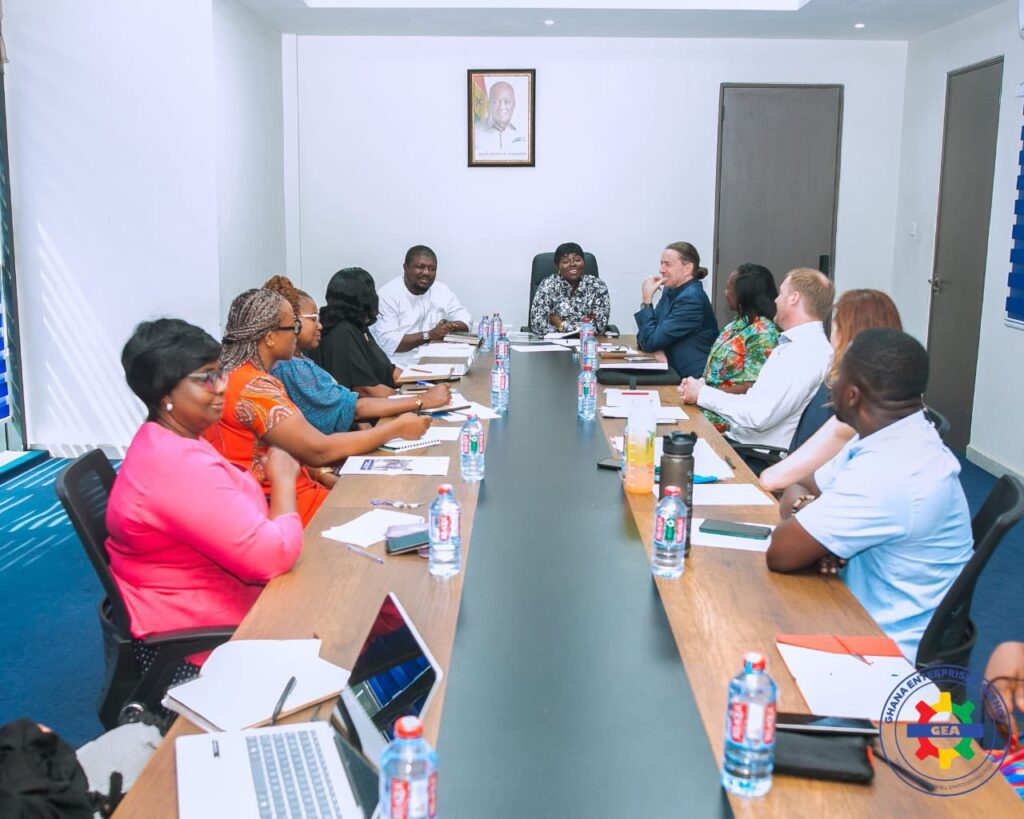
Marking the one-year milestone of Madam Margaret Ansei’s tenure as Chief Executive Officer of the GEA, a high-level delegation from GIZ Ghana, led by Country Director Dr. Dirk Abmann, convened in Accra to review and scale up bilateral enterprise development initiatives.
According to the GEA, the diplomatic engagement underscored a shared institutional mandate to enhance the sustainability, competitiveness, and resilience of the private sector, particularly focusing on underserved demographics such as youth-led and women-led corporate entities.
As Ghana continues its broader economic transformation agenda, the collaboration bridges international technical expertise with local regulatory infrastructure to establish decentralized business support channels across the country’s sub-regions.
“Discussions focused on strengthening collaboration between GIZ and GEA in support of Ghana’s Micro, Small, and Medium Enterprises.
“Dr Abmann shared insights on GIZ Ghana’s ongoing and planned initiatives aimed at promoting inclusive economic growth, enterprise competitiveness, and private sector development, with particular attention to women and youth led businesses”
Ghana Enterprises Agency
To maximize the impact of development assistance, the dialogue centered heavily on aligning GIZ Ghana’s upcoming and ongoing private sector interventions with the national development priorities managed by the GEA.
With operational efficiency in enterprise support requiring that international aid frameworks avoid creating parallel systems, and instead integrating directly into state-backed administrative channels, Dr. Abmann presented comprehensive insights into GIZ’s planned frameworks, emphasizing inclusive economic growth models to insulate small enterprises from macroeconomic shocks.
Through synchronizing these portfolios, the GEA plans to ensure that resources are funneled directly into high-growth sectors, leveling the playing field for emerging formal enterprises and expanding the domestic tax base through formalized private sector development.
A critical pillar of the expanded cooperation is the formal introduction and deployment of the Private Sector and Innovation Promotion (PSInno) Programme. Managed under the specialized guidance of Mr. Wilhelm Hugo, GIZ’s Cluster Coordinator for Sustainable Economic Development, and Ms. Arlett Stojanovic, the Head of Programme, PSInno introduces a data-driven methodology for enterprise upgrading.
The framework focuses extensively on value chain development and innovation integration, providing small-scale local manufacturers with the technical tools required to refine their production pipelines, stabilize supply chains, and meet international quality benchmarks.
The initiative intends to move local firms from survivalist business models toward highly competitive, growth-oriented commercial operations.
Northern Enterprise Hub
The primary strategic highlight of the bilateral consultation was the conceptual evaluation of the proposed Northern Enterprise Hub. This targeted sub-regional infrastructure project represents an intentional policy shift designed to dismantle the historical centralization of business development resources within major southern urban corridors.

The operational blueprint of the Northern Enterprise Hub establishes a specialized single-window center configured to provide northern-based enterprises with direct access to comprehensive business development services (BDS), localized capacity building, and advanced innovation toolkits.
Crucially, the hub will focus on constructing reliable market linkages, allowing small-scale agricultural processors and indigenous manufacturers across the northern territories to connect efficiently with national, regional, and continental off-takers.
“We explored the hub’s vision to support enterprises in the Northern regions. I was encouraged by the shared interest in working together to refine the concept and identify practical ways to collaborate in addressing regional disparities and promoting inclusive economic growth”
Madam Margaret Ansei, GEA CEO
Moving into the next phase of implementation, the GEA and GIZ Ghana have committed to an accelerated schedule of technical working sessions to finalize the operational parameters of the northern facility.
Managing regional economic disparities remains a central pillar of Ghana’s macroeconomic stability plan, and both institutions maintain that inclusive growth can only be realized by embedding innovation nodes across all administrative zones.
The combination of the PSInno value chain upgrading systems and the physical footprint of the proposed northern hub provides a clear path forward for structural enterprise transformation, anchoring development support to verified domestic institutions, to build an inclusive, competitive, and resilient enterprise ecosystem capable of sustaining long-term industrial output.
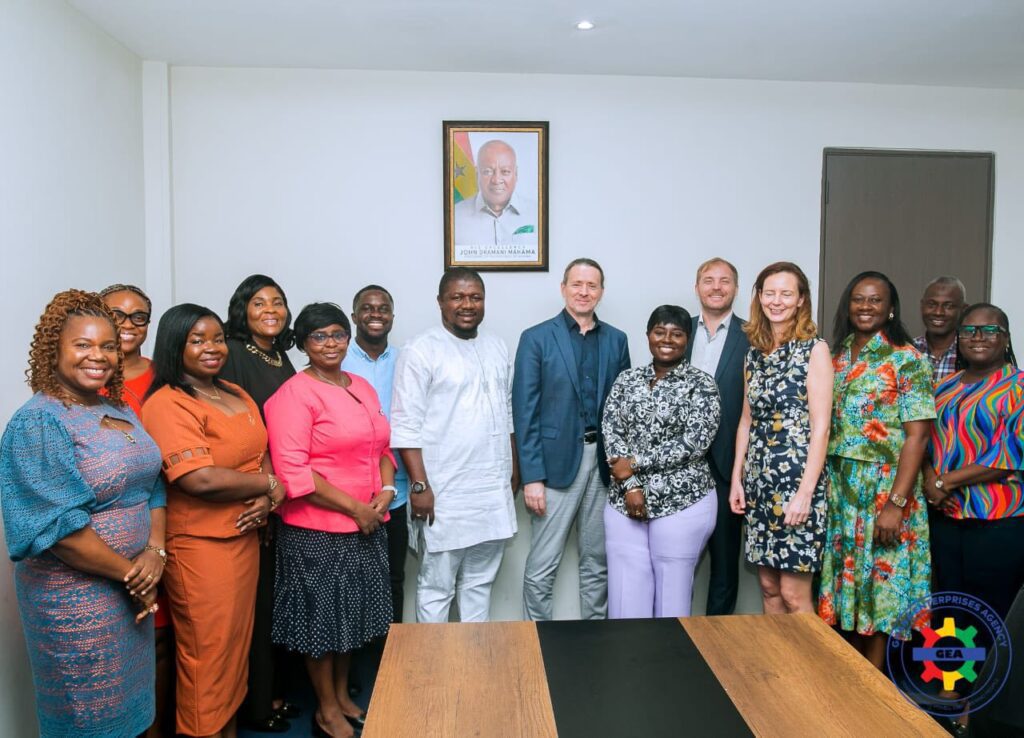
The meeting concluded with a mutual commitment to deepen institutional cooperation and continue technical engagements to advance this initiative in support of Ghanaian MSMEs. The GEA boss expressed her gratitude to the GIZ team for their continued partnership and support as both sides work together to “strengthen enterprise development across the country.”
READ ALSO: Ghana Calls Pope’s Slave Trade Apology Historic Step Towards Reparative Justice