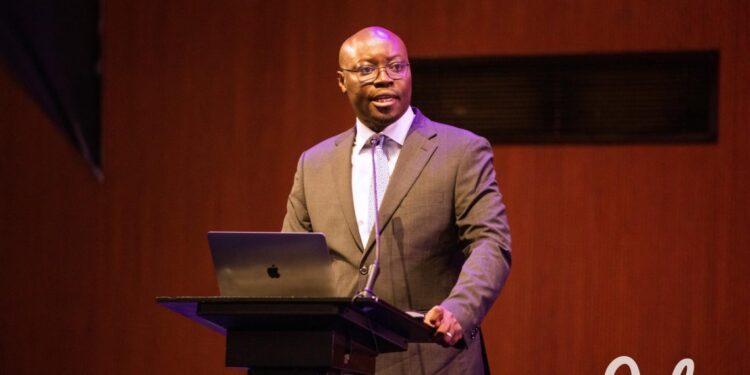
Ghana’s Finance Minister, Dr. Cassiel Ato Forson, has unveiled an ambitious roadmap to increase the country’s tax-to-GDP ratio to 15 percent by the end of 2026, describing a series of sweeping reforms that are already transforming public finances, strengthening the cedi, and boosting government revenue.
Speaking during a panel discussion at the Ghana-UK Investment Summit in London, Dr. Forson detailed the difficult decisions and far-reaching policy measures that have defined his first months in office.
The Finance Minister disclosed that the government’s maiden budget introduced an unprecedented 22 amendments to existing laws and several new legislative measures aimed at restoring fiscal discipline and placing Ghana’s economy on a sustainable path.
Tough Spending Controls Deliver Results
One of the administration’s biggest achievements, according to Dr. Forson, has been the aggressive control of public expenditure.
The government introduced a commitment authorization system designed to prevent state-owned enterprises from accumulating debts that eventually become liabilities for the central government.
According to him, Ghana had been losing about 2.5 percent of GDP annually through what economists describe as stock-flow adjustments, where debts contracted by public institutions were transferred onto the government’s books.
“We introduced the commitment authorization that yes, you can be a state-owned enterprise, but we need to approve the kind of expenditure and the kind of commitment just to make sure that that 2.5% of GDP of additional debt every year does not recur going into the future. So for now, we’ve stopped it.”
Dr. Cassiel Ato Forson
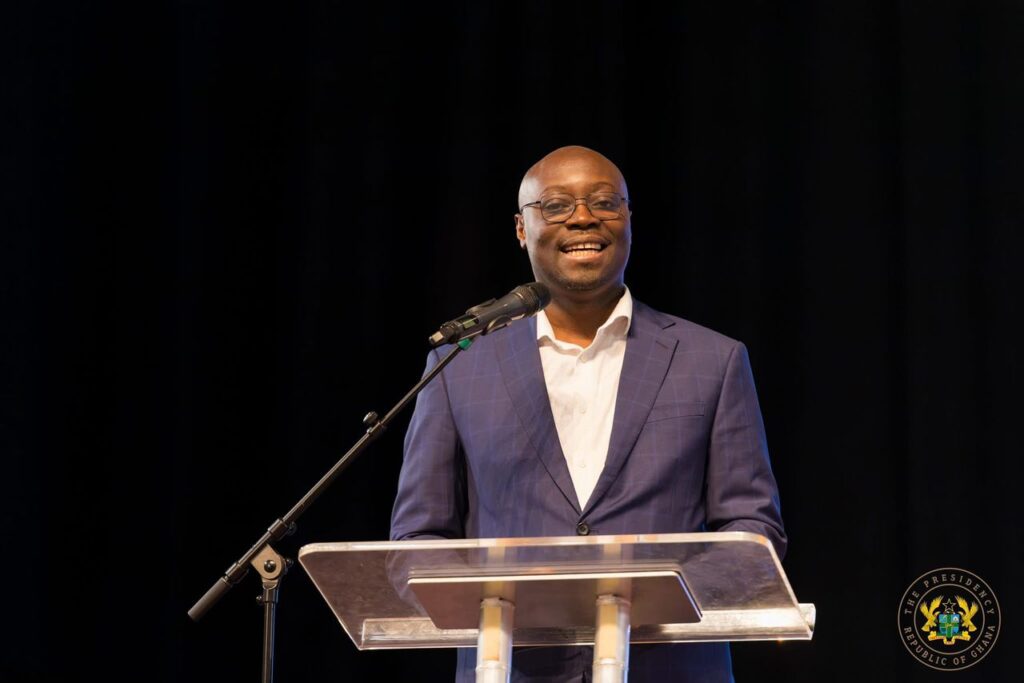
The reforms have already produced remarkable results. Government expenditure has been reduced significantly, with primary expenditure falling from 18.7 percent of GDP to 13.5 percent.
Despite the sharp reduction in spending, economic growth has remained resilient.
Dr. Forson revealed that non-oil GDP growth increased from 6.1 percent to 7.6 percent within a year, demonstrating that fiscal discipline does not necessarily undermine economic expansion.
Goldboard Emerges as Economic Game Changer
Another major pillar of the government’s strategy has been the establishment of the Gold Board, an initiative aimed at curbing gold smuggling and maximizing value from Ghana’s mineral resources.
The Finance Minister indicated that the Gold Board has enabled the country to purchase up to $14 billion worth of gold in a single year, significantly strengthening the Bank of Ghana’s reserves position.
He further disclosed that the government expects gold purchases to reach at least $20 billion this year.
The strengthened reserve position has given the central bank greater capacity to stabilize the local currency.
According to Dr. Forson, Ghana’s currency appreciated by an impressive 40.7 percent within a calendar year, a development he attributed largely to the country’s renewed control over its gold exports and revenues.
Scrapping Nuisance Taxes Without Losing Revenue
One of the most politically sensitive decisions undertaken by the government was the removal of what it described as nuisance taxes, including the Electronic Transfer Levy (E-Levy) and betting tax.
While critics questioned how government would compensate for the resulting revenue losses, Dr. Forson insisted that strategic reforms have allowed Ghana to expand revenue collection even after eliminating those taxes.
“We remove all of this nuisance tax, betting tax, and all of that. At the same time, we need to ensure that we grow revenue.”
Dr. Cassiel Ato Forson
He noted that Ghana’s tax-to-GDP ratio has already increased from 12.3 percent to 13.2 percent and is projected to rise further to 14 percent this year.
The government’s ultimate objective is to achieve a tax-to-GDP ratio of 15 percent by the end of 2026.
VAT Reforms and Digital Technology Drive Revenue Growth
Central to this target is the rationalization of Ghana’s Value Added Tax system.
Dr. Forson argued that the previous VAT structure contained distortions that undermined efficiency and revenue mobilization.
The government has therefore streamlined the system and is preparing to introduce electronic point-of-sale devices nationwide beginning in July.
The Finance Minister described the initiative as a potential game changer capable of increasing VAT collections by at least 20 percent.
The pilot phase has already been completed, and authorities are preparing for a nationwide rollout despite anticipated resistance from some stakeholders.
Artificial Intelligence Revolutionizes Customs Collection
Perhaps the most groundbreaking reform is the deployment of artificial intelligence in customs administration.
Under the new system, customs valuation decisions that were previously made by individual officers are now determined using AI technology aligned with international standards.
The impact has been immediate and substantial.
“Every single day, I see the customs revenue going up by a minimum of 3 million United States dollars every single day.”
Dr. Cassiel Ato Forson
Dr. Forson estimates that AI-driven reforms alone will generate at least $1 billion in additional customs revenue this year.
The revenue gains are expected to play a critical role in helping the government achieve its ambitious tax collection targets while maintaining its commitment to lower taxes and fiscal stability.
Taking the Hard Decisions
Beyond the numbers, Dr. Forson acknowledged that enforcing fiscal discipline has required difficult conversations within government.
He revealed that one of the toughest aspects of his job is declining spending requests from fellow ministers eager to secure additional resources for their sectors.
“The difficult decision for me is looking at your friends and colleagues in cabinet and telling them that it can’t work.”
Dr. Cassiel Ato Forson
Despite the challenges, the Finance Minister remains convinced that tough choices today will lay the foundation for stronger economic performance tomorrow.
With spending controls, gold sector reforms, VAT modernization, and artificial intelligence-powered revenue collection all gathering momentum, Ghana’s quest to achieve a 15 percent tax-to-GDP ratio is rapidly becoming one of the most closely watched economic transformation stories on the continent.