
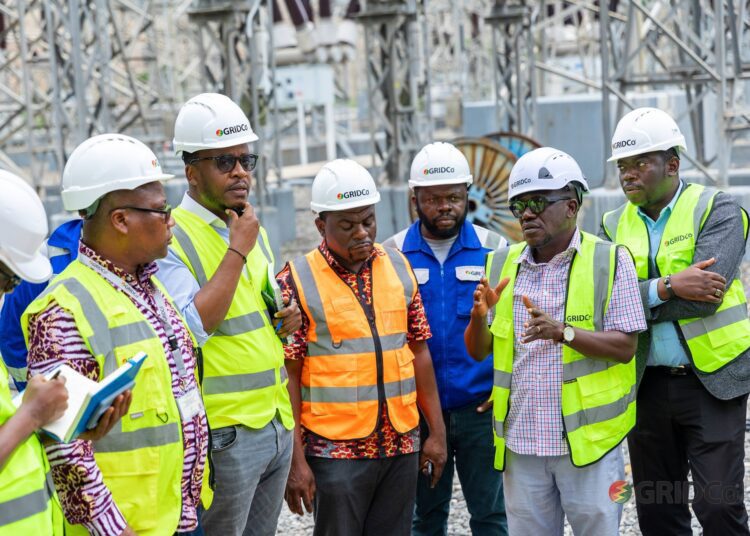
A delegation from the Ministry of Energy and Green Transition has paid a working visit to the Akosombo substation to assess the current level of ongoing rehabilitation works following the recent catastrophic fire outbreak that disrupted the national grid.
The ministerial tracking group, which was jointly led by Ing. Eric Frimpong Koduah and Ing. Elliot, arrived at the strategic power installation with a primary mandate to review technical milestones and ensure that all physical reconstruction activities strictly align with the binding September completion deadline.
Upon arrival at the facility, the monitoring team was received by the Area Manager for Akosombo, Ing. Job Aziaku, who doubles as the local operational head, alongside the Project Manager, Ing. Edward Erskine, who was fully present to guide the delegation through a comprehensive site inspection.
“A delegation from the Ministry of Energy and Green Transition Monitoring Team visited the Akosombo substation to review rehabilitation progress after a recent incident. The delegation praised the teams efforts, emphasising collaboration and urgency for this critical national project.”
GRIDCo
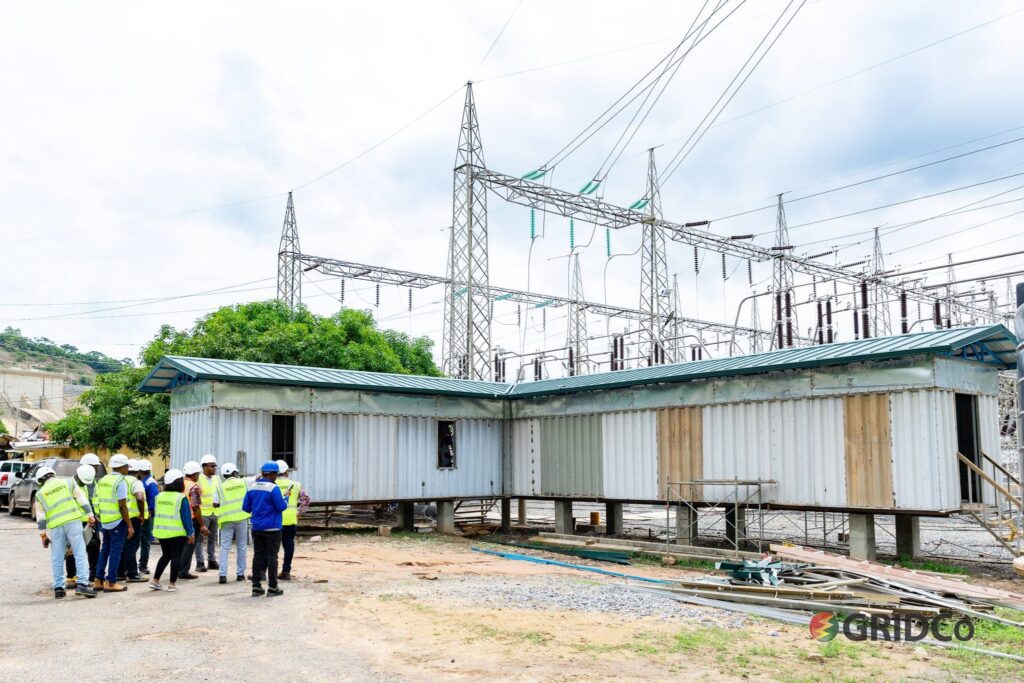
The essential site assessment expands on the initial ministerial directives aimed at preventing systemic delays, restoring full-scale energy generation capacities, and fast-tracking the procurement of highly modern components to replace the heavily damaged switchyard infrastructure.
During the high-level engagement, the visiting delegation praised the engineering team’s tireless recovery efforts on the ground, emphasizing that maximum collaboration and absolute urgency must remain the guiding principles for executing this critical national asset rehabilitation.
To prevent future outages, the ongoing reconstruction works are focusing heavily on reinforcing the main electrical nodes, upgrading local transmission control systems, and integrating intelligent fire suppression technologies to make the plant resilient.
Operational Enhancements and Infrastructure Resilience
This rigorous monitoring visit by the sector ministry significantly enhances future energy distribution operations by introducing an extra layer of strict administrative compliance and real-time project auditing.
When top-level energy experts from the ministry actively evaluate the engineering processes on-site, it automatically forces contractors to maintain high structural standards, thereby eliminating substandard civil and electrical installations. Furthermore, the active participation of Ing.
Eric Frimpong Koduah and Ing. Elliot guarantees that any financial or logistical challenges impeding the technical teams are instantly resolved through direct state intervention.
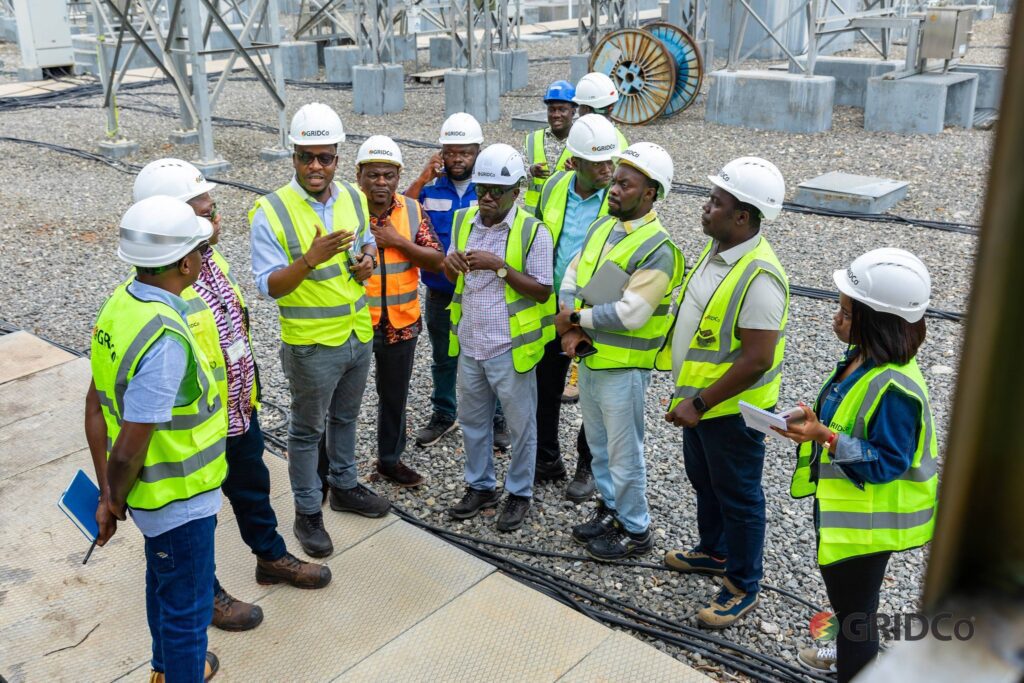
On the ground, the collective expertise of the Area Manager, Ing. Job Aziaku, and the Project Manager, Ing. Edward Erskine, ensures that the deployment of the new power apparatus matches contemporary international engineering guidelines.
Experts believe that replacing the destroyed traditional switchyard with automated gas-insulated switchgear (GIS) will massively improve the substation’s overall operational efficiency, lower maintenance costs, and reduce transmission line vulnerabilities.
The newly established technical framework will also enable Akosombo to withstand extreme voltage fluctuations, minimizing localized power curtailments across the country.
Accelerating National Grid Stabilization
The strategic alignment between the policy monitors and the engineering unit serves as a vital blueprint for accelerating the total stabilization of the national grid before the heavy demand period later in the year.
“We are setting a standard where administrative oversights directly translate into swift technical results on the field,” remarked an auxiliary engineer close to the rehabilitation project.
This collaborative synergy ensures that the primary transmission loops connecting the Akosombo hydroelectric plant to key industrial hubs are fully reinforced with modern circuit breakers and high-capacity step-up transformers.
By aggressively adhering to the stringent timelines of the September schedule, the Ministry is proactively mitigating the risk of extended electricity rationing that recently affected retail businesses and residential areas.
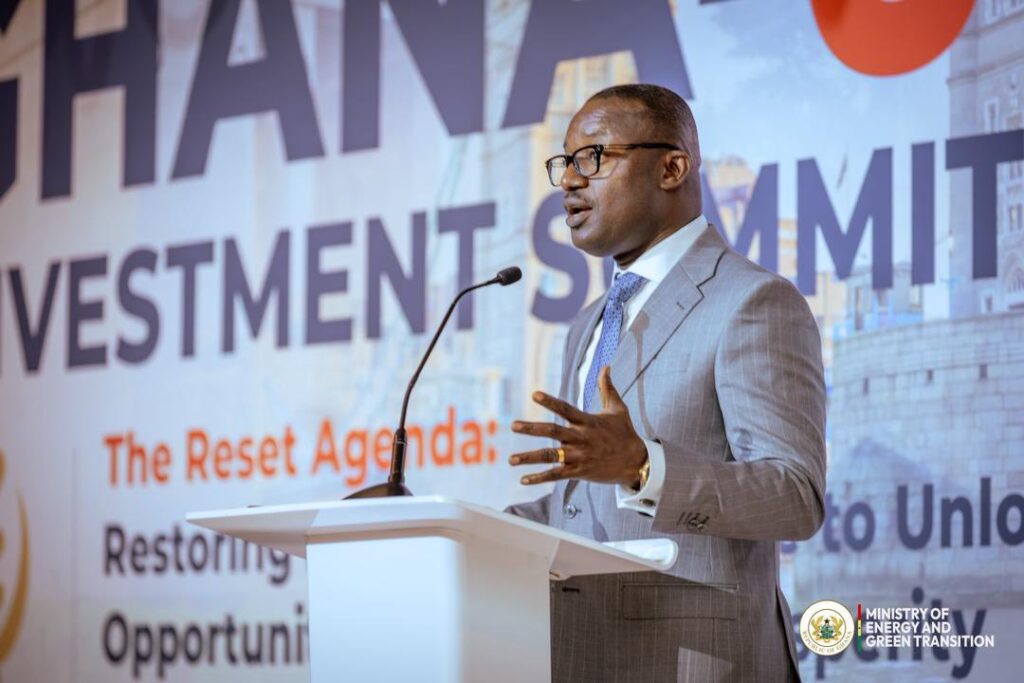
The rehabilitation will eventually restore the bulk supply points to maximum capacity, allowing for seamless power wheeling across regional lines.
Additionally, the intensive monitoring model guarantees that all interconnected secondary substations receive balanced energy loads, effectively permanently curing the historical transmission losses that have long plagued the electricity sector.
Strategic Sector Collaboration for Sustainable Energy
Ultimate victory over the recent infrastructure breakdown depends heavily on building strong institutional ties between the regulatory ministry and the state utility managers.
The joint walk-through of the damaged facility has allowed both teams to draft an updated risk-management matrix designed to protect critical energy investments across Ghana.
Ing. Elliot pointed out during a brief technical session that “the future of our green transition depends entirely on how safely and efficiently we operate our existing hydro-generation hubs.”

As the project enters its critical advanced stage, the constant exchange of technical data between the project management office and the ministry will serve as a defensive shield against unplanned structural failures.
This unified front sends a strong positive signal to corporate consumers and foreign development partners that Ghana’s energy ecosystem is rapidly moving towards world-class reliability.
With the rehabilitation moving at a rapid pace, the Akosombo substation is set to emerge from this crisis far stronger, highly efficient, and fully prepared to drive the nation’s industrial development.
READ ALSO: Taste Spain Accra Returns to Deepen Bilateral Food and Beverage Partnerships