
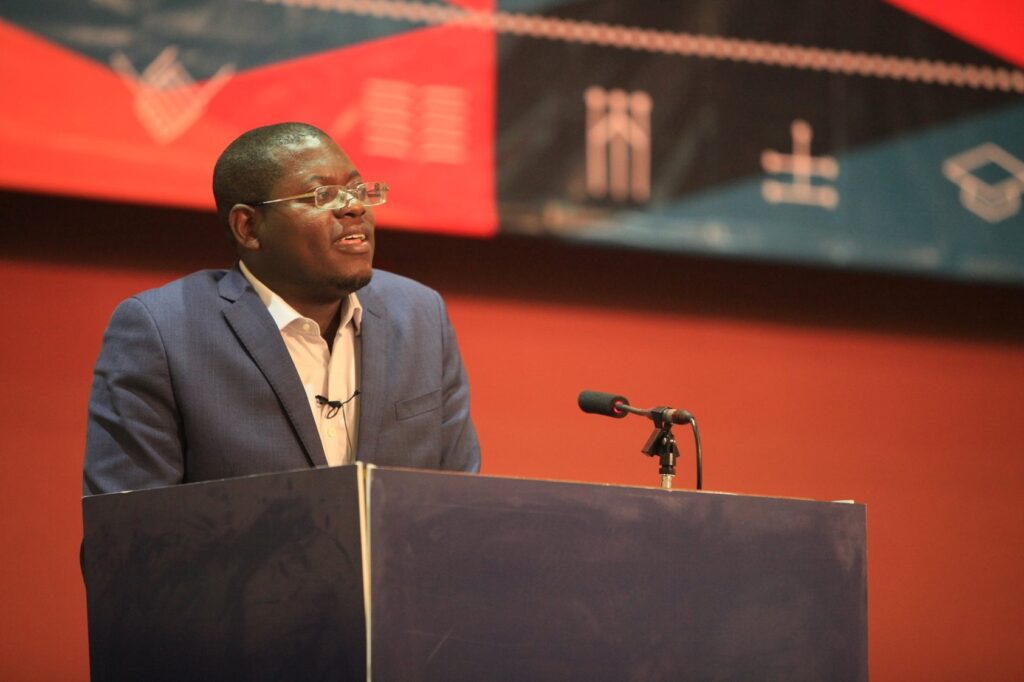
Bright Simons, the Vice President of IMANI Africa and a prominent policy analyst, has urged Ghanaians to desist from reducing critical mineral extraction debates to personal attacks and instead focus on maximizing financial returns for the state.
The civil society leader expressed deep worry over a growing national trend where objective assessments of resource exploitation are immediately misinterpreted as personal vendettas against indigenous business magnates.
According to him, analyzing natural resource governance through a strictly civic and structural framework remains the only credible way for the sovereign owner the state to derive real economic value from its finite natural wealth.
This intervention seeks to re-orient public conversations away from emotional conversations regarding ownership and steer it toward systemic performance metrics, commercial efficiency, and long-term national development goals.
“A truly sensible and careful analysis of the situation has nothing to do with ownership at all because, nominally, the country already owns the resources. The only serious analysis is how to create the right path to getting to a flourishing ecosystem with citizens being in charge of most of the businesses while maximizing total revenue. Unfortunately, far too few people care enough about this structural path because if they cannot personalize an issue, they simply cannot relate to it.”
Bright Simons, the Vice President of IMANI Africa

The policy expert, who has consistently championed extractive sector transparency for over fifteen years, explained that the persistent personalization of natural resource discussions stems from a fundamental public misunderstanding of how sovereign mineral ownership works in sub-Saharan Africa.
He expanded on this structural reality by pointing out that while private individuals can outrightly own underground minerals in Western jurisdictions like Australia, Canada, or the United States through direct land purchases, the legal landscape in Ghana is entirely different because the state holds absolute, permanent custody of all mineral resources.
Consequently, the national discourse should shift entirely from who nominally owns the concession to how effectively the government monitors private concessionaires, prevents revenue leakage, creates sustainable local jobs, and captures its rightful share of global windfalls to fund vital social services like healthcare and education.
The Fallacy of Nominal Ownership Versus Operational Efficiency
Using a vivid urban parallel, Simons compared the sovereign state to an entity that has constructed a massive, commercially vibrant shopping mall at the bustling Accra Circle intersection with the sole aim of generating revenue for public infrastructure.
“The state essentially faces a binary choice: either raise capital to run every single shop, cinema, gym, and restaurant internally or lease those spaces out to external operators under long-term profit-sharing agreements,” he observed during his analytical breakdown.
Historical evidence across developing economies shows that when governments attempt to manage commercial retail spaces or complex mining operations directly, the ventures frequently collapse under the weight of bureaucratic inefficiency, resulting in severe losses borne entirely by ordinary taxpayers.
Having learned from these historical failures, the Ghanaian state naturally opted for the profit-sharing path, which automatically shifts the critical policy question away from passport nationalism toward absolute competence.
The primary focus of regulatory institutions must be assessing whether an operator possesses the requisite technical capacity to generate huge profits, employ thousands of local citizens, and deliver premium services.
When citizens blindly shield local operators from rigorous regulatory scrutiny simply because of their nationality, they inadvertently undermine the state’s capacity to verify if it is receiving a fair deal from its natural resources.
Prioritising State Benefits to Cure Extractive Sector Deficits
A thorough investigation into Ghana’s mining history reveals an urgent need to prioritize total state benefits over symbolic ownership percentages to salvage the national economy.
Over the decades, the country has frequently ranked as one of Africa’s top gold producers, yet structural deficits persist because public discourse remains heavily obsessed with the identity of the mine operators rather than the actual volume of corporate taxes, royalties, and dividends entering the national treasury.
“Having a hundred local individuals in charge of our mineral blocks means very little if the overall yield to the state cannot fund our national budget or stabilize our volatile local currency,” an extractives researcher noted in support of the thesis.
Maximizing fiscal take ensures that the non-renewable wealth of the nation is successfully transformed into permanent human capital and sustainable infrastructure.
Furthermore, focusing heavily on state benefits compels regulatory bodies like the Minerals Commission and the Ghana Revenue Authority to upgrade their technical auditing capabilities.
When the state prioritizes real fiscal returns, it actively invests in sophisticated tracking systems to monitor the exact volume of minerals extracted, preventing common industry malpractices such as transfer pricing and base erosion.
This shift in national priority forces both foreign multinationals and indigenous conglomerates to operate under the same strict rules of accountability, ensuring maximum transparency across the entire value chain.
Constructing a Sustainable Framework for Local Content
The ultimate objective of any progressive mineral policy must be achieving a healthy equilibrium where the state enjoys massive financial inflows while systematically building the capacity of indigenous businesses to manage complex operations.
This dual triumph cannot be achieved through emotional protectionism or by treating local corporate entities as above public criticism.
Instead, it requires a structured, policy-driven local content framework that penalizes inefficiency while aggressively upskilling local engineers, suppliers, and managers to compete globally.

By filtering natural resource conversations through a sober policy lens, Ghana can move away from the toxic cycles of personalization that stifle honest intellectual debate.
National transformation occurs when citizens collectively demand strict institutional accountability, transparent bidding processes, and optimal fiscal returns from whoever holds a mining license.
Only when the country prioritizes aggregate national benefits over narrow individual identities will Ghana’s subterranean wealth truly reflect in the living standards of its populace.
READ ALSO: Newark Mayor Leads American Investors to Ghana’s Secure Business Environment