
Ghana Chamber of Mines disclosed that the nation’s mining industry witnessed a historic operational shift in 2025 as small-scale miners overtook large-scale producers in total gold output for the first time in over a century.
This unprecedented milestone underscoring the growing influence of artisanal and community-based mining on the country’s most important export sector came on the back of broad-based growth across Ghana’s traditional minerals.
Propelled by this structural realignment, total attributable gold production across the West African nation experienced a sharp increase, expanding by 23.41 percent from 4.82 million ounces in 2024 to a record-breaking 5.94 million ounces in 2025.
“In 2026, large-scale gold output is projected at between 3.2 million ounces and 3.4 million ounces, while small-scale output is expected to range between 2.9 million ounces and 3.5 million ounces.”
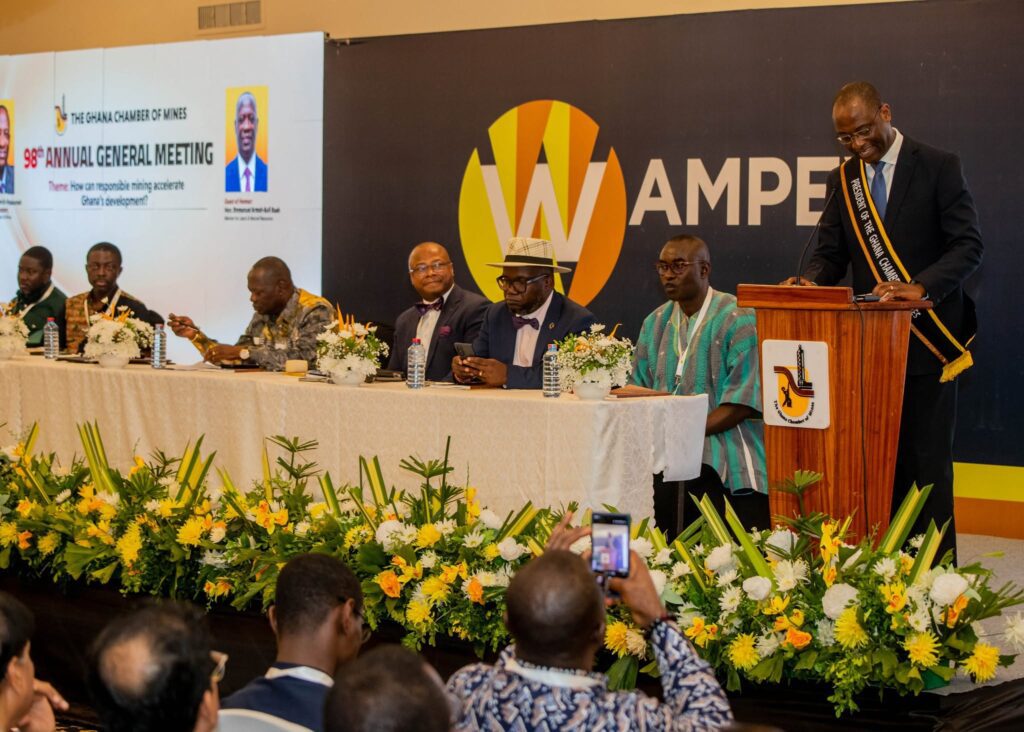
Immediate Past President of the Ghana Chamber of Mines, Micheal Edem Akafia

The Chamber of Mine’s annual review of the mining sector’s performance revealed that the small-scale mining subsector achieved a staggering 63.82 percent surge in output, with production climbing from 1.90 million ounces in 2024 to 3.11 million ounces in 2025.
Consequently, artisanal and small-scale operators successfully commanded a dominant 52.4 percent share of the entire national gold output.
This historic surge allowed local community-based miners to effectively eclipse the large-scale multinational firms, whose combined share diminished to 47.6 percent, completely upending a multi-decade status quo where corporate conglomerates served as the sole backbone of the domestic industry.
According to the official data released in the annual review, the performance marked a definitive inflection point for the domestic industry:
Large-Scale Operators Face Production Softness
As local, decentralized mining operations expanded rapidly, large-scale industrial producers experienced a modest contraction across their operations.
Large-scale gold output fell by 2.98 percent, moving from 2.92 million ounces in 2024 down to 2.83 million ounces in 2025, which contracted their national contribution from 60.6
percent to the current 47.6 percent.
Furthermore, the Chamber’s specific producing member companies recorded a combined output of 2.77 million ounces, representing a 3.08 percent dip from the 2.86 million ounces recorded the prior year.

Industry analysts point out that while overall industrial volumes soft-landed due to lower production across several core assets, significant operational gains achieved at the Asanko Gold Mine and AngloGold Ashanti’s revitalized Obuasi Mine helped cushion the deeper corporate downturn.
This divergence highlighted one of the most significant structural shifts in Ghana’s mining history, transforming local community mining units into the single largest source of gold production nationwide.
Fiscal Windfalls and Foreign Exchange Liquidity
This broad-based 23.41 percent expansion in physical gold volumes yields massive macroeconomic benefits for Ghana’s national economy, primarily through enhanced foreign exchange earnings and improved balance of payments.
Because gold serves as the nation’s primary export commodity, a higher volume of ounces exported directly increases the central bank’s gross foreign reserves, strengthening the local currency against major international trading currencies.
Furthermore, the state benefits from an immediate expansion of its fiscal space through mineral royalties, corporate taxes, and explicit export levies collected on small-scale shipments.
This injection of liquid capital assists the government in stabilizing national debts and fund critical infrastructural development.
Localized Wealth Distribution and Rural Economies
Beyond the macro-level indicators, the structural pivot toward a small-scale dominated sector ensures a highly localized retention of mining wealth, which triggers widespread economic multipliers across host communities.
Unlike large-scale multinational entities that frequently repatriate a substantial portion of their profits to offshore shareholders, artisanal and small-scale miners spend their revenues directly within the domestic economy.

This dramatic rise in local purchasing power stimulates rural economic ecosystems, driving demand for local goods, heavy equipment rentals, transport services, and consumer retail.
However, industry experts caution that to make this domestic growth permanent and sustainable, the state must successfully scale up regulatory reforms, enforce strict environmental stewardship, and finalize formalization mechanisms to eliminate illicit, destructive practices.
READ ALSO: Eriksen Stable After On-Field Collapse, Denmark Team Doctor Provides Positive Update