Government and Ghana Chamber of Mines are set to implement a comprehensive responsible ASM framework designed to formalize and sanitize the Artisanal and Small-scale Mining (ASM) sector.
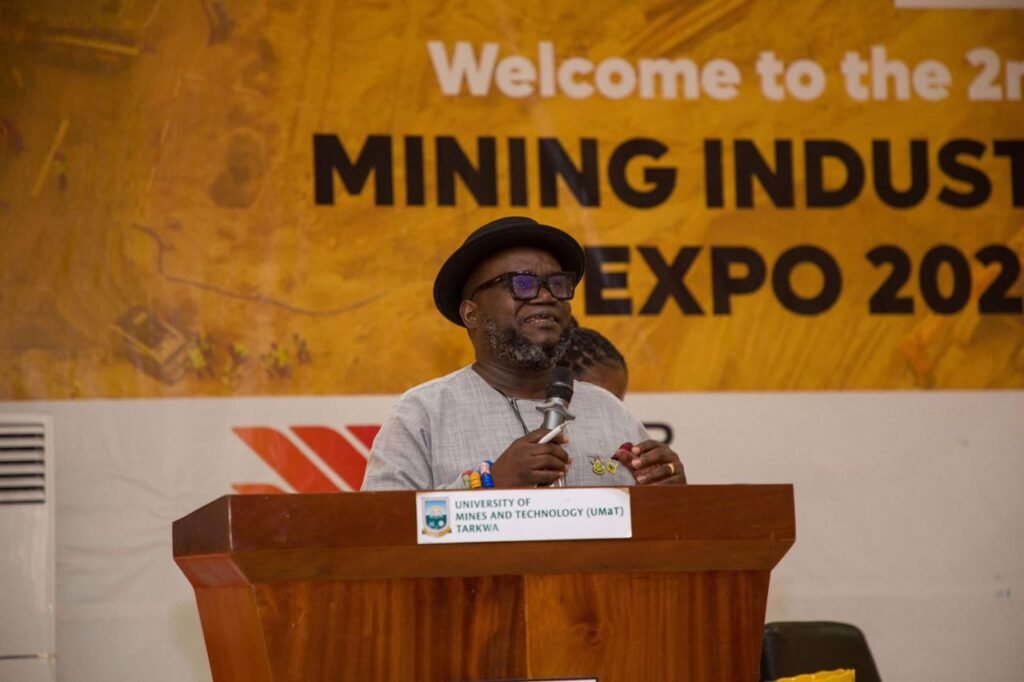
Speaking at 2026 Mining Indaba, the CEO of Ghana Chamber of Mines, Ing. Kenneth Ashigbey noted that the initiative marks a pivotal shift toward a “coexistence” model where small-scale operators are integrated into the formal mining ecosystem, ensuring they adhere to the same rigorous environmental and operational standards as large-scale commercial entities.
By establishing this structured roadmap, the state aims to mitigate the environmental degradation often associated with informal mining while securing a transparent supply chain for the nation’s mineral wealth.
“We are also supporting government’s push to get a responsible ASM framework so that we’re able to coexist with the ASM and ensure that those who are in artisan outlets also play to the responsible mining. The other big thing for us is value addition when it comes to local content, using mining as a catalyst for development and growing our industrial sector.”
Ing. Kenneth Ashigbey

This framework expands on the broader “Responsible Mining Agenda,” serving as a critical benchmark that requires mandatory sign-ups for operators seeking legitimacy within the industry.
Beyond mere regulation, the partnership is driving a “value addition” strategy that positions mining as a catalyst for industrial growth rather than an isolated extractive activity.
To support this transition, the Chamber of Mines has already committed substantial resources to human capital, including a $2.5 million investment in a Ghanaian mining university and the construction of a $1.2 million AI and Robotics laboratory.
These investments are designed to provide ASM operators with the technical “capacity building” and technological tools such as mercury-free processing and automated safety protocols necessary to thrive under the new legal and fiscal regime.
Integrating the Small-Scale Sector into the National Economy

The transformation of the ASM sector is rooted in a “clear physical and legal framework” that prioritizes the security of mineral titles and lease tenure. By removing barriers to entry, such as the VAT on mineral exploration, the government is incentivizing informal miners to step into a “stable, democratic, and investment climate.”
This shift is not just about regulation; it is about “promoting excellence” through a “tertiary education fund” that ensures the next generation of miners is equipped with modern, sustainable skills.
As Ing. Ashigbey noted, the goal is to move beyond “local content for local content’s sake” and instead foster a robust industrial sector where small-scale mining feeds directly into national development.
Strengthening Governance Through Industry Collaboration

A cornerstone of this new framework is the “strong government-industry collaboration” visible at events like the 2026 Mining Indaba, where the Chamber and regulators operate within the same pavilion.
This unified front ensures that governance and transparency are not just buzzwords but are backed by a commitment to “publish what we pay.” By advocating for “sound policies and regulatory frameworks,” the Chamber of Mines is helping the state create a “benchmark” for ESG (Environmental, Social, and Governance) leadership.
This collaborative approach allows for “constant engagement” between stakeholders, ensuring that the ASM framework remains adaptive to the needs of the 33 million Ghanaians whose “legendary hospitality” is matched only by their country’s “strong geological endowments.”
Technological Innovation as a Catalyst for Responsible Mining
The rollout of the $1.2 million AI and robotics lab serves as a physical manifestation of the framework’s forward-looking goals.
By deploying “modern traceability technology” and environmentally responsible processing plants, the framework addresses the “environmental degradation and low recovery rates” that have plagued informal mining for decades.
These high-tech solutions, combined with an “abundance of human capital,” allow for a more “efficient, sustainable, and safe” mining practice.
This technological leap ensures that the state can “efficiently mop up gold” once it is processed, cutting out illicit financial flows and ensuring that the “responsible mining agenda” becomes the standard for every miner in Ghana, regardless of the scale of their operation.
READ ALSO: Finance Minister Exposes Systemic Cocoa Crisis As COCOBOD Teeters