Ghana is on the verge of one of the most significant economic data transformations in recent years as the Ghana Statistical Service (GSS) pushes ahead with plans to introduce rebased Gross Domestic Product (GDP) and Consumer Price Index (CPI) figures by mid-2027.
The ambitious exercise, which is expected to provide a more accurate picture of the country’s economic performance and consumer spending habits, could dramatically alter how policymakers, investors, businesses, and international institutions view Ghana’s economy.
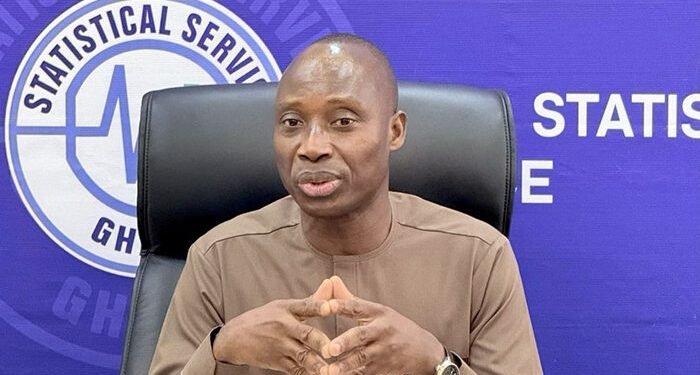
Speaking before Parliament’s Economic and Development Committee, Government Statistician Dr. Alhassan Iddrissu revealed that the GSS remains on track to complete the rebasing process, provided that the Ministry of Finance releases the required funds on schedule.
The announcement has sparked discussions among economists and market observers, many of whom believe the exercise could redefine key economic indicators and reshape perceptions of Ghana’s growth trajectory.
Why the Rebase Matters
Economic rebasing is a process that updates the reference year used to calculate GDP and inflation. As economies evolve, consumption patterns change, new industries emerge, and economic structures shift. Without periodic updates, official figures can become less reflective of current realities.
According to Dr. Iddrissu, the rebasing exercise is essential for ensuring that economic statistics accurately capture present-day conditions.
He emphasized that policymakers, investors, and development partners depend heavily on credible and up-to-date data when making decisions. Accurate figures help governments formulate effective policies, guide private sector investments, and support economic planning.
Dr. Iddrissu also appealed for sustained investment in data production, describing economic statistics as critical national infrastructure that deserves long-term support.
Major Groundwork Already Completed
The GSS has already completed substantial preparatory work for the exercise. Fresh data has been collected to update the weighting structure used in calculating both GDP and inflation.
One of the key foundations of the rebasing process is the completion of the Ghana Living Standards Survey 8 (GLSS 8), which will provide updated information on household spending patterns and economic activities across the country.
Earlier this year, Dr. Iddrissu explained that the current CPI basket largely relies on information from the Ghana Living Standards Survey 7 conducted in 2017.
While the price reference period was updated to 2021 to accommodate Ghana’s six newly created regions, the underlying consumption weights still reflect household behavior from nearly a decade ago.
“The last one we did was in 2017, and it did reflect the consumption pattern at that time, so this new one will definitely affect the consumption pattern of consumers.”
Dr. Alhassan Iddrissu
Currently, inflation is measured using a basket of 307 goods and services collected from 57 markets and more than 8,300 outlets across the country.
Inflation Numbers Could Change Dramatically
One of the most closely watched outcomes of the rebasing exercise will be its impact on inflation measurement.
Economists caution that the revised methodology could produce inflation figures that differ significantly from current estimates. Depending on changes in consumer spending patterns and the weighting of products and services, inflation could appear lower, higher, or simply more reflective of prevailing economic realities.
This possibility comes at a crucial time for Ghana, which has recorded remarkable progress in reducing inflation over the past year.
The inflation rate has dropped sharply from 23.5 percent in January 2025 to just 3.7 percent in May 2026. However, recent data suggest that inflationary pressures are beginning to re-emerge after months of steady declines.
Dr. Iddrissu recently attributed the slight increase to rising food prices and called for continued fiscal discipline, stronger food systems, improved storage infrastructure, irrigation expansion, and better transportation networks.
Could Ghana’s GDP Get a Massive Boost?
Beyond inflation, the rebasing exercise could have an even bigger impact on Ghana’s GDP figures.
History provides a powerful example. In 2010, Ghana revised its GDP base year from 1993 to 2006. The result was astonishing. The country’s GDP increased by more than 60 percent overnight, propelling Ghana into lower-middle-income status and changing global perceptions of the economy.
Many analysts believe the upcoming rebasing exercise could once again reveal sectors and activities that are currently underrepresented in official statistics.
A larger GDP does not necessarily mean people become richer overnight. However, it can influence debt ratios, investment attractiveness, economic rankings, and development planning.
As Ghana’s economy continues to diversify through technology, services, manufacturing, and emerging industries, updated measurements may uncover a broader and more dynamic economic landscape than currently reflected in official data.
A Defining Moment for Economic Planning
The countdown to 2027 has effectively begun, and the stakes are high.
For government officials, investors, businesses, and international partners, the new GDP and inflation figures could become the foundation for future economic decision-making.
Dr. Iddrissu acknowledged that the exercise “will definitely change the dynamics going forward,” a statement that underscores the far-reaching implications of the project.
If completed on schedule, the rebasing exercise may not only update Ghana’s economic statistics but also redefine the narrative surrounding the country’s growth, competitiveness, and future prospects.
As anticipation builds, all eyes will remain on the Ghana Statistical Service and the Ministry of Finance to ensure that the resources required for this landmark exercise are delivered on time, paving the way for what could be the most consequential statistical reset in Ghana’s recent economic history.
READ ALSO: Ghana International Bank CEO Dismissed Despite Turnaround Success