
Constitutional rights activist and legal practitioner Osagyefo Oliver Barker-Vormawor has urged the Attorney-General to accept a proposed plea bargain request initiated by Bernard Antwi-Boasiako, popularly known as Chairman Wontumi, in connection with an ongoing criminal trial involving alleged financial losses to the Ghana Export-Import Bank.
Barker-Vormawor, commenting on the development, argued that any plea agreement should prioritize the recovery of public funds while establishing a clear and consistent framework for dealing with similar cases in the future.
“Wontumi has asked for a plea deal in connection with charges of defrauding the Ghana Exim Bank out of 14.3 million, stealing 4 million through forging documents, and causing financial losses of 30 million to the Bank”.
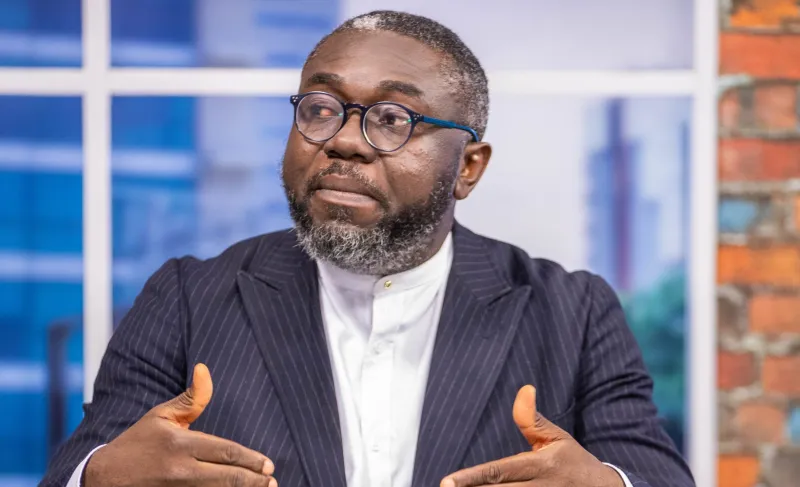
Constitutional rights activist and legal practitioner Osagyefo Oliver Barker-Vormawor
He further proposed that the Attorney-General should consider accepting the request, provided it includes the full recovery of the funds involved, together with a substantial financial penalty.

According to him, such an approach could serve both punitive and deterrent purposes while ensuring that the state recovers resources lost through alleged financial misconduct.
Plea Bargain Request Before the Courts
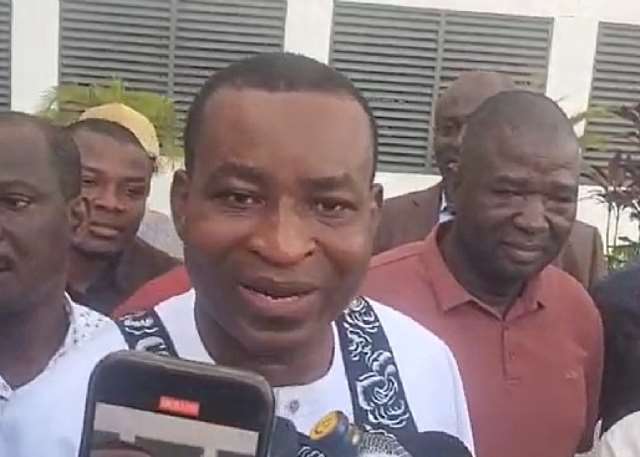
Chairman Wontumi has formally initiated plea bargain negotiations with state prosecutors regarding allegations linked to a financial facility obtained from the Ghana Export-Import Bank.
The request was officially filed at the Accra High Court through his lead counsel, Andy Appiah-Kubi. Both the court and the Office of the Attorney-General have been notified of the commencement of plea negotiations.
The development marks a significant turn in the case, particularly after the New Patriotic Party Ashanti Regional Chairman previously pleaded not guilty to the charges brought against him.
Under Ghana’s criminal justice framework, plea bargaining allows an accused person to negotiate an agreement with prosecutors, which may include a guilty plea, restitution, or other conditions in exchange for reduced charges or a mitigated sentence.
Any agreement reached through the process would ultimately require judicial approval before it can take effect.
Allegations Surrounding the GEXIM Facility
The criminal proceedings stem from a financial facility applied for in January 2018 on behalf of Wontumi Farms Limited. According to prosecutors, the company sought funding to support an agricultural venture, resulting in the disbursement of GH¢14.3 million by the Ghana Export-Import Bank.
Investigators allege that subsequent representations made to secure additional funding involved the submission of forged documentation.
The prosecution claims that Chairman Wontumi presented what was described as a receipt amounting to GH¢4 million to demonstrate that earth-moving and farm equipment had been purchased for the project.
However, state investigators contend that the document was, in fact, a modified pro forma invoice and did not constitute proof of payment.
The allegations extend beyond document irregularities. Investigations conducted by the Economic and Organised Crime Office reportedly found no evidence of the large-scale farming activities that had formed the basis of the funding application.
Prosecutors maintain that no substantial farming operations were undertaken, no workers were employed, and no significant agricultural infrastructure was developed under the project.
They further allege that portions of the funds were diverted for personal use and invested in unrelated business ventures. As interest accumulated on the principal amount, authorities estimate that the total financial exposure to the state-owned institution now exceeds GH¢30 million.
Call for Consistency in Accountability
Barker-Vormawor’s comments have reignited public discussions on how the state should approach cases involving alleged financial crimes and the recovery of public funds.
He argued that a uniform standard for restitution would eliminate perceptions of selective justice and reinforce public confidence in accountability processes. “So that everyone knows that as for ORAL, if we catch you, you go pay 100% interest,” he stated.
His remarks appear to align with broader public demands for stronger consequences in cases involving the alleged misuse of state resources, while also ensuring that the financial interests of the state are protected.
As discussions between prosecutors and the defence team potentially move forward, attention is likely to focus on whether an agreement can be reached that balances restitution, deterrence, and the principles of justice.
The Attorney-General’s office has acknowledged receipt of the plea bargain request, with further engagements expected ahead of the next scheduled court proceedings.
The outcome of those negotiations could shape not only the direction of the Wontumi case but also future expectations regarding the use of plea bargaining mechanisms in high-profile financial crime cases in Ghana.
READ ALSO: The Politics of Counting II: Staffing, Expenditure and Value for Money