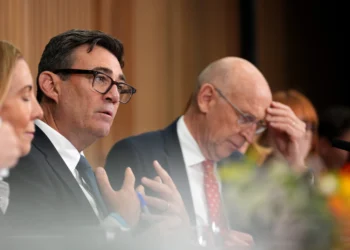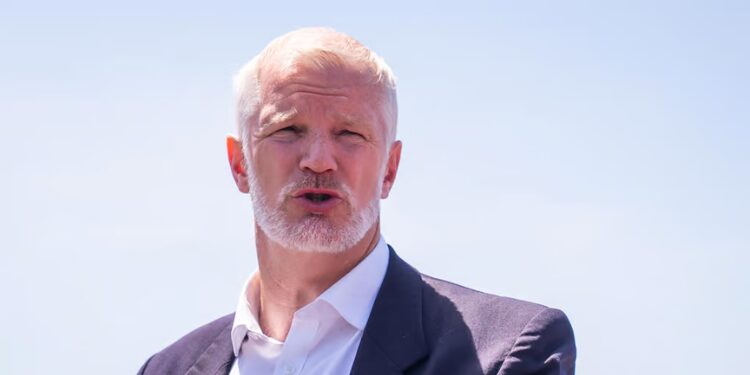
Former Armed Forces Minister Al Carns has intensified pressure on Prime Minister Sir Keir Starmer after publicly defending his resignation from government, arguing that Britain’s proposed defence spending plans are inadequate for the threats facing the country and warning that Ministers are preparing for “the last war rather than the next one.”
Al Carns, who dramatically quit the government alongside former Defence Secretary John Healey, used a series of media appearances to explain why he could no longer support the government’s Defence Investment Plan (DIP), deepening a crisis that has exposed serious divisions at the heart of Labour over military spending and national security.
According to the former Royal Marines officer, his decision to resign was straightforward and unavoidable.
“The reason I quit was quite simple. I didn’t think the proposed funding settlement was correct for defence.”
Al Carns
His comments came less than 24 hours after Healey resigned in protest over what he described as insufficient funding for Britain’s armed forces, accusing Starmer and the Treasury of failing to provide the resources needed to respond to a rapidly deteriorating international security environment.
Together, the resignations have created one of the most serious political crises of Starmer’s premiership, raising fresh questions about his authority and his government’s ability to maintain unity on major policy issues.
Carns suggested that his concerns extended beyond funding levels alone. He argued that the Defence Investment Plan lacked the innovation required to prepare Britain for future conflicts and had failed to properly incorporate lessons emerging from the war in Ukraine.
According to Carns, the strategy was too heavily focused on traditional military approaches rather than adapting to the changing nature of warfare.
The criticism strikes at the heart of UK government’s defence strategy, which is intended to implement recommendations from last year’s Strategic Defence Review. That review called for a major transformation of Britain’s military capabilities, including increased investment in advanced technologies, drones, cyber capabilities, ammunition stockpiles and next-generation defence systems.
However, the Defence Investment Plan, which is expected to explain how those ambitions will be funded, has been repeatedly delayed amid disputes between defence officials and Treasury ministers.
The growing controversy comes as NATO allies continue to increase military spending in response to Russia’s war in Ukraine and wider concerns about European security.
Carns argued that Britain needs a more honest national conversation about the scale of threats facing the country and the financial commitments required to address them.
The former Minister also highlighted broader frustrations with government decision-making, arguing that excessive bureaucracy was slowing progress across multiple policy areas.
He warned that unless governments become more agile and responsive, meaningful change would remain difficult to achieve.
“We need to ensure we offer help, but not handouts. Until we change the way we govern, no government is going to deliver the speed of change required needed to sort the country out.”
Al Carns
In the meantime, there has been more conjecture over Carns’ political future and whether he plans to run for the Labour leadership if the chance presents itself.
However, Carns dismissed suggestions that personal ambition had motivated his resignation.
He insisted that if ambition had been his main objective, he would never have entered politics. “My whole career has been about service,” he stated.
Ministers Rally Behind Defence Plan as Political Opposition Senses Opportunity

Business Secretary, Peter Kyle
Despite the growing fallout, government Ministers have sought to contain the damage and reassure the public that Britain’s defence strategy remains on track.
Business Secretary Peter Kyle rejected suggestions that the Defence Investment Plan had collapsed following the resignations.
According to Peter Kyle, “the plan is being developed,” adding, “we are determined to get it right.”
“We are talking about an enormous amount of money going into defence at a period of time where we have to modernise the way we think about defence, but also make sure that we do so in a way that benefits British jobs.”
Kyle acknowledged that difficult spending decisions were being taken across government departments to accommodate higher defence expenditure but declined to provide specific details before the publication of the Defence Investment Plan. “The plan will be set out in a short amount of time before the Nato summit,” he added.
However, the government’s determination to proceed has done little to silence critics. Conservative politicians seized on the resignations as evidence of growing dysfunction within Labour’s ranks.
Kevin Hollinrake, Conservative MP for Thirsk and Malton, accused the government of becoming increasingly divided. He noted that, “Labour’s own people are telling you everything you need to know.“
Meanwhile, former Security Minister Tom Tugendhat argued that the country was failing to respond adequately to mounting international threats.
“The reality is now the enemy is at the gate, and we’re still not taking this seriously. So, it’s one of those ‘If not now, when?’ moments.”
Tom Tugendhat
READ ALSO: Ghana Revolutionizes Shea Industry with National Commodity Platform Launch