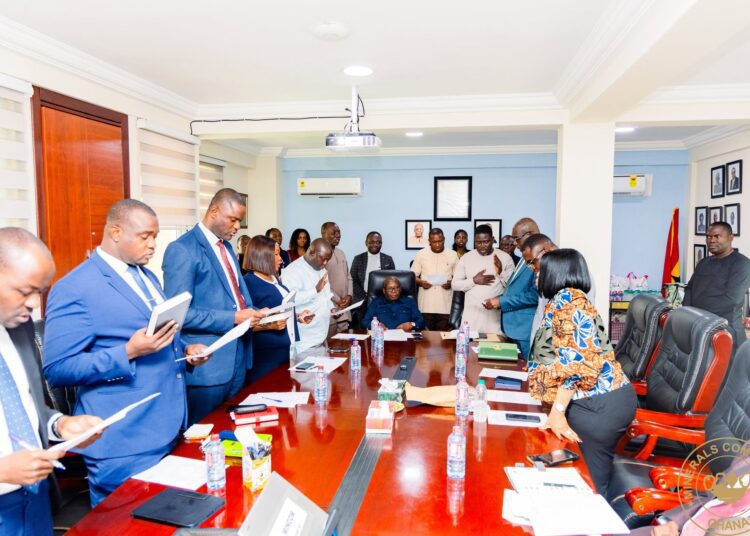
Minerals Commission has inaugurated a five-member reconstituted Audit Committee at its Head Office in Accra, a strategic move aimed at establishing rigorous statutory oversight and fostering institutional accountability within Ghana’s primary mining regulatory body.
This executive administrative transition aligns directly with the state’s rigid framework for corporate governance, ensuring that public resources are tightly managed.
The timely formation of this oversight body serves as a pivotal mechanism to guarantee seamless governance continuity and transparent institutional operations under strict legal mandates.
“The work of this Committee will be instrumental in providing assurance that operations, financial reporting and internal control systems meet both regulatory requirements and international best practice. As a state agency entrusted with the regulation and management of Ghana’s mineral resources, the Commission recognises the importance of maintaining the highest standards of transparency, integrity and accountability.”
Minerals Commission

This high-profile institutional reconstitution was meticulously conducted in absolute compliance with the explicit directives outlined in the Public Financial Management Act, 2016 (Act 921), which strictly mandates all statutory agencies to maintain an active, fully functional audit committee.
By operationalizing this specific committee, the Commission establishes a highly resilient internal structure designed to continuously evaluate compliance, manage corporate risks, and optimize procedural transparency across its departments.
The strategic assembly of these financial and legal experts provides the necessary technical backbone to scrutinize internal systems, ensuring that every operational facet aligns fully with domestic regulations and international standard benchmarks.
Legal Mandate and Institutional Alignment
The Internal Audit Agency’s Director-General, Mr. Thomas Ashaley Thompson-Aryee, formally administered the official Oath of Office and Oath of Secrecy to induct the committee members into their statutory roles.
He strongly urged the newly sworn-in committee to execute its sweeping statutory mandate with unwavering diligence, absolute objectivity, and a profound, permanent commitment to public accountability.
The rigorous induction process emphasizes the crucial legislative foundation of the committee, positioning it as an indispensable legally backed entity rather than a mere advisory panel.
The Board Chairman, Ambassador William Ntow Boahene, Esq., who closely oversaw the entire reconstitution process, pledged the Board’s unyielding operational support and warmly congratulated the newly appointed members on their selection.
He heavily tasked the team to continuously uphold the highest peaks of professionalism and ethical integrity in the day-to-day discharge of their crucial oversight duties.
This seamless institutional alignment between the executive board and the independent audit committee creates a united front focused on eliminating administrative lapses and ensuring that corporate policies are strictly implemented.
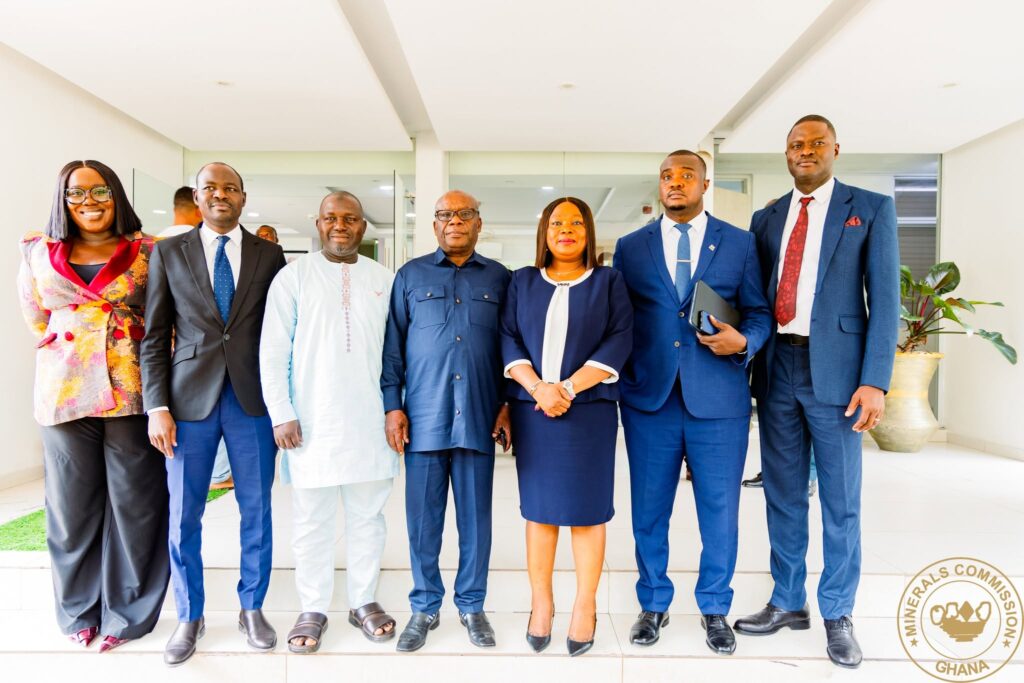
The strategically balanced committee features prominent figures, including Hon. Prof. Hamza Adam and Hon. Emelia Ankomah, Esq., both directly representing the Minerals Commission Board.
They are joined by Mr. Senanu K. Mensah and Mr. Patrick Nanke Vug, who represent the technical interests of the Internal Audit Agency, alongside Mr. Inusah Shirazu, representing the Institute of Chartered Accountants, Ghana. Additionally, Mrs. Fafanyo Kukubor Amegavi of the Minerals Commission will serve as the Secretary to the Committee, providing administrative coordination.
Upon his official appointment, the newly elected Chairman of the Committee, Mr. Senanu K. Mensah, expressed intense gratitude for the massive confidence reposed in him, assuring management of the committee’s total commitment to drastically strengthening supervisory frameworks and ensuring absolute compliance with Act 921.
Enhancing Accountability and Internal Controls
The newly established Audit Committee can fundamentally enhance the commission’s institutional accountability by creating an impenetrable line of defense against financial mismanagement and bureaucratic inefficiencies.
By executing regular risk assessments and comprehensive system audits, the committee will pinpoint administrative vulnerabilities before they manifest as systemic crises, thereby safeguarding valuable public funds from misapplication.
Their technical expertise allows for the objective appraisal of complex financial statements, ensuring that resource allocations are fully justifiable and entirely productive.
Furthermore, this committee is structurally positioned to bridge the historical gap between regulatory theory and practical operational enforcement within the energy and mining sectors.
Through the systematic tracking of internal and external audit recommendations, the members ensure that past operational errors are actively corrected rather than shelved.
This relentless follow-up mechanism instills a corporate culture of proactive rectification among management staff, knowing that independent specialists are monitoring performance metrics.
Consequently, the commission can maintain a spotless record of financial rectitude that withstands intense public and parliamentary scrutiny.
Sustaining Stakeholder Trust in Mining Governance
The long-term socio-economic impact of a highly independent audit committee extends deep into investor relations and international market reputation, as clean governance directly attracts premium global capital.
As Ghana’s mining sector continues to evolve rapidly, the presence of an uncompromising oversight body reassures foreign and local stakeholders that the country’s mineral wealth is managed under world-class ethical frameworks.
This foundational trust is absolutely vital for sustaining long-term investment portfolios, stabilizing revenue inflows, and solidifying Ghana’s prestigious position as a secure mining hub.
Ultimately, the committee’s work translates directly into enhanced public confidence, proving that state agencies can effectively govern themselves from within.
By prioritizing transparency in every single transaction and regulatory approval process, the committee actively shields the commission from reputational damage and political vulnerabilities.
The Board and Management remain deeply confident that the committee’s profound technical expertise and institutional independence will act as a major catalyst in driving institutional integrity and permanently sustaining stakeholder trust across the entire commodity value chain.
READ ALSO: Government Re-engages Contractor to Complete 500-Bed Afari Military Hospital Project