International Organization for Migration (IOM) has supported nearly 18 million people across the globe in 2025, responding to a year marked by unprecedented levels of displacement, worsening humanitarian emergencies and growing pressures on migration systems worldwide.
According to the organization’s newly released Annual Report, IOM reached 17.8 million people across 170 countries and territories during the year, delivering humanitarian assistance, health services, protection support and long-term recovery programmes despite mounting funding challenges and increasingly complex global crises.
At the heart of the report is a stark reminder of the scale of global displacement. By the end of 2025, an estimated 82.2 million people were internally displaced worldwide, representing one of the highest figures ever recorded. At the same time, more than 7,900 migrants lost their lives while attempting dangerous journeys along migration routes, highlighting the persistent risks faced by people seeking safety, opportunity or refuge.
Against this backdrop, IOM highlighted that it remained focused on three core objectives: saving lives and protecting people on the move, supporting durable solutions for displaced populations and expanding pathways for safe and regular migration.
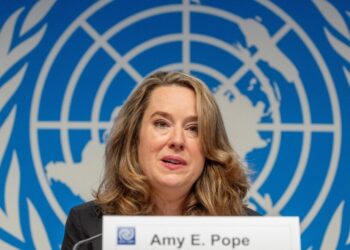
According to IOM Director General Amy Pope,“2025 was a year of immense challenges, but also of extraordinary resolve.”
“From helping families displaced by conflict and disaster to supporting communities rebuilding after crisis, IOM remained focused on delivering practical solutions for people on the move and the communities that host them.
“The results captured in this report demonstrate both the scale of today’s needs and what can be achieved when governments, partners and communities work together.”
Amy Pope
Moreover, the report highlights the growing complexity of displacement crises worldwide, with humanitarian needs continuing to rise even as aid organizations grapple with financial constraints.
Despite these challenges, IOM maintained operations across some of the world’s most difficult environments, providing emergency support, collecting critical displacement data and helping governments strengthen migration governance systems.
One of the most significant achievements highlighted in the report was the continued expansion of IOM’s Displacement Tracking Matrix (DTM), widely regarded as the world’s largest source of primary data on displacement and human mobility.
Operating in 76 countries during 2025, the DTM assessed approximately 166.3 million people and provided information that informed 95 percent of humanitarian needs assessments and response plans developed throughout the year. Humanitarian agencies increasingly rely on such data to identify vulnerable populations, allocate resources effectively and design emergency interventions.
Additionally, the report represents a significant institutional milestone for the company. In order to boost coordination efforts in displacement events worldwide, IOM joined the International Federation of Red Cross and Red Crescent Societies (IFRC) as global co-lead of the Shelter, Land, and Site Coordination Cluster in 2025.
IOM reached 7.3 million people in 88 countries and territories through its shelter and settlement programs, giving displaced families access to better living conditions, essential services, and chances to start over after a crisis.
The organization’s humanitarian efforts continued to be especially noticeable in nations ravaged by conflict, such as Sudan, where one of the biggest displacement crises in history is still ongoing.
As conflict and insecurity drove millions of people from their homes, IOM was the first UN organization to resume operations in Khartoum. The group then reached out to over 1.1 million people with humanitarian aid, resilience programs, and rehabilitation help, giving communities a lifeline as they struggled to cope with the effects of prolonged violence.
Health, Climate Resilience and Safe Migration Drive IOM’s Global Mission
Beyond emergency assistance, the report highlights the increasingly broad role migration plays in global development, public health and climate adaptation efforts.
Health services remained one of the organization’s largest operational priorities in 2025. IOM delivered more than 4.1 million health consultations in crisis settings, helping vulnerable populations access essential medical care in areas affected by conflict, displacement and humanitarian emergencies.
Mental health and psychosocial support programmes also expanded significantly, reaching approximately 1.5 million people across 99 countries. Humanitarian experts have increasingly emphasized the importance of mental health services for populations affected by displacement, conflict and disaster, particularly as prolonged crises continue to affect millions worldwide.
Moreover, Water, Sanitation and Hygiene (WASH) programmes reached more than 5.1 million people, while protection services supported over 1.5 million individuals in 64 countries. These interventions included efforts to safeguard vulnerable populations from exploitation, abuse and violence while ensuring access to critical services.
The report also points to growing progress in addressing one of the most challenging aspects of displacement: helping people find durable solutions.
As the founding head of the Solutions Champions Group, IOM collaborated closely with countries and UN partners to promote commitments under the UN Secretary-General’s Action Agenda on Internal Displacement. More than 16.8 million people benefited from these efforts, which provided them with avenues to rebuild stable and secure lives.
Climate change was also key in the organization’s activities. As extreme weather events and environmental pressures continue to contribute to displacement, the IOM has expanded resilience initiatives for almost one million people in 34 countries who are at risk of disaster-related displacement.
The organization also assisted governments in incorporating human mobility considerations into national catastrophe preparedness and response plans, reflecting a growing realisation that climate-related displacement is becoming a major global policy issue.
At the same time, IOM continued to promote safe and regular migration pathways. During 2025, the organization supported more than 147 governments in strengthening migration governance systems and assisted nearly 625,000 migrants in accessing labour and study opportunities through skills mobility partnerships.
Despite these achievements, the IOM warns that growing humanitarian needs continue to outpace available resources. To help address funding challenges, IOM launched its Resilience Campaign in 2025, securing support from 20 Member States, one federal state government and two private-sector partners.
With a global operating portfolio worth around USD 2.95 billion and a workforce of over 15,800 employees, IOM maintains that it remains committed to assisting people in moving securely, recovering from crises, and building more resilient futures.
READ ALSO: BoG Unveils Tough New Dud Cheque Sanctions