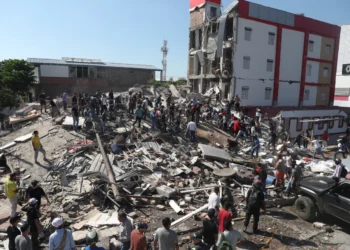
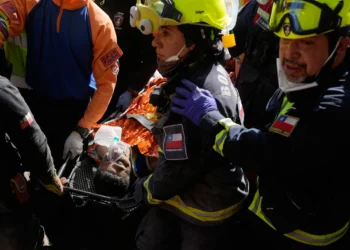
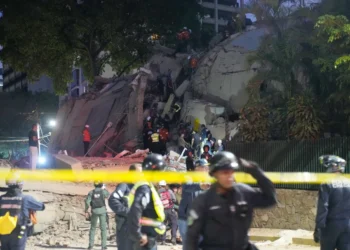
A strong aftershock jolted Venezuela early today following last week’s devastating twin earthquakes, as civilians and emergency responders kept combing through the ruins of fallen buildings for survivors.
According to the United States Geological Survey, the aftershock, which struck about 27 kilometers (17 miles) north of Caraballeda on Venezuela’s Caribbean coast at 7:01 a.m. local time, measured 4.6 on the Richter scale. Colombia’s geological survey put the magnitude at 5.1. Differences in magnitude estimates between monitoring agencies are common and reflect variations in measurement methods.
Jorge Rodríguez, the leader of the Venezuelan National Assembly, said there were no immediate reports of additional damage from the quake, which sent residents in the capital of Caracas screaming into the streets.
The aftershock also convulsed the hard-hit port city of La Guaira, where local and international rescue teams have been racing against time since the twin earthquakes struck the northern state five days ago.
The strongest impact of last week’s earthquakes was felt in La Guaira state, where numerous residential and commercial buildings collapsed. Caraballeda, one of the worst-hit communities, has remained the focus of rescue operations as emergency crews continue combing through debris in search of survivors.Rescue teams have been working around the clock despite increasingly difficult conditions. Heavy machinery, search dogs and specialized detection equipment are being used alongside manual efforts by volunteers who continue removing debris in hopes of locating people trapped beneath collapsed structures. International rescue personnel have also joined local emergency workers to strengthen the response.Authorities say the aftershock briefly interrupted rescue operations in some locations as workers paused to assess the stability of damaged buildings before resuming their search. Structural engineers have continued inspecting weakened buildings to reduce the risk of further collapses during ongoing recovery efforts.
The twin earthquakes triggered one of Venezuela’s largest disaster responses in recent years. Emergency shelters remain open for residents who lost their homes or whose buildings have been declared unsafe. Relief agencies have been distributing food, drinking water, medical supplies and temporary shelter materials to affected communities as recovery efforts continue.Hospitals in the affected region remain under pressure as they continue treating injured survivors. Medical personnel have worked extended shifts while additional healthcare workers and humanitarian organizations assist with emergency medical care and psychological support for displaced families.
The latest aftershock has renewed concerns among residents already traumatized by last week’s disaster. Many people remain reluctant to return to their homes, fearing additional tremors could further weaken already damaged buildings. Emergency officials have advised residents to avoid structures showing visible signs of damage until safety inspections are completed.
Seismologists note that aftershocks are a normal part of the earthquake cycle following major seismic events. While they are generally less powerful than the main earthquakes, they can still pose serious risks by destabilizing weakened buildings and triggering additional collapses.
The humanitarian response has expanded as international organizations coordinate with Venezuelan authorities to support relief operations. Aid efforts remain focused on providing emergency healthcare, shelter, clean water and essential supplies to communities hardest hit by the earthquakes.Despite the challenges, rescue teams continue searching for survivors, with authorities emphasizing that every effort is being made to locate those still trapped beneath the rubble. Officials acknowledged that the passage of time makes rescue operations increasingly difficult but said search efforts will continue as long as there remains a possibility of finding survivors.
1450 People Dead From Twin Earthquakes
The government reported 1,450 dead from the quakes as it faces growing criticism from Venezuelans that its response is inadequate and overshadowed by civilian-led efforts to rescue people buried under collapsed buildings.
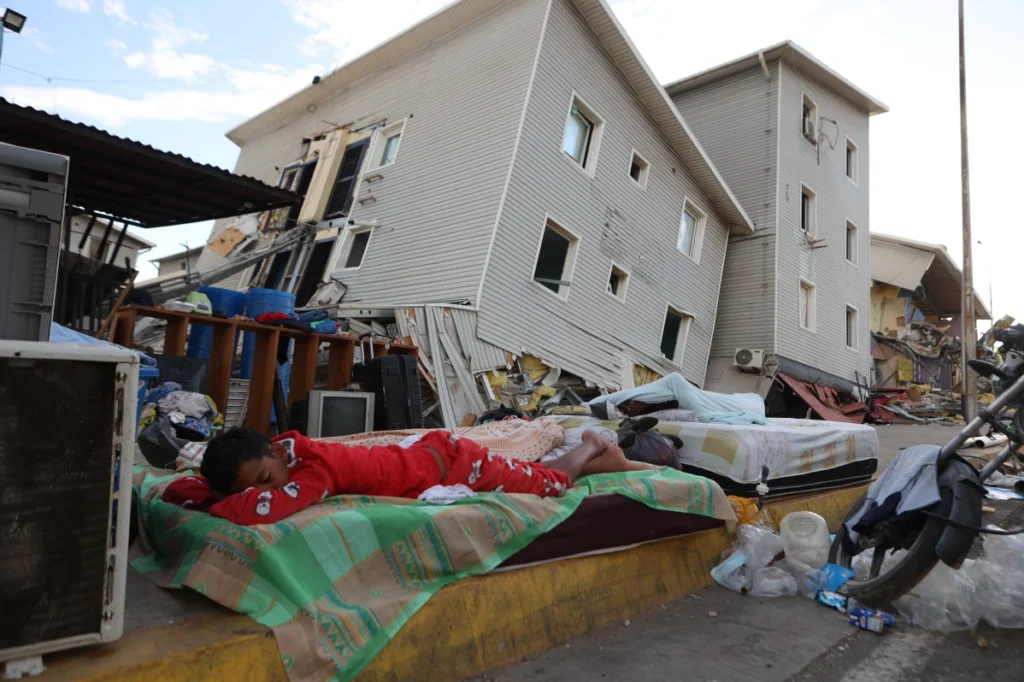
Thousands more have been reported missing. Even as the likelihood of finding people alive diminished with each passing hour, rescuers continued to free some survivors from debris, offering anguished families a sliver of hope. The first 48 to 72 hours after a natural disaster are crucial to rescue efforts, though survival can be extended if people have access to food and water.
Venezuela’s acting President Delcy Rodríguez said late Sunday that even as the time threshold passed, the search for survivors would continue. The government said that more than 2,600 rescue workers from around the world had arrived with trained search dogs and machinery.
The earthquakes and subsequent aftershocks have highlighted the vulnerability of densely populated urban areas to seismic hazards and underscored the importance of disaster preparedness and resilient infrastructure. Engineers are continuing damage assessments while authorities evaluate the safety of public buildings, schools and transportation infrastructure.
As Venezuela enters another day of rescue and recovery operations, the latest aftershock serves as a reminder that the danger has not completely passed. Emergency officials continue monitoring seismic activity while urging residents to follow official safety guidance and remain prepared for additional tremors in the coming days.
READ ALSO: Chamber of Mines Demands Allocation of 30% of Mineral Royalties to Mining Communities