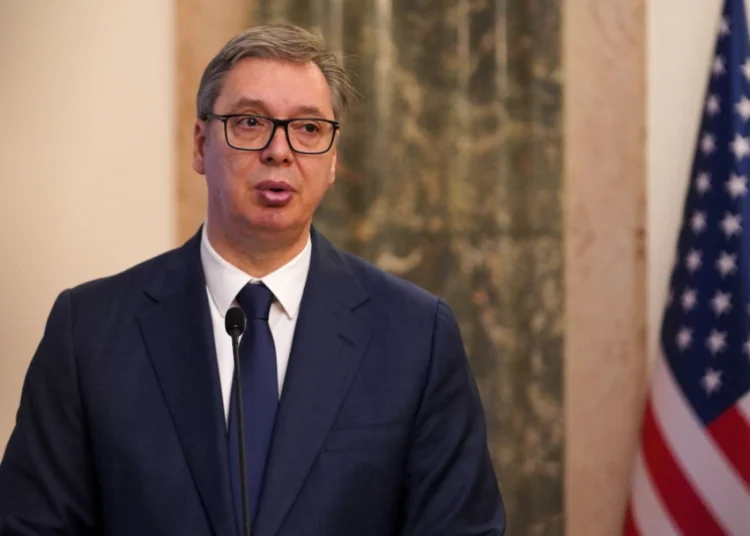
Serbia’s populist President, Aleksandar Vucic has announced that early general elections in the country will be held in the next three to four months.
He reiterated that he will resign the presidential post ahead of the vote. “Yes, it is logical that we will have elections soon, and when I say soon I mean the next three-four months,” Vucic said.
Vucic offered no exact dates. At a rally Saturday, he told supporters that it was likely the last time he would address them as President and said he will step down within weeks. “I will be President for several weeks more and then I will submit my resignation,” Vucic told thousands of his supporters in downtown Belgrade. He said that he will help his right-wing Serbian Progressive Party at upcoming elections.
Although Vucic did not specify an exact election date, he indicated that preparations would begin soon to ensure the vote is conducted within the announced timeframe.
The decision to call early elections comes as Serbia continues to face political polarization, economic challenges and ongoing debates over governance and democratic reforms. The country has also experienced periods of anti-government demonstrations, with opposition parties and civil society groups demanding greater institutional accountability and electoral transparency.
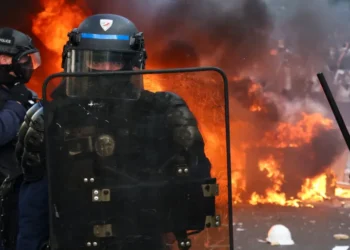
Vucic has faced more than a year of mass street protests that first started in response to a train station tragedy in Serbia’s north which killed 16 people. A youth-led movement demanding accountability for the station canopy collapse has shaken Vucic’s firm grip on power more than ever in the past.
Before he became President in 2017, Vucic had previously already served as Prime minister. The populist leader has gradually tightened his rule since his right-wing SNS party came to power in 2012. He has pushed back aggressively against the protesters, and has faced European Union criticism over Serbia’s democratic backsliding, including a media clampdown.
Hundreds of people have been detained while protesters and international human rights groups have accused Serbian police of using excessive force and carrying out arbitrary arrests. Anti-government protesters have blamed the fall of a concrete canopy at the Novi Sad railway station on alleged corruption-fueled negligence in big state infrastructure projects.
Political analysts say the announcement could reshape Serbia’s political landscape by opening a new phase of campaigning among both the ruling coalition and opposition parties. The coming months are expected to see increased political activity as parties prepare to present their policy platforms and mobilize supporters ahead of the vote.Serbia’s electoral authorities are expected to announce the formal timetable for the elections once legal procedures have been completed. Political parties will then begin submitting candidate lists and organizing nationwide campaigns.
The elections are expected to be closely watched both domestically and internationally. Serbia remains an important country in the Western Balkans and is seeking membership in the European Union while maintaining relations with other global partners. International observers have consistently monitored Serbian elections, with recommendations aimed at strengthening transparency, media pluralism and public confidence in the electoral process.
The outcome of the vote could influence Serbia’s domestic reforms as well as its foreign policy priorities, including its European integration process, regional cooperation and economic development agenda.
A Move To Allow Vucic To Become Serbia’s Prime Minister
The move is widely seen as a political maneuver that would allow Vucic to become Prime Minister, formally the most powerful office in the country. Vucic is serving his second presidential term and is barred from running again.
He added that he is yet to decide whether to seek the Prime Minister’s post if his Serbian Progressive Party, SNS, wins the future parliamentary vote. “Whatever I decide and whatever decision I make, it will be transparent, just like I have done by announcing my resignation,” he said, adding that he could step down any time in July, August or September. “It will be no surprise,” he said.
Once Vucic formally resigns, the presidential ballot must be held within the next 90 days. Regular presidential and parliamentary elections in Serbia are due next year.
READ ALSO: Chamber of Mines Demands Allocation of 30% of Mineral Royalties to Mining Communities