The Minority in Parliament has urged the Minister for Health to urgently appear before the House to brief lawmakers on the government’s preparedness to prevent disease outbreaks following widespread flooding across the country.
Beyond concerns over the distribution of relief funds, the caucus warned that Ghana is now facing an emerging public health threat as stagnant floodwaters continue to expose communities to dangerous diseases.
Minority Leader Alexander Afenyo-Markin said the scale of flooding has created conditions that could easily trigger outbreaks if immediate preventive action is not taken.
“Flooding on this scale is now creating a public health emergency. It carries serious public health implications that cannot be left unaddressed.”
Minority Group in Parliament
Flood Conditions Creating Disease Hotspots
The Minority explained that stagnant floodwaters, combined with uncollected refuse and overflowing drainage systems, have created an environment where communicable diseases can spread rapidly.
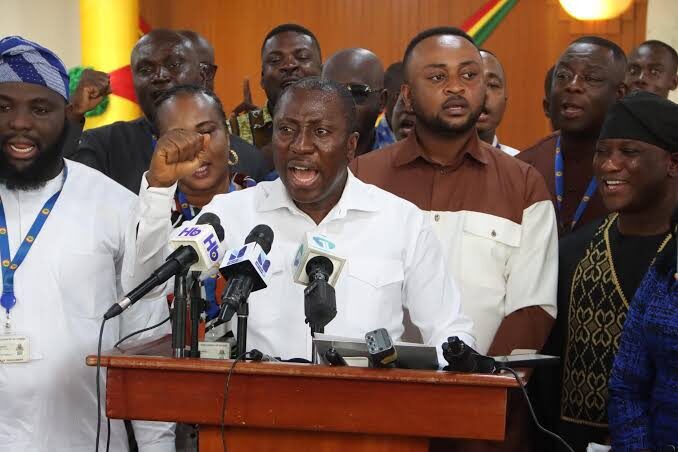
According to Mr. Afenyo-Markin, residents in flood affected communities are now at heightened risk of illnesses such as cholera, typhoid and other water borne and vector borne diseases.
“Stagnant floodwaters mixed with uncollected refuse and overflowing sanitation facilities create conditions for communicable diseases, including cholera, typhoid and other water borne and vector borne illnesses.”
Minority Group in Parliament
The caucus noted that poor sanitation in submerged communities is worsening the risk profile, especially where clean water sources have been compromised and waste disposal systems disrupted.
Parliamentary Concern and Prior Warnings
The Minority disclosed that Nana Ayew Afriyie had already raised the issue on the floor of Parliament, urging government to take immediate preventive measures before the situation escalates into a full blown outbreak.
They stressed that early intervention is critical, particularly in densely populated flood affected areas where access to healthcare and sanitation services has been disrupted.
Demand for Urgent Health Minister Briefing
The caucus is therefore demanding that the Minister for Health appear before Parliament without delay to provide a comprehensive update on government’s response to the emerging health risks.
According to the Minority, the briefing must outline the specific steps being taken to monitor affected communities, prevent disease outbreaks, and safeguard public health nationwide.
They also want clarity on emergency sanitation interventions, provision of clean drinking water, and the deployment of disease surveillance and rapid response teams.
“The Minority is therefore calling for an urgent and substantive briefing to this House by the Minister for Health, outlining the precise steps and measures being taken to monitor affected communities and individuals across Ghana.”
Mr. Afenyo-Markin
The caucus emphasized that Parliament cannot afford delays in receiving such a briefing, warning that slow action could lead to avoidable and widespread health crises.
Focus on Emergency Sanitation and Disease Control
Beyond the ministerial briefing, the Minority is calling for detailed information on ongoing public health interventions in flood affected areas.
They want government to clarify how it is managing sanitation challenges, particularly in communities where waste systems have collapsed or become inaccessible due to flooding.
The caucus is also seeking information on access to potable water, public health education campaigns, and emergency medical response capacity deployed to vulnerable communities.

According to them, these measures are essential to reduce exposure and prevent the spread of infectious diseases during and after flooding events.
Long Term Flood and Health Prevention Measures
Minority Leader Afenyo-Markin also urged government to move beyond emergency response and invest in long term flood prevention and environmental health strategies.
He called for improvements in drainage infrastructure, stronger waste management systems, and stricter enforcement of physical planning regulations to reduce the recurrence of flooding and associated health risks.
He further emphasized the need to expand flood mitigation projects nationwide, arguing that recurring seasonal floods require structural solutions rather than temporary responses.
Commitment to Oversight and Accountability
The Minority reaffirmed its support for efforts aimed at assisting flood victims but maintained that transparency and accountability must remain central to government’s response.
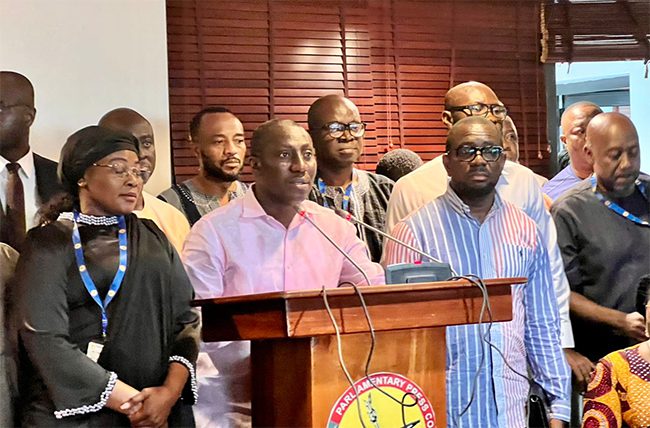
It pledged to continue exercising its parliamentary oversight role to ensure that public funds allocated for disaster response are used effectively and reach intended beneficiaries.
The caucus stressed that every cedi spent must translate into real protection and relief for affected communities.
Urgency Amid Expanding Risk
With thousands of residents displaced, sanitation systems disrupted and livelihoods affected by recent floods, the Minority warned that the situation now carries serious public health implications.
It said the effectiveness of government’s response will depend not only on relief efforts but also on how quickly health risks are identified, managed and contained.
The Minority maintained that an urgent briefing from the Health Minister is essential to reassure Parliament and the public that adequate safeguards are in place to prevent a nationwide disease outbreak.
READ MORE: Mahama Calls for Moral Reset to Build Better Ghana