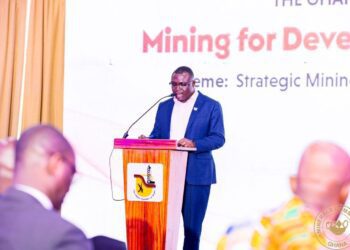
Dr. Theo Acheampong, Technical Advisor to the Ministry of Finance, has revealed that the government is aggressively pursuing a strategic shift from merely taxing resource extraction to actively retaining wealth within the domestic economy by targeting new mineral revenue streams.
This fresh economic paradigm signals an intentional departure from traditional reliance on raw exports toward an integrated blueprint that emphasizes deep, localized processing of resources.
By re-engineering the fiscal and industrial frameworks governing extractive sectors like gold and manganese, the Ministry intends to tap into previously neglected revenue nodes, ensuring that a higher percentage of the mineral wealth remains inside the country to support the broader national economy.
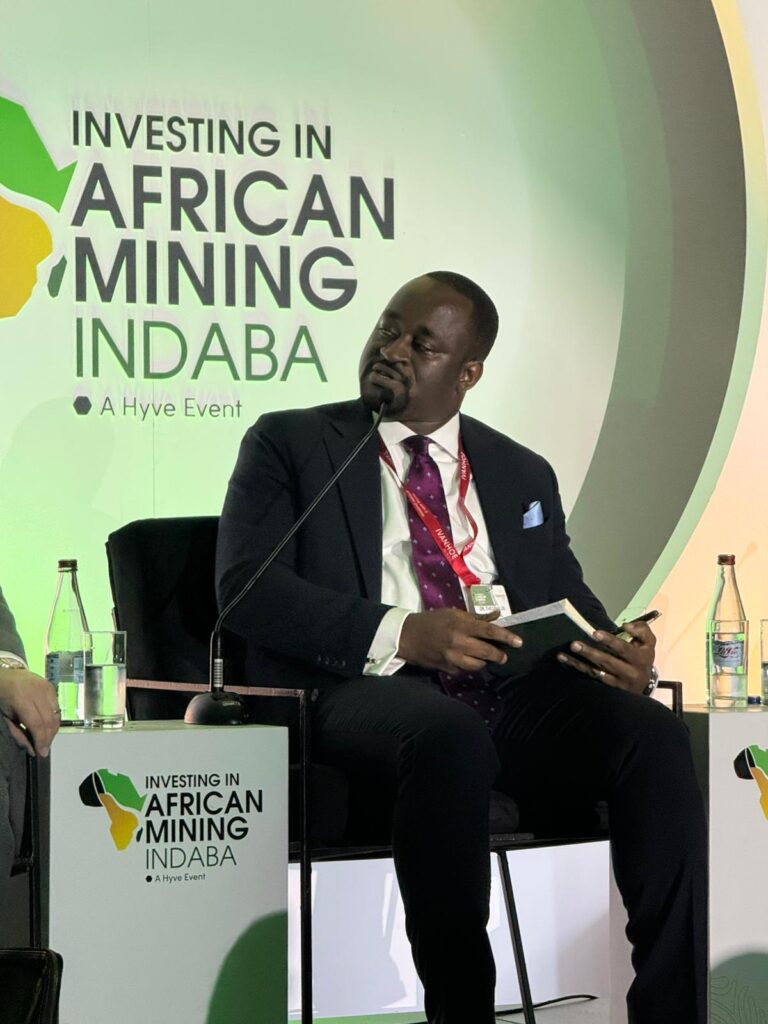
“But I think what is also clear to us is that the conversation goes beyond just revenue. The conversation is also a conversation about, and you’ve captured it very well, value retention and how you could do or leverage your sector to be able to get more or retain more of the value. This is where two things are important, your fiscal policy tools and, of course, also your industrial policy tools.”
Dr. Theo Acheampong, Technical Advisor to the Ministry of Finance

The Ministry intends to integrate both fiscal policy mechanisms and targeted industrial policy tools to balance the attraction of crucial investment with aggressive state-led value maximization.
The government recognizes that optimizing returns requires deploying advanced mechanisms, such as price-based royalties, corporate income taxes, and carefully structured windfall tools, to capture surplus earnings during commodity upswings while maintaining competitive incentives for both local and international producers.
Crucially, this policy framework marks a move away from looking at resource governance as a simple upstream collection exercise, focusing instead on building concrete operational links between mining concessions, processing institutions, and institutional off-taker frameworks like the state’s central purchasing agencies.
Navigating the Fair Share and Investment Dilemma
Achieving a sustainable equilibrium between state revenue maximization and private capital attraction remains a central challenge within contemporary extractive industry literature.
Dr. Acheampong pointed out that “there’s a lot of debate around what is fair, relative to what the investor is getting, and of course, what the government is also getting, right, at the end of the day.”

To address this, the government’s approach prioritizes economic productivity over the origin of capital, considering whether investment is “foreign or it is local” to be “actually immaterial” as long as it actively flows into the extractive sectors.
The ultimate policy goal focuses squarely on providing optimal operational security and the “right incentives to be able to produce that gold or manganese” without eroding the state’s sovereign right to collect its justifiable share of resource wealth.
Expanding Midstream and Downstream Integration
The Ministry’s strategic blueprint emphasizes that true wealth transformation cannot occur solely at the point of extraction, forcing a deliberate policy expansion into the midstream and downstream segments of the commodity value chain.
Government technical advisors emphasize that value retention must be visible “across all strands of the value chain,” pushing the state’s economic focus far beyond “just really on the upstream side of the industry.”
This structural transition involves linking raw mining operations directly with domestic industrial processing plants, transforming raw gold and manganese into high-value, market-ready refined products before they leave national borders.
Central to this midstream transformation is the active operational synergy being forged with key institutional bodies, most notably the state Gold Board and specialized processing facilities.
Collaborative programs are being fast-tracked to expand domestic processing capacity, enabling the state to “capture more” of the market value through systematic certification and purification processes.
Long-Term Economic Benefits of Value Retention
If successfully realized, this ambitious resource management shift could fundamentally reshape the country’s macroeconomic profile by creating deep, structural economic buffers.
Moving away from raw exports toward refined mineral products directly addresses the persistent problem of low-value raw material export dependency, significantly stabilizing foreign exchange earnings and strengthening the national currency against external shocks.

Furthermore, keeping the processing and refining stages within the country acts as a powerful industrial catalyst, driving substantial job creation for domestic engineers, technicians, and logistics experts, while stimulating localized supply chains.
Beyond stabilizing the currency, the fiscal returns generated from high-value midstream and downstream activities provide the state with sustainable, non-debt-creating capital to fund critical public infrastructure.
The premium revenues secured from certified, locally refined metals can be directly funneled into building durable transport networks, expanding stable energy grids, and funding strategic developmental projects.
Ultimately, by mastering the dual leverage of flexible fiscal policy tools and targeted industrial policy tools, the state positions itself to convert finite underground natural wealth into lasting, diversified socioeconomic development for the entire population.
READ ALSO: GAF Clears Half of Accra-Kumasi Expressway Corridor, Targets 13-Week Completion