• About
  • Advertise
  • Privacy Policy
  • Contact
Tuesday, June 9, 2026
  • Login
The Vaultz News
  • Top Stories
  • News
    • General News
    • Education
    • Health
    • Opinions
  • Economics
    • Economy
    • Finance
      • Banking
      • Insurance
      • Pension
    • Securities/Markets
  • Business
    • Agribusiness
    • Vaultz Business
    • Extractives/Energy
    • Real Estate
  • World
    • Africa
    • America
    • Europe
    • UK
    • USA
    • Asia
    • Around the Globe
  • Innovation
    • Technology
    • Wheels
  • Entertainment
  • 20MOBPL2DNew
  • Jobs & Scholarships
    • Job Vacancies
    • Scholarships
No Result
View All Result
The Vaultz News
  • Top Stories
  • News
    • General News
    • Education
    • Health
    • Opinions
  • Economics
    • Economy
    • Finance
      • Banking
      • Insurance
      • Pension
    • Securities/Markets
  • Business
    • Agribusiness
    • Vaultz Business
    • Extractives/Energy
    • Real Estate
  • World
    • Africa
    • America
    • Europe
    • UK
    • USA
    • Asia
    • Around the Globe
  • Innovation
    • Technology
    • Wheels
  • Entertainment
  • 20MOBPL2DNew
  • Jobs & Scholarships
    • Job Vacancies
    • Scholarships
No Result
View All Result
The Vaultz News
No Result
View All Result
in Science, Sub Top Stories, Sub Top Stories2

Less than 30% of female researchers in Ghana, increased investments needed- UNESCO

Maynard Championby Maynard Champion
June 19, 2021
Reading Time: 3 mins read
Less than 30% of female researchers in Ghana, increased investments needed- UNESCO

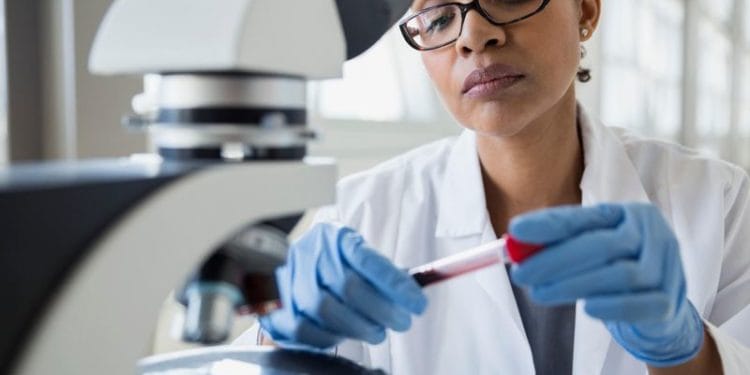
Image credit: Hero Images/Corbis

The share of female researchers as a percentage of total researchers in Ghana lies below 30 percent (26.1%), and also below the global average of 33.8 percent. As a result, more increased investments in the field of science alongside efforts towards bridging the gender gap are required, according to a new report by UNESCO.

 A more disaggregated analysis of the density of females in research fields in the country shows that, only 9.3 percent of women are into Natural sciences, 6.8 percent in Engineering and technology fields, 11.2 percent in health and welfare,  24.7 percent in Agricultural sciences, and 40.8 percent in Social sciences and humanities.

Evidently, this shows how overrepresented women are in the last category, and this trajectory has been followed through for years. Gender parity has been reached in the humanities, social sciences and arts but largely different from those in the other fields as aforementioned.

Only a few countries have reached gender parity in the field of engineering and technology. According to the report, Kuwait, Malaysia, Azerbaijan, Myanmar have achieved gender parity in engineering and technology.

ADVERTISEMENT
Increase in investments needed globally

Globally, the report indicates that spending on science increased by 19% worldwide between 2014 and 2018. The number of scientists grew by 13.7% to 8.8 million and spending has been further increased by the response to the COVID-19 pandemic.

However, the 2014-2018 figure masks huge inequalities in that growth, with the United States and China between them accounting for nearly two-thirds of the increase, the UNESCO report indicates.

Meanwhile, the G20 still accounts for more than 90 percent of research expenditure, researchers, publications and patents.

Still, about 80 percent of countries still devote less than 1% of gross domestic product (GDP) to research, prolonging their dependence on foreign technologies.

Audrey Azoulay, director-general of UNESCO, indicated that the science landscape had become a landscape of the powerful. Furthermore, she warned that Sub-Saharan Africa, with only 0.5% of its GDP devoted to scientific research, is going to be left behind.

Meanwhile, this compares with 2.73% in North America and 2.13% in East and Southeast Asia. “We must invest more and invest better,” she indicated.

“Science must become less unequal, more co-operative and more open. Today’s challenges, such as climate change, biodiversity loss, decline of ocean health and pandemics are all global. This is why we must mobilise scientists and researchers from all over the world,” she noted.

More than 30 countries raise spending

More than thirty countries have raised their research spending since 2014, in line with their commitment to the Sustainable Development Goals.

Some governments are seeking to improve the status of researchers through pay rises and other means.

“The global researcher population has surged since 2014. The COVID-19 pandemic has energised knowledge production systems,” the report reveals.

ADVERTISEMENT

“This dynamic builds on the trend towards greater international scientific collaboration, which bodes well for tackling this and other global challenges such as climate change and biodiversity loss.”

READ ALSO: Gov’t spends GH¢65.2 m on SDG 12 in 2020

Sign Up to Our Newsletter

Fresh updates, Straight to your inbox

Tags: analysisengineeringresearchersscienceUNESCO
Share3Tweet2Share1SendSend
Please login to join discussion
Previous Post

Gov’t spends GH¢65.2 m on SDG 12 in 2020

Next Post

Current Tax Regime to Blame for VAT Underperformance – Seth Terkper

Related Posts

President John Dramani Mahama, with Belarus’s President Alexander Lukashenko
Vaultz Business

Ghana’s $114 Billion Economic Turnaround Anchors Alliances at Minsk Business Forum

June 8, 2026
Mahama @Belarus
General News

Mahama, Lukashenko Seal Three Landmark Agreements to Boost Ghana-Belarus Ties

June 8, 2026
Mr. Simon Madjie, GIPC CEO
Vaultz Business

GIPC Boss Pitches Ghana as Access to Africa’s $16 Trillion Market at Belarus Business Forum

June 8, 2026
Gold
Extractives/Energy

ASM Overtakes Large-Scale Gold Producers as Gold Production Climbs to 5.94mn Ounces

June 8, 2026

Sign Up to Our Newsletter

Fresh updates, Straight to your inbox

Recent News

Sean "Diddy" Combs, American former rapper, record producer, record executive, and actor

Diddy Hit with New Lawsuit Alleging Sexual Assault of Minor Child Actor

June 9, 2026
Dr. Afisah Zakariah, Chief Director of MoFAD, and Stakeholders, at the Closure Workshop for the Fish for Development (FFD) Programme

Ghana and Norway Conclude Seven-Year ‘Fish for Development’ Programme

June 9, 2026
Ukrainian Parliament Approves Law To Allow Multiple Citizenship

Zelenskyy, Karis Seek Cheaper Ways to Counter Drones

June 9, 2026
Chief Executive of the NHIA, Dr. Victor Asare Bampoe

NHIA Disburses GH¢113 Million Claims to Healthcare Providers

June 9, 2026
Stanbic Bank Ghana Spearheads Dialogue on Workplace Inclusion

Stanbic Flags Major Threats to Mining Finance

June 9, 2026
Next Post
Next Government to Face Hefty Debt Burden, Warns Former Finance Minister Terkper

Current Tax Regime to Blame for VAT Underperformance – Seth Terkper

The Vaultz News

Copyright © 2025 The Vaultz News. All rights reserved.

Navigate Site

  • About
  • Advertise
  • Privacy Policy
  • Contact

Follow Us

Welcome Back!

Login to your account below

Forgotten Password?

Retrieve your password

Please enter your username or email address to reset your password.

Log In
No Result
View All Result
  • Top Stories
  • News
    • General News
    • Education
    • Health
    • Opinions
  • Economics
    • Economy
    • Finance
      • Banking
      • Insurance
      • Pension
    • Securities/Markets
  • Business
    • Agribusiness
    • Vaultz Business
    • Extractives/Energy
    • Real Estate
  • World
    • Africa
    • America
    • Europe
    • UK
    • USA
    • Asia
    • Around the Globe
  • Innovation
    • Technology
    • Wheels
  • Entertainment
  • 20MOBPL2D
  • Jobs & Scholarships
    • Job Vacancies
    • Scholarships

Copyright © 2025 The Vaultz News. All rights reserved.

This website uses cookies. By continuing to use this website you are giving consent to cookies being used. Visit our Privacy and Cookie Policy.

Discover the Details behind the story

Get an in-depth analysis of the news from our top editors

Enter your email address