The Flood Mitigation Task Force has begun operations with a series of site visits to identified water retention ponds and affected communities, marking the start of what officials describe as a major demolition exercise targeting structures that have encroached on Ghana’s natural drainage systems.
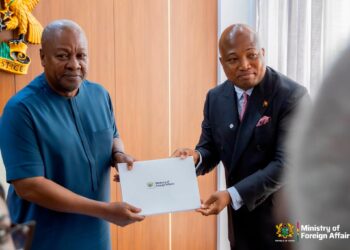
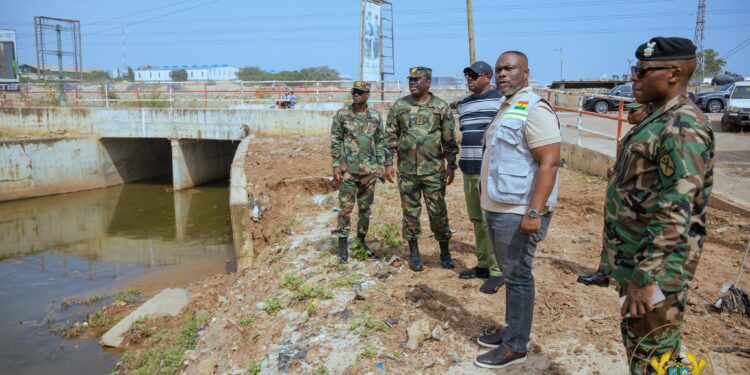
Brigadier General Forster Okae Yeboah, Coordinator of the Task Force, led the inspection team through several critical sites across the Accra region.
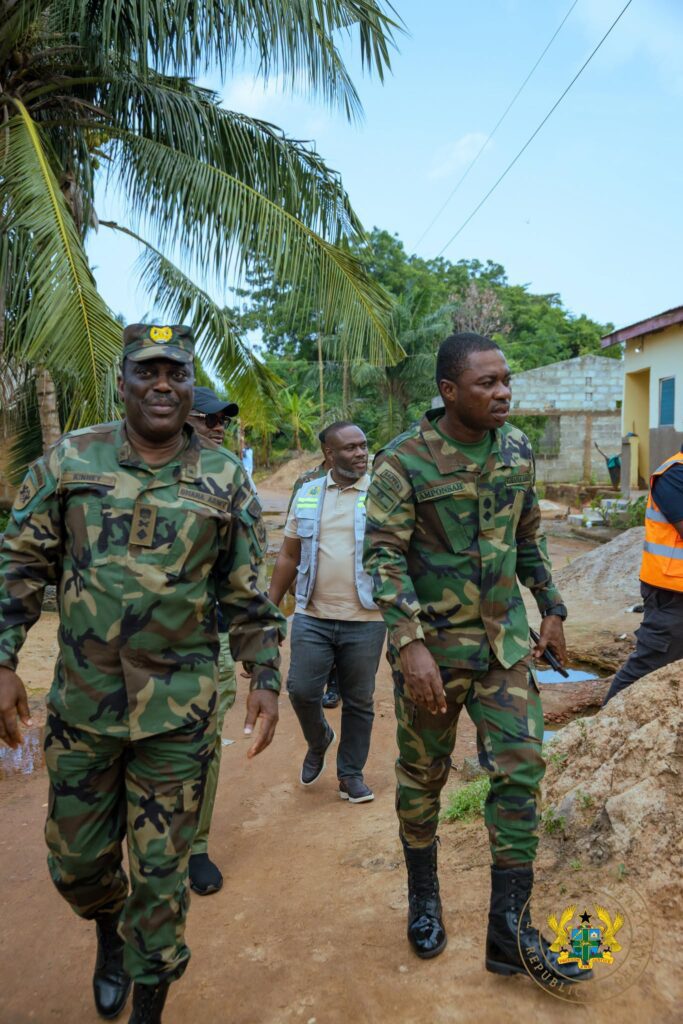
Brigadier General Okae Yeboah was accompanied by Deputy Chief of Staff for Operations Stanislav Dogbe, Minister for Water Resources, Works and Housing Kenneth Adjei, and 15 Engineer Brigade Commander Brigadier General Richard Kinney.
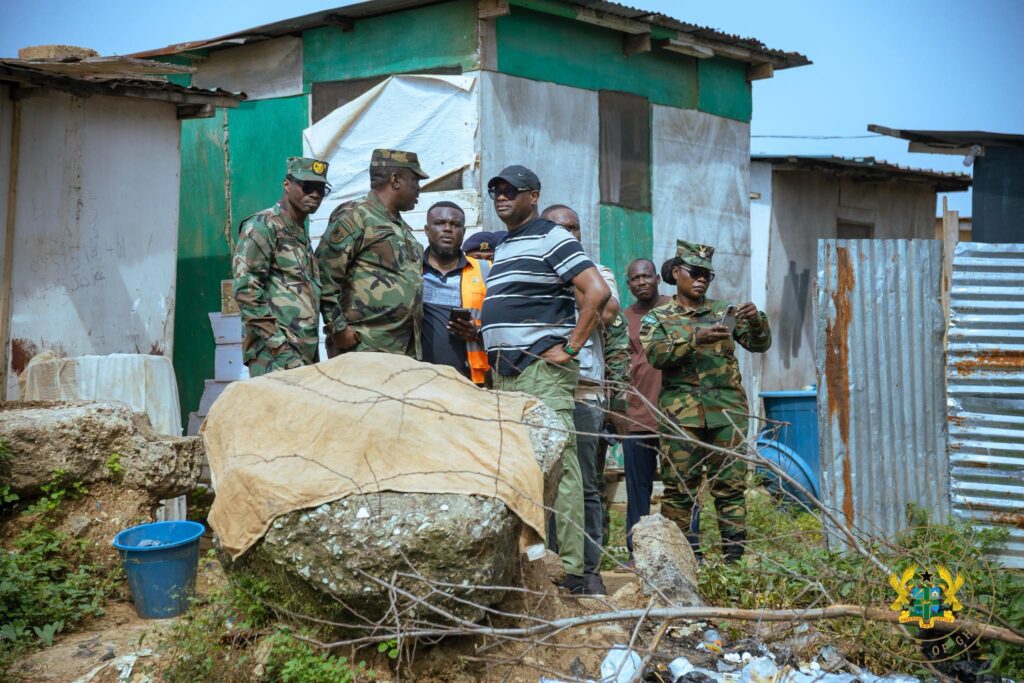
Together, the team visited the Tesa Dam near East Legon Boundary Road, along with the communities of Damfa, Amrahia, and Oyarifa, assessing the scale of encroachment firsthand.
Tesa Dam Shows Signs of Severe Encroachment
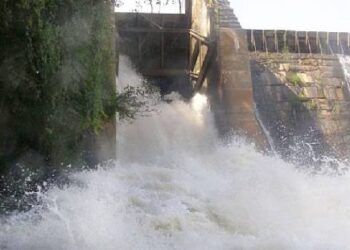
At the Tesa Dam, located adjacent to Boundary Road, the inspection team found that the size of the dam has been significantly reduced due to encroachment. Individuals have constructed illegal retention walls within the dam area, structures that the Task Force has now marked for demolition.
The findings at Tesa Dam reflect a broader pattern the team encountered throughout the day, one in which private construction has steadily eaten into land meant to hold and manage rainwater runoff.
Damfa Pond Loses Capacity to Hold Rainwater
At Damfa, the team observed that a retention pond had been heavily encroached upon, significantly reducing its size and its capacity to hold rainwater flowing down from the Aburi Hills.
An official from the GARID Project briefed the Task Force on the situation, outlining the specific challenges the encroachment has created for water management in the area.
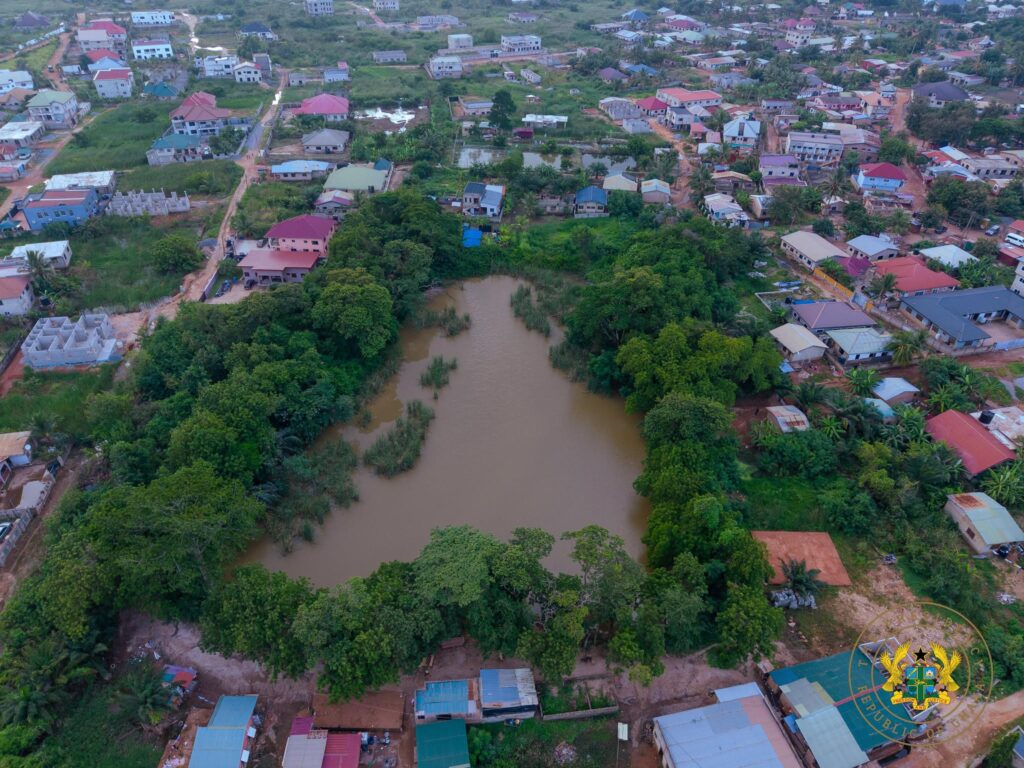
The briefing gave the visiting officials direct insight into how construction around the pond has compromised its original function, leaving the surrounding area more vulnerable to flooding whenever heavy rains occur.
Kpeshie Lagoon Dredging Continues
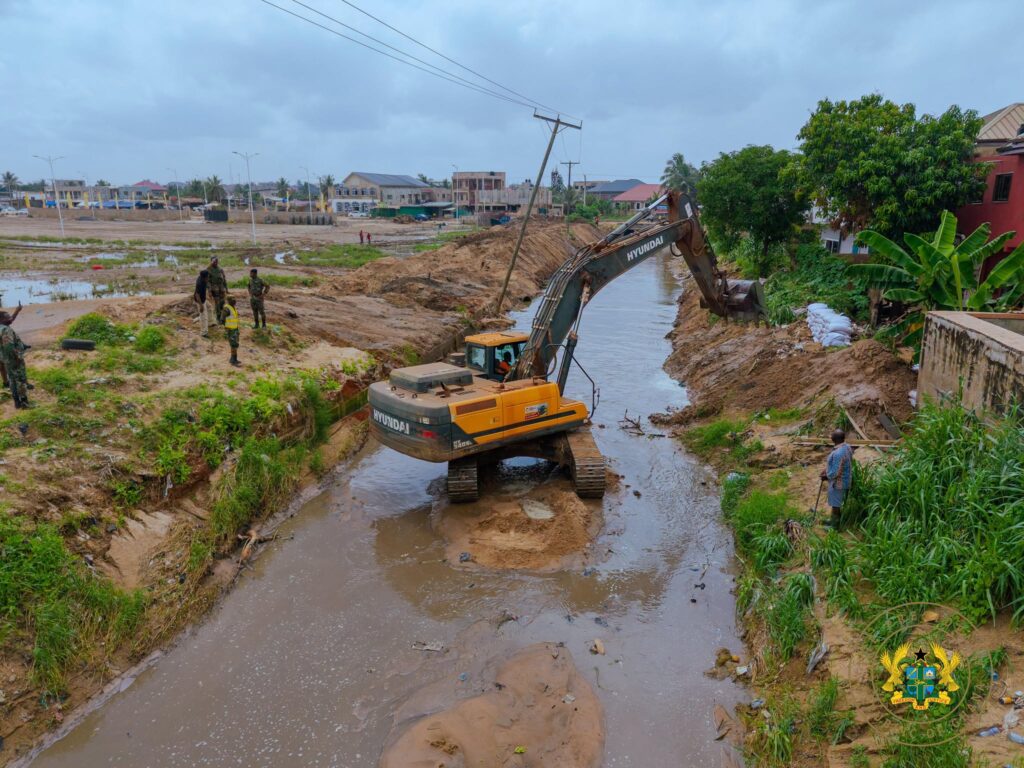
The team also visited the Kpeshie Lagoon, where the 48 Engineer Regiment is continuing dredging works as part of the broader flood mitigation effort. From there, the inspection moved to a major storm drain along Teshie Bush Road near the ICGC Temple East in Accra, where officials examined the condition of the drainage infrastructure.
These stops formed part of a wider effort to assess how well existing waterways and drains can handle stormwater across the capital, and where further intervention is needed.
Operation Backed by Military Equipment and Manpower
The inspection forms part of the government’s post-flood mitigation measures, following a directive for the Ghana Armed Forces to lead the exercise.
In support of the operation, the unit has taken delivery of excavators and tipper trucks to carry out the ongoing works, equipping the team with the machinery needed for demolition and clearance activities across multiple sites.
Officials indicated that the post-flood mitigation measures may also include the demolition of structures that pose a danger to lives and property following the recent floods, signaling that the operation extends beyond drainage repair into direct action against unsafe buildings.
Slum Settlement Near Dam Raises Health Concerns
During the visit, the team identified a densely populated slum settlement near the dam, comprising largely wooden structures. The settlement was found to pose serious health and sanitation concerns, adding a public health dimension to the flooding risks already present in the area.
Following the assessment, the affected areas have been earmarked for demolition as part of efforts to restore the dam’s capacity and mitigate future flooding risks, according to the Task Force.
Oyarifa Diversion Wall Sparks New Concerns
In a suburb of Oyarifa known as New York, the inspection team encountered a particularly concerning development. A retention wall was being constructed to divert the natural flow of water uphill, an intervention that has resulted in flooding in areas that were previously not affected.
This discovery raised fresh concerns among officials about the broader impact of unauthorised alterations to natural waterways, illustrating how localized construction decisions can shift flooding risk onto communities that had no history of such problems.
A Widening Effort to Restore Natural Drainage
Taken together, the day’s inspections revealed a consistent pattern across multiple communities, encroachment on dams, ponds, and waterways that has steadily reduced their capacity to manage rainwater safely.
With demolition equipment already delivered and key sites marked for clearance, the Flood Mitigation Task Force appears positioned to move from assessment into active operations in the coming weeks.
For residents in Tesa, Damfa, Oyarifa, and surrounding areas, the outcome of this operation will likely determine whether the coming rainy seasons bring renewed flooding or mark the start of a more resilient drainage system across the region.
READ ALSO: Bear Is Back: Global Oil Market Turns Bearish as OPEC+ Unwinds Cuts and Hormuz Stabilises