
Ghana’s shift towards renewable energy and electric mobility is increasingly highlighting a challenge that extends beyond infrastructure and investment, the need for a skilled workforce capable of designing, installing and maintaining emerging energy technologies.
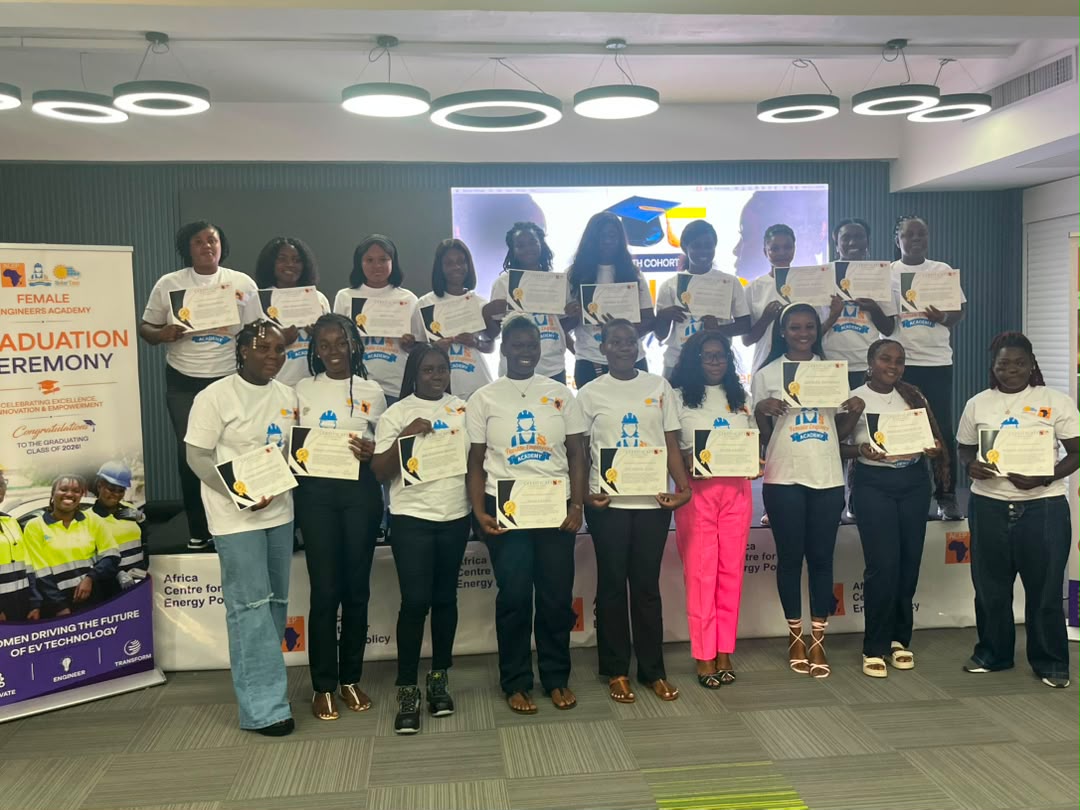
In response, the Africa Centre for Energy Policy (ACEP), in partnership with Solar Taxi Ghana, according to norvan reports, has graduated the country’s first all-female cohort under the Female Engineering Academy, marking what industry players describe as an important step towards building local technical capacity for the green economy.
Bridging the skills gap in Ghana’s energy transition
The programme, implemented under the Green Energy Technology Capacity Development Programme (GET-CADEP) with support from the Ford Foundation, trained 30 young women in practical renewable energy and electric mobility technologies, including solar photovoltaic installation, solar system assembly, electric vehicle (EV) maintenance and diagnostics.
Unlike many technical programmes that remain largely classroom-based, participants also underwent industry internships with Solar Taxi Ghana, giving them direct exposure to real operational environments.
The initiative comes at a time when Ghana is pursuing an ambitious energy transition agenda centred on expanding renewable energy, improving energy efficiency and encouraging electric mobility to diversify the country’s energy mix and reduce emissions.
While government policies increasingly focus on cleaner sources of energy, experts argue that the success of those policies will ultimately depend on whether enough skilled professionals are available to install, maintain and operate the technologies entering the market.
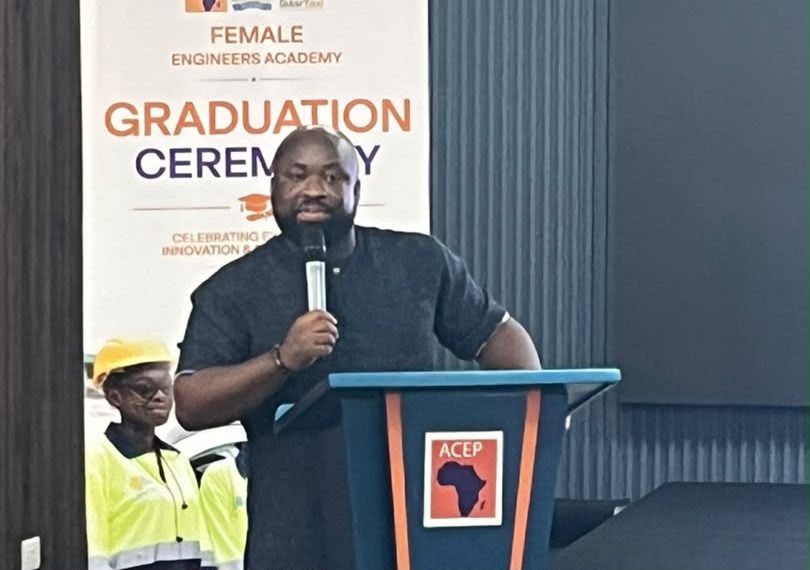
Delivering the keynote address at the graduation ceremony, ACEP’s Programmes Manager, Mr. Kodzo Yaotse, said the continent’s clean energy ambitions could not be achieved if women remained underrepresented in technical professions.
The transition to clean, sustainable energy in Ghana and across Africa cannot succeed if it excludes half our population.
Mr Kodzo Yaotse
He explained that the academy was created to move beyond discussions about gender inclusion by providing practical engineering skills, industry mentorship and workplace experience.
Preparing Ghana’s workforce for emerging industries
Although Ghana’s renewable energy and electric mobility industries are still developing, both sectors are expected to generate increasing demand for technicians, engineers, installers and maintenance specialists over the coming years.
Businesses are gradually investing in rooftop solar systems, battery storage technologies and electric vehicles, while government continues to promote renewable energy as part of broader efforts to strengthen energy security and reduce dependence on fossil fuels.

Industry analysts say this expansion cannot be sustained without a corresponding investment in human capital.
Programmes such as GET-CADEP therefore seek to prepare young Ghanaians before demand for these specialised skills accelerates.
Rather than limiting participants to theoretical instruction, trainees worked directly with industry professionals, allowing them to understand how renewable energy technologies are deployed, serviced and maintained under commercial operating conditions.
According to ACEP, this practical approach is intended to improve employability while encouraging graduates to pursue careers in engineering, entrepreneurship, research and innovation within Ghana’s emerging green economy.
Addressing a long-standing gender imbalance
The graduation also draws attention to the continuing underrepresentation of women in engineering and technical occupations across the energy sector.
Although women have increasingly entered science and technology programmes, participation remains relatively low in specialised engineering disciplines associated with energy infrastructure, equipment installation and industrial maintenance.
ACEP believes targeted interventions are needed if women are to participate meaningfully in the country’s energy transition.
Mr. Yaotse noted that expanding women’s participation should not stop at technical training but should also create pathways into leadership, entrepreneurship and decision-making within the sector.
Our goal is not simply to train technicians. We want to help build future engineers, innovators, entrepreneurs and leaders who will shape Africa’s clean energy future.
Mr Kodzo Yaotse
The academy’s approach reflects growing recognition that Africa’s energy transition must also become a vehicle for inclusive economic growth, ensuring that emerging industries create opportunities across different segments of society.
Building local expertise instead of importing it
As Ghana increases investment in renewable energy technologies, industry observers argue that developing domestic expertise will be just as important as attracting equipment and financing.
Solar panels, battery systems and electric vehicles require skilled technicians to install, service and repair them throughout their operational lifespan.
Without sufficient local capacity, Ghana risks depending heavily on foreign technical expertise, increasing project costs and slowing deployment.
By training young engineers before the market reaches full maturity, programmes such as GET-CADEP aim to position Ghanaian professionals to meet future demand while creating employment opportunities within the country.

The collaboration with Solar Taxi Ghana is particularly significant because it integrates training with industry experience, helping graduates understand operational realities while strengthening the link between education and employment.
The graduation ceremony also recognised outstanding performance among participants, with Princess Ama Gyekye emerging as the best graduating student from the Kumasi branch, while Delphine Semenyo Nkudede received the top award from the Accra branch.
Supporting Ghana’s broader energy ambitions
The development aligns with Ghana’s wider efforts to build a resilient and inclusive energy sector capable of supporting industrialisation, job creation and long-term economic growth.
In recent months, government officials have repeatedly emphasised that Ghana’s energy transition should support domestic economic development while expanding access to cleaner technologies.
During international engagements, both Energy and Green Transition Minister Dr. John Abdulai Jinapor and Deputy Minister Richard Gyan-Mensah have argued that Ghana’s transition must prioritise affordability, energy security, industrial development and local participation rather than simply replacing one energy source with another.
Developing skilled professionals capable of supporting renewable energy deployment forms an important part of that broader objective.

While the graduation of 30 engineers alone will not transform Ghana’s energy labour market, it provides a practical model for strengthening local technical capacity as investment in clean energy continues to expand.
Industry experts say scaling similar initiatives through partnerships involving government, technical universities, private companies and development partners could help ensure that Ghana’s energy transition creates employment opportunities alongside cleaner sources of power.
READ ALSO: Counselling First, Stigma Never — GAC Urges Careful HIV Response