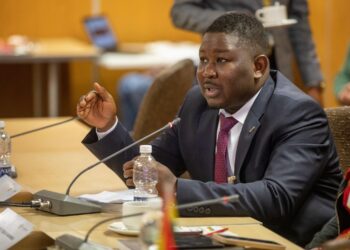

Interior Minister Muntaka Mubarak Mohammed has described the Mahama administration’s logistical support to Ghana’s security agencies as unprecedented, citing major equipment deliveries across the Police, Prisons, Fire, Immigration and Narcotics Control services within the past year.
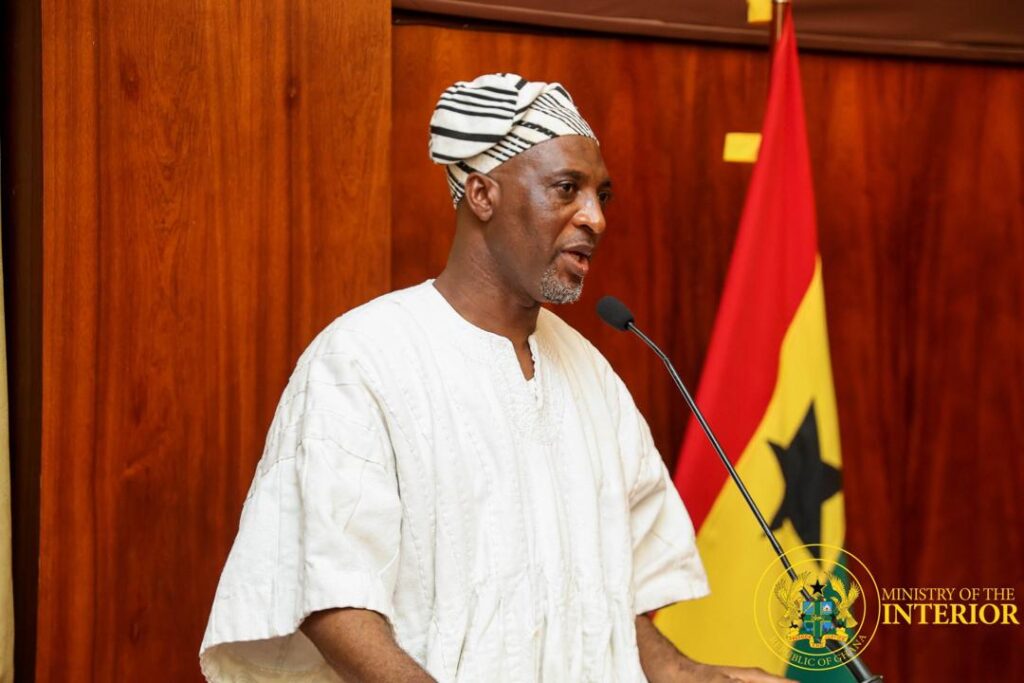
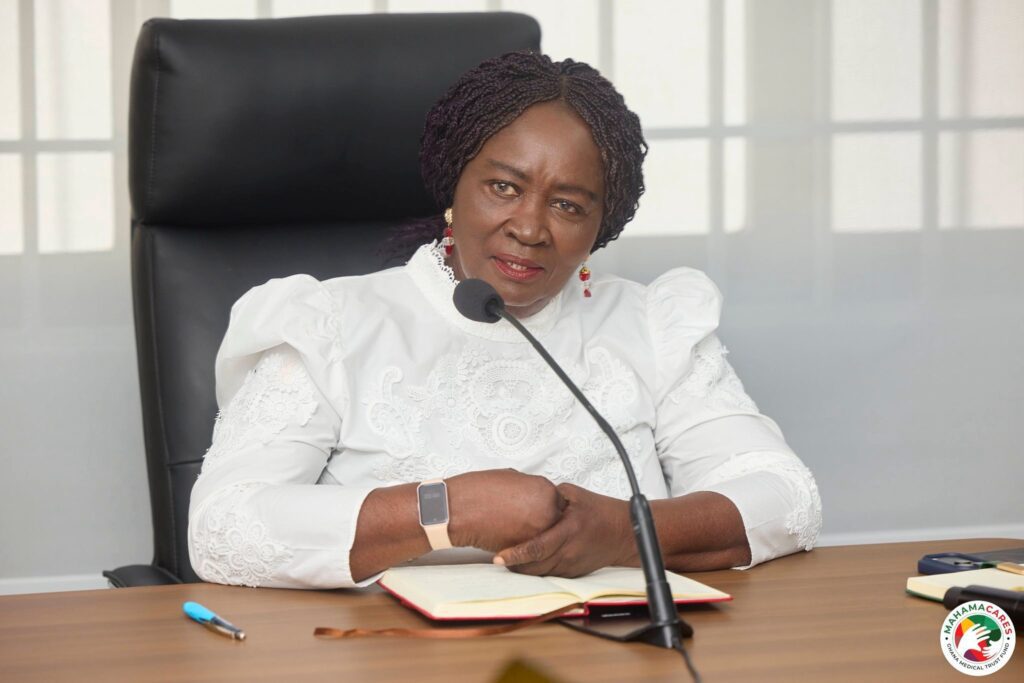
Speaking during a familiarisation visit by the Vice President, Professor Jane Naana Opoku-Agyemang to the Ministry of Interior and its agencies, the Minister said the scale of support given to the services in recent months surpasses anything he has witnessed before.
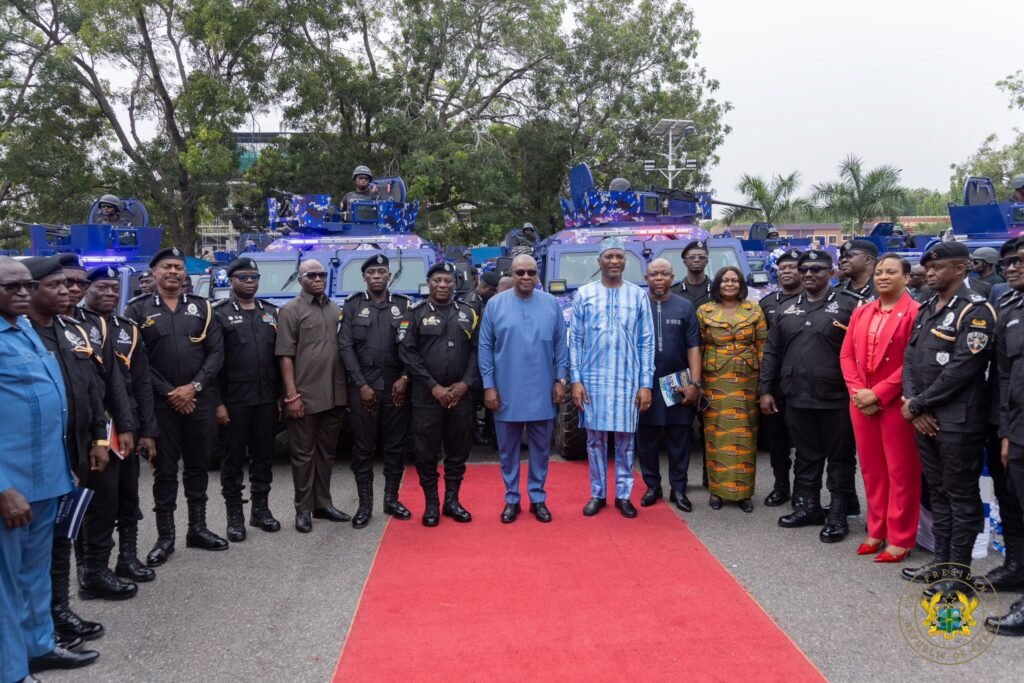
“In the last one year, the Ghana Police alone have received 160 pickups to augment their fleet. They were able to receive 50 armored vehicles to support their operations”.
Interior Minister Muntaka Mubarak Mohammed
He added that the Ghana Prisons Service received about 25 pickups and three buses, while the Ghana National Fire Service received around 20 pickups. The Immigration Service also received approximately 25 pickups during the same period, according to the Minister.
Narcotics Control Gets First Equipment in a Decade
Hon. Muntaka gave particular attention to the Narcotics Control Board, revealing that the agency had gone almost a decade without receiving new equipment before the current administration took office.
He said government has since supplied the agency with 22 logistical vehicles to support operations targeting drug trafficking networks rather than focusing solely on users. He noted that this shift in approach has already produced results, with 73 assets linked to suspected traffickers currently under scrutiny.
“We’ve equipped them with almost 22 logistical vehicles and this is doing a lot of work for us because as we speak we’ll be able to tend 73 assets that are linked to people who are drug trafficking”.
Interior Minister Muntaka Mubarak Mohammed
Dedicated Court and Prosecutorial Powers for Narcotics Cases
The Minister said the government secured a dedicated court to handle narcotics prosecutions, a development he credited to cooperation with the Chief Justice. “And with the help of the Attorney General, too, we’ve been able to give the prosecutorial powers to Narcotics Control,” he said.
He added that a number of lawyers are being trained to strengthen the agency’s prosecutorial capacity going forward.
Education Campaign Reaches Half a Million Students
Beyond enforcement, Hon. Muntaka said the government has invested in public education to combat narcotics abuse. He said the Narcotics Control Board carried out over 2,000 community engagement activities in 2025, reaching nearly half a million students nationwide.
“In 2025 alone, there were about 2,117 community engagements, and we were able to reach out to almost half a million students across our country to educate them on the effects of narcotics and how it hampers and destroy the future of our young people.”
Interior Minister Muntaka Mubarak Mohammed
Thousands of Illicit Arms Surrendered
Hon. Muntaka also addressed the challenge of arms proliferation, describing it as one of the country’s biggest security concerns. He said an amnesty programme run with the National Commission for Small Arms and Light Weapons and the CID led to the surrender of more than 4,000 weapons, some of which were publicly destroyed the previous week.
The Minister closed his remarks by updating the Vice President on the construction of a new Interior Ministry building, which he said was about 85 percent complete and expected to be ready by the end of August.
“In fact, this building was started before we came. It was stalled, but by the grace of God and the help of President Mahama, now it’s continuing,” he said, thanking the Vice President for the visit.
Hon. Muntaka’s remarks reflect a deliberate effort by the Mahama administration to position itself as a government committed to strengthening Ghana’s security architecture, both through equipment and structural reform.
The combination of expanded logistics, a dedicated narcotics court, prosecutorial autonomy for Narcotics Control, and sustained public education suggests an approach that pairs enforcement with prevention rather than relying on one at the expense of the other.
Whether these investments translate into measurable improvements in public safety and crime reduction will depend on sustained funding and follow-through beyond the initial rollout.
As the Ministry approaches full occupancy of its new headquarters, the coming months are likely to test how effectively these logistical gains convert into operational results across the security services.
READ ALSO: EU Targets Sudanese Gold Trade With New Restrictions