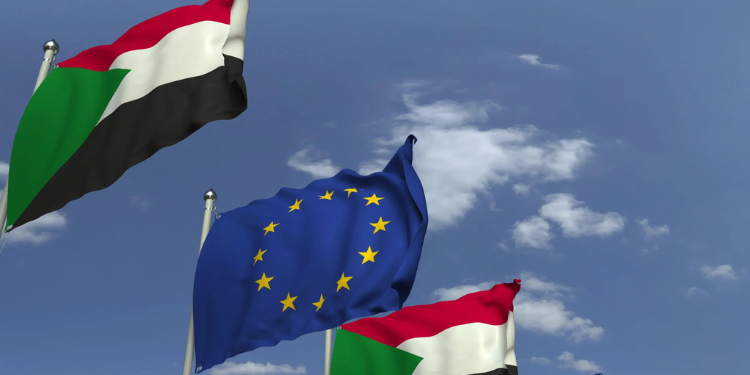
European Union has unveiled a new round of sanctions against Sudan, targeting the country’s lucrative gold sector as a decisive effort to cut off a major source of funding that has sustained more than three years of devastating conflict.
In a statement announcing the decision, the Council of the European Union indicated that the measures were intended to increase pressure on those responsible for fuelling the conflict while reducing access to resources that have become central to financing the war.
“The Council today decided to strengthen the EU’s restrictive measures concerning Sudan by introducing new sectoral measures targeting the war economy.
“The measures are designed to curb sources of financing for the conflict and further increase pressure on those fuelling the war.”
European Union
The Council added that, “the decision introduces a ban on the purchase, import or transfer of gold originating in Sudan. It also bans the sale, supply, transfer or export of mercury and cyanide to Sudan.“
According EU officials, gold has emerged as one of the most significant economic lifelines for armed groups involved in the conflict, making the sector a critical target for international sanctions.
By limiting international trade in Sudanese gold and restricting access to chemicals essential for extraction and processing, the EU hopes to reduce the financial resources available to actors accused of perpetuating violence across the country.
The latest sanctions, however, include carefully defined humanitarian exemptions. Restrictions on mercury and cyanide will not apply to supplies intended for humanitarian operations, responses to public health emergencies or disaster relief activities, reflecting efforts to ensure that aid operations are not disrupted while economic pressure is intensified.
The announcement comes as Sudan remains trapped in a conflict that has displaced millions of people, devastated public infrastructure and pushed large parts of the country towards famine-like conditions.
Since violence erupted in April 2023 between the Sudanese Armed Forces (SAF) and the paramilitary Rapid Support Forces (RSF), repeated international mediation efforts have failed to secure a lasting ceasefire, while civilians continue to bear the brunt of the violence.
The European Union has consistently condemned the conflict and accused both sides of contributing to widespread violations of international humanitarian law and human rights.
The bloc argues that targeting the financial foundations of the conflict is essential if diplomatic efforts to restore peace are to succeed.
EU Expands Sanctions on Sudan’s War Economy as Crisis Worsens
The latest sanctions build on a framework of restrictive measures first adopted by the European Union in October 2023 following the collapse of Sudan’s political transition and the outbreak of widespread violence.
Since then, the sanctions regime has been repeatedly expanded to target individuals and entities accused of undermining stability, obstructing peace efforts and contributing to the conflict. The most recent listings were adopted in January 2026 as Brussels intensified efforts to isolate those believed to be responsible for prolonging the war.
According to the Council, the measures are intended to “strengthen the EU sanctions regime by targeting elements of the war economy that contribute to sustaining the conflict.”
The decision follows a series of diplomatic initiatives by the European Union aimed at ending hostilities in Sudan. In October 2025, the Council adopted conclusions calling on all parties to engage constructively in ceasefire negotiations, allow rapid and unhindered humanitarian access and commit to an inclusive civilian-led political transition grounded in respect for international law and accountability.
More recently, the EU co-hosted the Third International Conference on Sudan in Berlin on 15 April 2026, marking the third anniversary of the conflict. The gathering brought together international partners to coordinate humanitarian assistance and renew calls for an immediate and lasting ceasefire.
Following the conference, the EU’s High Representative reiterated that external actors must stop fuelling the conflict and warned that the bloc was prepared to deploy all available diplomatic and economic tools to encourage peace.
The latest sanctions give practical effect to that pledge by directly targeting one of Sudan’s most valuable export sectors.
Gold has long been one of Sudan’s most important natural resources, generating billions of dollars in revenue annually. However, international observers have increasingly warned that control of gold mines, smuggling routes and export networks has become closely linked to the financing of armed groups and the continuation of hostilities.
By restricting access to European markets and limiting the supply of key mining chemicals, Brussels hopes to reduce the profitability of the sector while increasing pressure on parties engaged in the conflict.
Despite these efforts, humanitarian organisations continue to warn that the crisis in Sudan is worsening. Millions of people remain displaced within the country and across neighbouring states, while shortages of food, healthcare and essential services continue to deepen.
The European Union has stressed that its latest measures are directed at those sustaining the conflict rather than the Sudanese population, with humanitarian exemptions designed to ensure that emergency relief operations can continue.
READ ALSO: Netflix Acquires Definitive Basquiat Documentary With Family Collaboration