
Africa’s ability to strengthen its position in an increasingly fragmented global economy will depend not only on trade and finance reforms, but also on building secure, affordable and sustainable energy systems capable of driving industrialisation, regional integration and economic resilience.
That message emerged strongly at the close of the 2026 African Economic Conference (AEC), where African policymakers, development finance institutions and international partners stressed that the continent’s long-term competitiveness would depend on transforming structural sectors, including energy, that underpin production, investment and trade.
Although the conference centred broadly on Africa’s geopolitical agency and trade resilience, discussions repeatedly underscored the role of reliable energy infrastructure in unlocking industrial growth, supporting regional value chains and reducing Africa’s vulnerability to external economic shocks.
The three-day conference, jointly organised by the African Development Bank (AfDB), the United Nations Development Programme (UNDP) and the Organisation for Economic Co-operation and Development (OECD), concluded in Abidjan on July 12 with renewed commitments to deepen collaboration on policies that strengthen Africa’s economic foundations.
Energy at the Centre of Africa’s Industrial Future
Held under the theme “Strengthening Africa’s Geopolitical Agency and Trade Resilience in a Multipolar World,” the conference brought together economists, policymakers, researchers and development partners to examine how African countries can build stronger economies amid growing geopolitical tensions, shifting global supply chains and climate-related challenges.
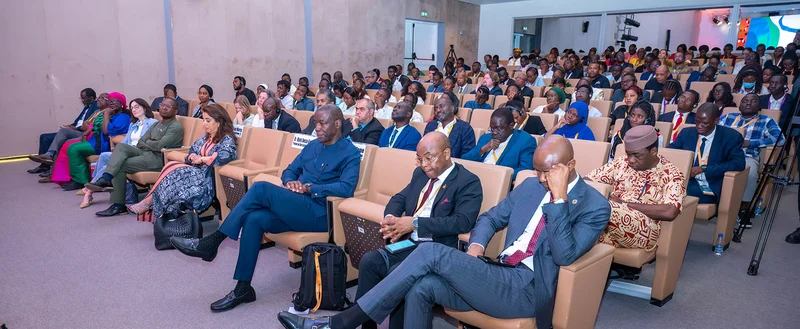
While discussions covered trade, investment, debt and development finance, participants consistently acknowledged that none of those objectives can be achieved without sufficient energy infrastructure capable of supporting manufacturing, mineral processing, digital industries and expanding intra-African trade.
For many African economies, including Ghana, energy has increasingly become a strategic development issue rather than merely a public utility. Governments across the continent are seeking to improve electricity reliability, expand renewable energy deployment, strengthen transmission infrastructure and accelerate investment in domestic energy resources to support industrialisation.
The conference therefore reinforced a message that has become increasingly prominent in African development policy: energy security is economic security.
“The lasting impact of these past days will be determined by what we do next: remove barriers to trade, invest in African enterprise and innovation, strengthen regional value chains, and equip our young people to compete in a changing global economy.
“In a multipolar world, Africa’s greatest leverage will not come from choosing sides, but from building its own economic strength.”
Ahunna Eziakonwa, United Nations Assistant Secretary-General and Director of the UNDP Regional Bureau for Africa
Her remarks resonate strongly with Ghana’s own policy direction, where government has increasingly linked energy investments to industrialisation through initiatives such as renewable energy expansion, domestic gas utilisation and the proposed 24-Hour Economy programme.
Integrated Policies Needed to Support Energy Investment
Another major takeaway from the conference was the growing recognition that African governments can no longer formulate energy, trade, climate and fiscal policies in isolation.
Participants argued that today’s development challenges require integrated policymaking capable of balancing economic growth with climate commitments while ensuring countries maintain affordable access to energy.
Senior Policy Advisor at the OECD, Ida McDonnell, said policymakers must increasingly recognise the interconnected nature of development priorities.
“Trade, debt, investment, fiscal policy, climate action and development finance are becoming increasingly interconnected. Yet we often continue to analyse them separately. The complexity of today’s policy challenges calls for more integrated analysis that reflects the real choices policymakers face.”
Ida McDonnell, Senior Policy Advisor, OECD
For African energy economies, this integrated approach has particular significance. Countries such as Ghana continue to rely on petroleum revenues to finance national development while simultaneously investing in renewable energy, cleaner fuels and climate resilience.
Balancing these competing priorities requires policies that allow African countries to continue monetising existing energy resources while investing in future energy systems.
The discussions mirror concerns recently raised by Ghana’s Public Interest and Accountability Committee (PIAC), which cautioned that energy transition policies must reflect national development realities and avoid undermining petroleum-producing economies before alternative industries are sufficiently developed.

Implications for Ghana’s Energy Sector
For Ghana, the conference outcomes align closely with several ongoing national initiatives aimed at strengthening energy security while supporting industrial transformation.
Government has recently announced plans to expand renewable energy generation under the 24-Hour Economy initiative, including large-scale solar and battery storage projects intended to reduce electricity costs for industry.
At the same time, authorities continue to encourage upstream petroleum investment through ongoing exploration, new drilling campaigns and policies designed to maximise domestic gas production for power generation.
Recent engagements with international investors, including ENI, Global South Utilities of the United Arab Emirates and other strategic partners, also reflect Ghana’s effort to diversify investment into both conventional and renewable energy.
Conference participants suggested that such balanced approaches may become increasingly important as African economies seek to navigate global energy transition pressures without compromising economic growth.
Reliable electricity remains one of the biggest constraints facing industrial competitiveness across much of the continent. Manufacturing, agro-processing, mining value addition and digital industries all require dependable and affordable energy supplies if Africa is to strengthen regional trade under the African Continental Free Trade Area (AfCFTA).
Without sustained investment in energy infrastructure, experts noted, broader ambitions around industrialisation and export diversification may prove difficult to achieve.
Regional Cooperation Remains Critical
Another recurring theme throughout the conference was the importance of stronger regional cooperation. Rather than responding individually to changing global economic conditions, participants encouraged African countries to pursue coordinated strategies capable of strengthening continental resilience.
This includes greater cooperation on energy infrastructure, electricity markets, cross-border power transmission, renewable energy deployment and regional investment frameworks.
The conference also hosted the annual meeting of the Global Network of Chief Economists of Development and Financing Institutions and witnessed the launch of the African Chief Economists Network (ACE Network), aimed at strengthening collaboration among African economic institutions.
The creation of such platforms is expected to improve evidence-based policymaking while supporting coordinated responses to emerging economic and energy challenges.
Building Economic Resilience Through Energy
Closing the conference on behalf of African Development Bank Group President Dr Sidi Ould Tah, Senior Vice President Marie-Laure Akin Olugbade said the discussions had generated practical ideas that policymakers could translate into future action.
“The exchanges we have had provide an essential foundation for the policies and partnerships needed to strengthen Africa’s geopolitical agency and enhance its trade resilience.”
Marie-Laure Akin Olugbade, Senior Vice President, African Development Bank Group
For Ghana, those partnerships could prove increasingly valuable as the country seeks to strengthen electricity reliability, expand renewable energy deployment, maximise domestic oil and gas resources and attract long-term investment into strategic infrastructure.
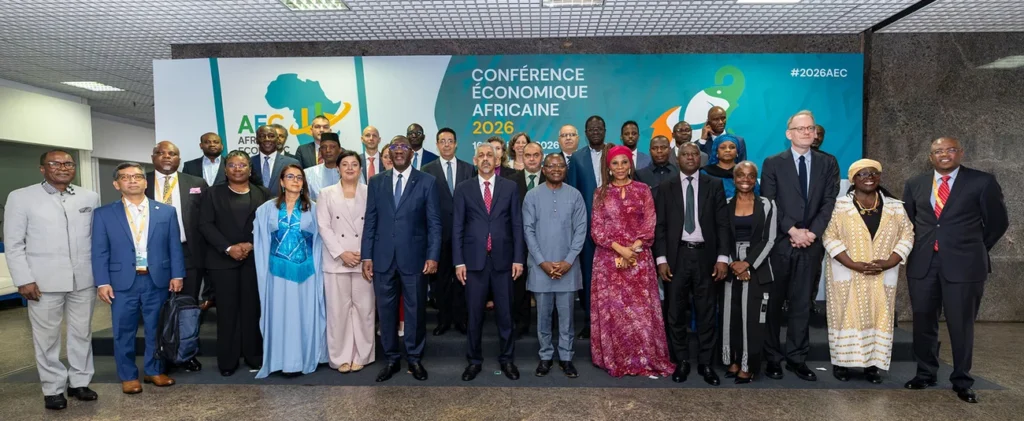
The conference concluded with a shared recognition that Africa’s geopolitical influence will increasingly depend on its ability to build productive economies capable of withstanding external shocks.
For energy-producing countries such as Ghana, that means ensuring energy policy supports not only electricity access but also industrial competitiveness, investment attraction, job creation and long-term economic transformation.
As global markets continue to evolve, the discussions in Abidjan reinforced a growing consensus that Africa’s future competitiveness will depend as much on the strength of its energy systems as on the resilience of its trade policies, a message that carries significant implications for Ghana’s own energy transition and industrial development agenda.