The European Union has imposed sanctions on Russian military officers, hackers and private companies, denouncing what it called a years-long cyber-espionage campaign against the bloc.
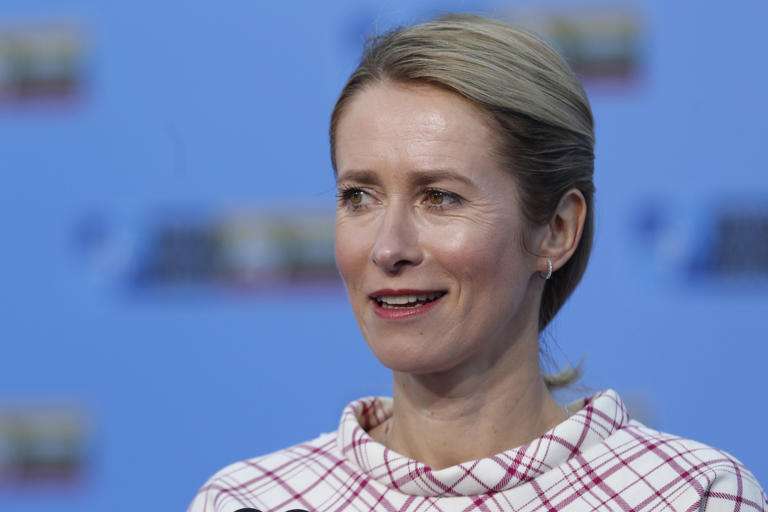
EU Foreign Policy Chief Kaja Kallas said that those hit by the sanctions “contribute to Russia’s efforts to destabilize the EU, its member states and international partners.”
The EU focused its sanctions, which are mostly asset freezes and travel bans, on the 16th Center of Russia’s Federal Security Service, or FSB. Kallas said the FSB has been “controlling a variety of cyberthreat groups,” and said it “has conducted a wide range of malicious cyberactivities with growing severity.”
The espionage and attacks have taken place in at least nine countries. The names of the people and entities were not listed in the statement. It said France, Germany, Poland, Cyprus, the Netherlands, Austria, Slovakia, Romania and Finland, “among others” have been targeted.
Germany’s Federal Foreign Office said that it had summoned the Russian Ambassador over the “unacceptable” attacks and said they would be met decisively. “This morning … we summoned the Russian ambassador to the Foreign Ministry in connection with hostile cyber attacks,” a ministry spokeswoman told reporters.
French Foreign Minister Jean-Noël Barrot said that Paris intends to call in Russia’s envoy in the coming days. He told a French television that the aim of the cyberactivities is “either to capture information, or sabotage the operation, for example, of railway infrastructures, as it was the case in Poland.”
Some countries have accused Russia of using cyberattacks and propaganda to interfere with elections. In April, Sweden said a pro-Russian group with links to Russia’s security and intelligence services was behind a cyberattack on a heating plant last year. The announcement followed warnings from officials in Poland, Norway, Denmark and Latvia that Russia is attacking critical infrastructure across Europe.
With its sanctions, the EU notably targeted a member of Russia’s GRU military intelligence agency, Yevgeny Bashev, and a company it says he runs, Impuls. “The company provides technical and material support to cyberattacks and attempted cyberattacks conducted by GRU Unit 29155,” the sanctions notification said. It said the actions of Impuls “constitute an external threat” to EU member countries and have had “a significant effect” on an unnamed country outside the bloc.
Britain also slapped sanctions on 24 people and entities. Britain said that Impuls recruited hackers and cyber specialists from Russian universities and academies. It slapped sanctions on Bashev as well as three other senior GRU officials “for their role in directing GRU cyber and hybrid threat operations.”
Britain believes Russian intelligence agencies “have tasked cybercriminals to collect intelligence to support Russia’s military and foreign policy objectives, threatening security across Europe.”
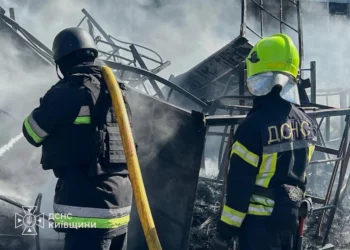
The sanctions comes as Ukraine’s Western allies prepare for meetings in Paris to secure more air-defence commitments for Ukraine. Despite gaining momentum on the battlefield in recent months, Ukraine has been left exposed as Russia stepped up drone and missile strikes on Kyiv and the surrounding region in the past few weeks, killing dozens of people.
Ukraine is running low on munitions for its systems and has been largely unable to shoot down ballistic missiles, which travel at several times the speed of sound, over the past month. It has pleaded with allies for more supplies and has also pushed Europe to work with it on its own antiballistic air defence system, including at last week’s NATO summit in Ankara, Turkiye.
Zelenskyy To Meet “Coalition of the Willing”
Ukrainian President Volodymyr Zelenskyy is likely to interact with 25 state leaders at a meeting of the “Coalition of the Willing” in Paris to hammer out security guarantees to support the country after months of stalled US-brokered negotiations with Russia. French President Emmanuel Macron will also be attending the summit.
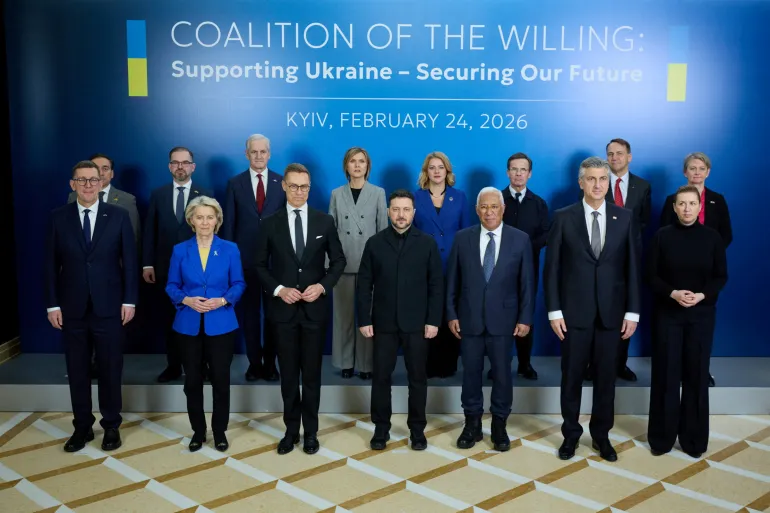
Diplomats said that leaders from nine countries, including Italy, Germany, Sweden, Denmark and Norway, will meet about a dozen arms companies, including the SAMP-T manufacturer Eurosam, Leonardo, Thales and Saab, before the summit seeking to develop air defence plans for Ukraine.
An announcement on formalising the Freyja project, Ukraine’s attempt to build a European-backed, lower-cost alternative to the US Patriot system, is on the agenda. Zelenskyy urged allies to increase the pressure on Russia after attacks in Odesa tiday.
“Today, the Russians have once again ‘vanquished’ over purely civilian sites. The pressure on Russia must work. New sanctions against the aggressor. New packages of support for Ukraine, new projects-like our European anti-ballistic project FREYJA- everything must work.”
Volodymyr Zelenskyy
However, the Kremlin Spokesman, Dmitry Peskov, dismissed the Paris summit as a meeting of a “coalition of warmongers” who “do not want peace.” “These are the countries that are undertaking hostile actions against Russia, so we will be watching very closely,” Peskov said.
READ ALSO: African Economic Conference Ties Energy Security to Trade Growth