The Group of Seven (G7) has issued a forceful appeal for an immediate end to escalating violence in Sudan, warning that continued fighting around the strategic city of El-Obeid risks triggering fresh atrocities against civilians and worsening one of the world’s gravest humanitarian crises.
In a joint statement released by the Foreign Ministers of Canada, France, Germany, Italy, Japan, the United Kingdom and the United States, alongside the European Union’s High Representative for Foreign Affairs, the world’s leading democracies called on the Rapid Support Forces (RSF) and allied armed groups to immediately halt military actions that threaten civilian lives, including drone strikes and restrictions on humanitarian operations.
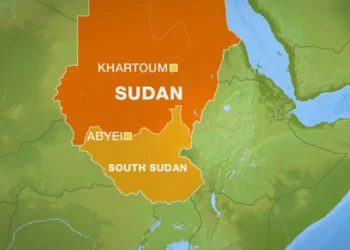
The statement comes amid growing international concern over the deteriorating security situation across Sudan’s Kordofan and Darfur regions, where renewed clashes have raised fears of a further escalation in a conflict that has already displaced millions and left vast areas struggling with food shortages, disease outbreaks and collapsing public services.
The G7 stated it was “gravely concerned” about reports of serious violations of international humanitarian and human rights law, citing allegations of atrocities in Kordofan, Darfur, and the Blue Nile region.
The warning comes after previous claims of atrocities during the RSF’s siege and attack on El Fasher, the capital of North Darfur, which has become one of the conflict’s most fiercely contested cities.
El-Obeid, the capital of North Kordofan State, has emerged as another critical flashpoint in Sudan’s civil war. The city serves as an important commercial and humanitarian hub linking western and central Sudan, making continued instability there a major obstacle to aid operations intended to reach millions of vulnerable people.
The conflict, which erupted in April 2023 between the Sudanese Armed Forces (SAF) led by General Abdel Fattah al-Burhan and the Rapid Support Forces commanded by General Mohamed Hamdan Dagalo, widely known as Hemedti, has evolved into one of the largest displacement crises in the world. Entire communities have been uprooted, while repeated attacks on civilian infrastructure have devastated healthcare facilities, schools and essential services.
Against this backdrop, the G7 urged all parties to respect their obligations under international humanitarian and human rights law, stressing that civilians must never become targets of military operations.
“We urge the Rapid Support Forces, as well as the Sudanese Armed Forces and allied armed groups, to abide by their obligations under the rules of international humanitarian law and international human rights law, as applicable. Civilians must be protected.”
G7 Foreign Ministers
They also appealed to all sides to facilitate humanitarian operations by guaranteeing safe passage for civilians and ensuring aid organisations can move freely throughout the country.
International humanitarian organisations have repeatedly cautioned that access difficulties, insecurity, and deliberate obstruction of relief efforts continue to impede the delivery of life-saving aid to areas in Sudan experiencing famine-like conditions.
The G7 action points out growing diplomatic efforts to prevent the war from worsening, which has raised concerns among regional and global powers about its potential to destabilise neighbouring nations and exacerbate humanitarian misery in the Horn of Africa.
G7 Backs Peace Efforts, Calls for Accountability and Expanded Arms Embargo
Beyond urging an immediate cessation of violence, the G7 renewed calls for Sudan’s warring parties to return to negotiations aimed at securing a lasting political settlement.
They also called on both the Sudanese Armed Forces and the Rapid Support Forces to immediately cease hostilities and engage in direct negotiations conducted in good faith.
They criticised both sides for failing to advance de-escalation efforts, urging the Sudanese Armed Forces to end what they described as repeated rejection of proposed confidence-building measures while calling on the Rapid Support Forces to fulfil commitments made under the Jeddah Declaration.
“We urge the Sudanese Armed Forces, the Rapid Support Forces and allied armed groups to immediately cease hostilities and to engage in direct negotiations in good faith.”
G7 Foreign Ministers
The statement also reaffirmed international backing for diplomatic initiatives led by United Nations Secretary-General António Guterres’ Personal Envoy for Sudan, Pekka Haavisto, who is working to reduce tensions around El-Obeid and encourage broader peace negotiations.
The G7 expressed support for ongoing efforts by the Quad and the Quintet to secure a humanitarian truce that could pave the way for a permanent ceasefire and an inclusive, transparent and civilian-led political dialogue designed to restore democratic governance in Sudan.
“We are united in our determination to promote accountability for all violations of international humanitarian law and international human rights law committed by all parties to the conflict.”
G7 Foreign Ministers
They further pledged continued support for victims and survivors, including initiatives aimed at preventing future atrocities and strengthening guarantees against renewed violence.
The G7 also directed attention toward the role of external actors, warning that continued military, financial or logistical assistance to the parties risks prolonging the conflict.
Moreover, G7 urged the United Nations Security Council to expand the existing arms embargo on Darfur to cover the entirety of Sudan, arguing that broader restrictions could help reduce the flow of weapons into the conflict.
“We reaffirm our unwavering commitment to Sudan’s sovereignty, unity and territorial integrity. We reject all unilateral initiatives that risk leading to the country’s partition and remain committed to support the democratic aspirations of the Sudanese people.”
G7 Foreign Ministers
READ ALSO: Speaker Bagbin Warns Africa’s Democracy Backsliding as Money Corrupts Politics