The Minister for Youth Development and Empowerment, Hon. George Opare Addo, Esq, has told Parliament that 26 percent of Ghanaian youth begin abusing drugs before the age of 15, a disclosure that has thrown fresh attention on the scale of substance abuse among the country’s young population.
Responding to questions in the House the Minister outlined a series of interventions being rolled out by his Ministry and the National Youth Authority, ranging from media partnerships and school outreach to a nationwide billboard campaign and plans for a dedicated youth rehabilitation centre, even as he flagged funding as a persistent obstacle to scaling up the response.
Media Partnerships and School Outreach Anchor the Campaign
Addressing the Speaker, Hon. Opare Addo said the Ministry has partnered with YFM, one of Ghana’s leading youth-focused radio stations, using its regular programming, interviews, call-in shows and public service announcements to expand outreach among young audiences who actively consume youth-oriented content.
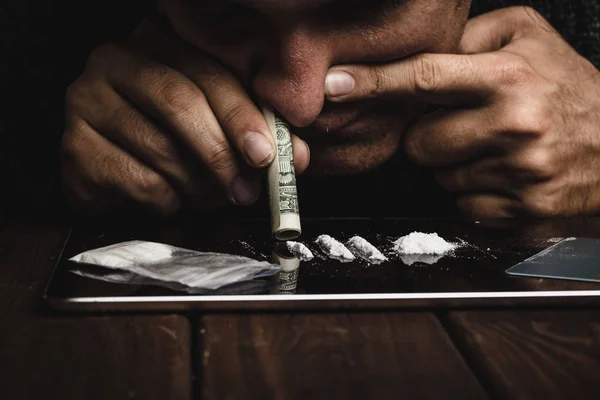
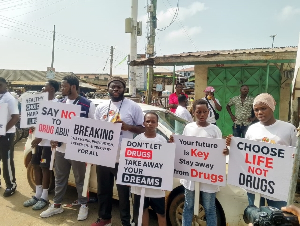
Beyond the airwaves, the Minister said the National Youth Authority has been positioned to engage students directly at events such as Party in the Park and other second-cycle school gatherings. He described these platforms as giving the Authority direct access to thousands of young people, enabling peer-to-peer conversations, the distribution of educational materials, the recruitment of Red Ambassadors, and real-time engagement on substance abuse prevention, an approach he said works because it meets youth in their own social spaces rather than lecturing them.
Influencers and Billboards Deployed to Reinforce the Message
To sharpen the campaign’s appeal among younger audiences, the Ministry has turned to popular culture, appointing well-known Ghanaian influencers as Red Means Stop ambassadors. The Minister said their reach among young Ghanaians, particularly through music and social media, makes them effective advocates for substance-free living.
The National Youth Authority has since built on that foundation with a broader road map that includes a billboard campaign spanning all 16 regions. ‘
Under the plan, billboards carrying the Red Means Stop message are being mounted along major highways and transport corridors, in city centres and market areas, around school zones and youth gathering points, at bus and taxi terminals, and near sports stadia and entertainment venues, with the aim of keeping the anti-drug message in constant public view and reinforcing peer norms against drug use.
However, the Minister was candid that the billboard drive, like much of the wider campaign, is being constrained by funding.
“This program is faced with funding challenges, and we urge all to support it.”
Hon. George Opare Addo, Esq.
Over 2,000 Red Ambassadors Recruited Nationwide
On grassroots mobilisation, the Minister disclosed that the National Youth Authority has already recruited more than 2,000 Red Ambassadors drawn from across the country’s regions.
These young advocates, he explained, are being trained to serve as peer counsellors, event organisers and grassroots mobilisers in their own schools and communities, with the training programme covering peer-to-peer communication, event planning, digital advocacy, public speaking and community mobilisation.
He added that the Authority intends to hold more than 500 school outreach events annually through Red Means Stop rallies and youth festivals, alongside parallel efforts to build substance abuse prevention policies for schools, establish referral systems linking students to treatment and rehabilitation services, and draw religious institutions, traditional authorities and community leaders into
the advocacy effort.
Rehabilitation Centre Planned on Newly Acquired Land
The Minister also updated the House on progress toward longer-term treatment infrastructure, revealing that the Ministry has secured a 3-acre parcel of land to construct a youth rehabilitation centre. He indicated the project is being pursued in partnership with an external collaborator, though the details of that arrangement were not fully spelt out in his remarks to the House.
Minister Appeals to Parliament for Advocacy and Funding Support
Closing his remarks, Hon. Opare Addo pressed lawmakers to see themselves as partners in the fight rather than bystanders, urging every Member of Parliament to dedicate part of their community engagements, roughly five to ten minutes on each platform, to raising awareness of drug and related issues.
He was equally candid about the financial constraints facing the programme, telling the House that youth development issues are too often treated as an afterthought despite the scale of the threat they pose, and appealed to Parliament to help mobilise both advocacy and community funding support for anti-drug initiatives.
Framing the crisis as a collective rather than an individual burden, the Minister cited figures showing that 41 percent of tertiary students are aware of active drug use on their campuses, against 37 percent among second-cycle students, numbers he described as evidence of a national emergency requiring urgent, sustained attention.
He reiterated his long-held view that substance abuse is a community-wide disease rather than an individual failing, since one person’s drug use ripples out to affect an entire community.
In his final appeal, the Minister pledged the Ministry’s continued commitment to monitoring, assessing and refining its interventions, while committing to work with other stakeholders to ensure that young people struggling with drug and substance abuse receive proper rehabilitation support, and asked Parliament to help push the conversation into everyday public discourse.
With the Ministry’s billboard rollout, ambassador network and rehabilitation centre project all still taking shape, attention will now turn to whether Parliament responds to the Minister’s funding appeal and whether the reported prevalence figures spur the kind of sustained, cross-sector response he says is needed to turn the tide on youth substance abuse in Ghana.
READ MORE: Argentina Fightback Against England, Reach Third World Cup Final in Last Four Editions