
The former Minister of Environment, Science, Technology and Innovation, Professor Kwabena Frimpong Boateng, has accused successive Ghanaian governments of abandoning their funding obligations to research institutions and regulatory bodies, warning that this pattern has turned underfunding into outright abdication of responsibility.
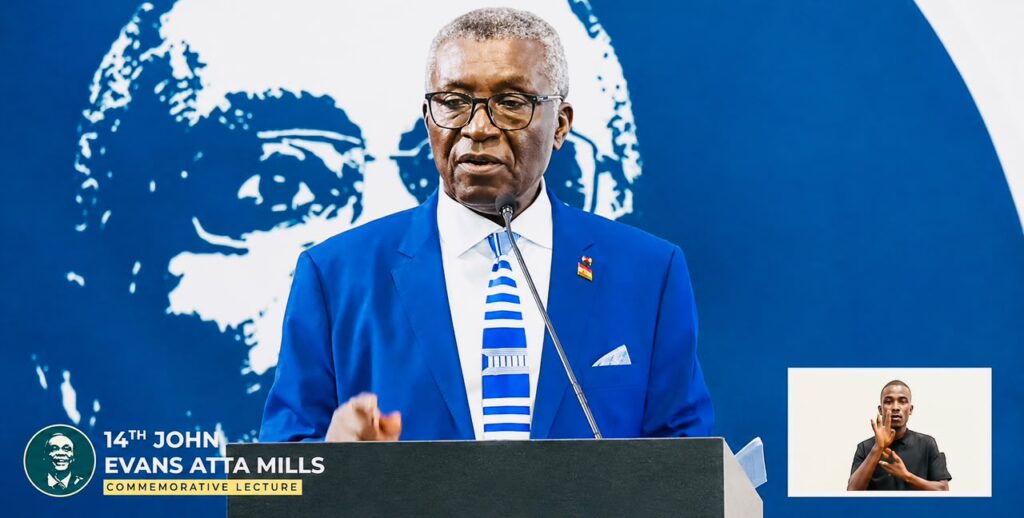
He made the remarks as inaugural speaker at the 14th Commemorative Lecture in honour of the late President Professor John Evans Atta Mills, organised by the Atta Mills Heritage at the University of Professional Studies, Accra, on July 22, 2026.
“Any genuine development program must place research institutions, CSIR, Atomic Energy, the universities, the Ghanaian diaspora at the center, not at the periphery. Science and technology infrastructure, such as fund-raising and CNC machine tool centers, must be built and sustained,”.
Professor Kwabena Frimpong Boateng, a former Minister of Environment, Science, Technology and Innovation
He credited Professor Mills with establishing two specialised universities and science resource centres in every district during his tenure, presenting this as a marked contrast to the broader pattern he has observed across the Fourth Republic.
“The general trend in the fourth republic is that governments are not merely failing to invest in Ghana’s institutions. They are actively abandoning their obligations to them. What began as underfunding has become abdication”.
Professor Kwabena Frimpong Boateng, a former Minister of Environment, Science, Technology and Innovation
Universities Forced to Rely on Student Fees
Prof. Frimpong Boateng described the practical consequences of chronic underfunding within Ghana’s university system, noting that institutions have been left with few options beyond raising fees to survive financially.
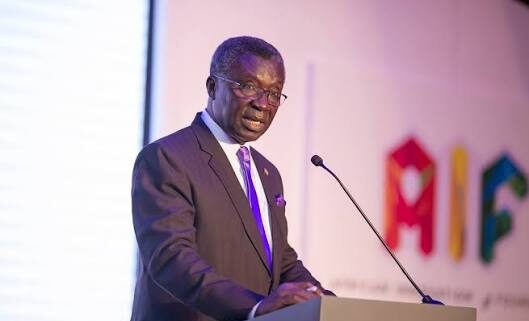
He extended this criticism to Ghana’s research institutions, revealing that CSIR and the Atomic Energy Commission have been directed by successive governments to generate their own revenue simply to remain operational.
“This is a profound misunderstanding of how science works and how nations develop. No country that has achieved technological advancement has done so by demanding that its public research institutions pay for themselves through the market.
“Successful countries fund their research institutions generously and hold them to account for outcomes, not for revenue”.
Professor Kwabena Frimpong Boateng, a former Minister of Environment, Science, Technology and Innovation
He summarised the resulting distortion in stark terms, describing a system that inverts the proper priorities of scientific institutions. “Ghana is asking its scientists to be entrepreneurs first and researchers second, and then wonders why there is no indigenous technological breakthrough to show for it,” he said.
EPA Left to Fund Its Own Operations
Prof. Frimpong Boateng identified the Environmental Protection Authority as the most troubling example of this broader pattern, revealing that the agency has been instructed to generate the funds needed to pay its own staff and carry out its regulatory mandate.
“The result is entirely predictable. An agency charged with protecting Ghana’s environment, biodiversity and public health has been reduced to issuing permits as a revenue-generating exercise without the capacity to provide meaningful oversight, conduct proper environmental impact assessments and enforce compliance”.
Professor Kwabena Frimpong Boateng, a former Minister of Environment, Science, Technology and Innovation
Prof. Frimpong Boateng drew a direct line between the EPA’s weakened capacity and the visible environmental degradation across the country, particularly the destruction caused by illegal mining.
“Illegal mining destroys our water bodies not merely because of lawlessness, but because one of the institutions mandated to prevent that destruction has been defunded into irrelevance”.
Professor Kwabena Frimpong Boateng, a former Minister of Environment, Science, Technology and Innovation
He characterised this outcome as the direct result of a broader governance mindset rather than an isolated policy failure. “This application is not accidental. It is the cumulative results of governments that treat public institutions as liabilities rather than assets,” he said.
Mills’ Vision of a Leaner, Capable State
Turning back to Professor Mills’ legacy, Prof. Frimpong Boateng argued that the late President Mills understood the difference between reducing the size of government and weakening the state’s core functions, a distinction he suggested subsequent administrations have failed to grasp.
He closed this portion of his lecture with a pointed warning about the long-term consequences of failing to adequately fund the institutions responsible for scientific and environmental progress.
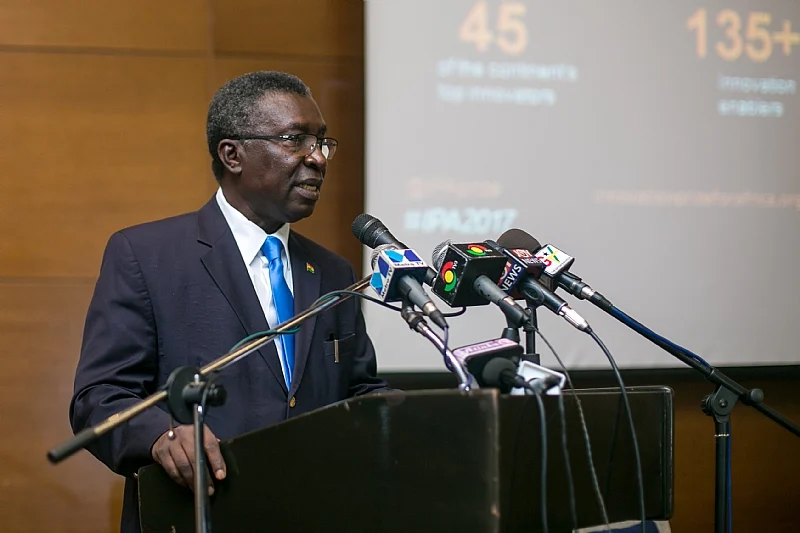
“A government that cannot fund its universities, its scientists and its environmental regulators has not found a clever way to save money. It has found a certain way to destroy the country’s future”.
Professor Kwabena Frimpong Boateng, a former Minister of Environment, Science, Technology and Innovation
Prof. Frimpong Boateng’s remarks add a pointed institutional dimension to his broader lecture on Ghana’s development trajectory, framing the underfunding of universities, research bodies and regulatory agencies not as isolated budgetary decisions but as a systemic pattern with direct consequences for environmental protection and technological progress.
His comparison between the late President Mills’ institutional investments and the subsequent decline he described suggests a lecture aimed as much at present-day accountability as historical reflection, particularly given the presence of current government officials, including the Education Minister and the Majority Leader, both acknowledged directly during his address.