
The Mahama administration has backed the proposal extending Ghana’s presidential term from four years to five years while reducing the minimum age for presidential candidates from 40 to 35 years as part of its official position on the Constitutional Review Committee’s report.
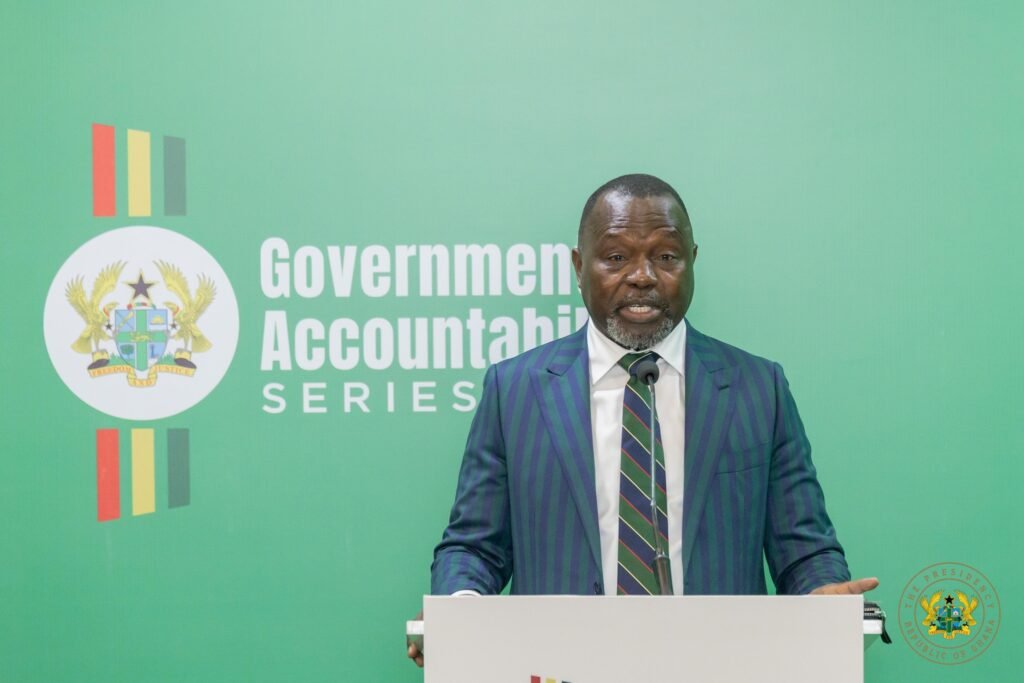
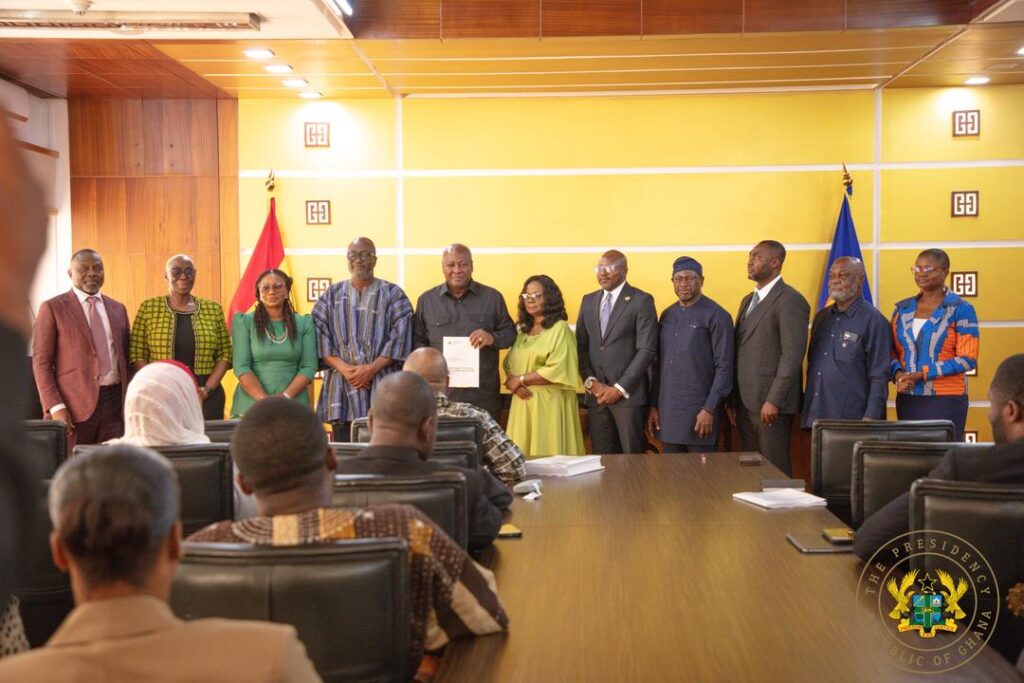
Attorney General and Minister for Justice, Dr. Dominic Ayine, presented the Government’s position paper, outlining the Executive’s response to recommendations submitted by the Constitutional Review Committee.
The proposals form part of the Government’s broader constitutional reform agenda, which seeks to strengthen governance while ensuring amendments remain consistent with the principles of the 1992 Constitution.
The Government says it carefully examined every recommendation before deciding whether to accept, modify or reject it, maintaining that constitutional amendments should be reserved for issues that genuinely require changes to the supreme law.
Government Explains Basis for Constitutional Reform Decisions
Presenting the position paper, Dr. Ayine clarified that the document should not be regarded as a White Paper because the Constitutional Review Committee was not established as a Commission of Inquiry under Chapter 23 of the 1992 Constitution.
Instead, he explained, the document represents the Government’s official response to the committee’s recommendations following an extensive review process. According to the position paper, every recommendation submitted by the committee was assessed under three broad categories.
These were recommendations accepted by the government, recommendations accepted in principle but subject to modification, and recommendations that were rejected. Government stated that its decisions were guided by several constitutional considerations.
These included consistency with the 1992 Constitution, whether proposed amendments affected entrenched or non-entrenched provisions, whether the intended objectives could instead be achieved through ordinary legislation, and lessons drawn from previous constitutional reform efforts, particularly the work of the 2010 Constitutional Review Commission.
The Government further stressed that the Constitution should remain a document that establishes the nation’s foundational principles and institutional framework rather than becoming an operational manual designed to address every public policy issue.
Five Year Presidential Term Proposed
Among the most significant proposals contained in the Government’s position paper is the recommendation to extend the tenure of the President from four years to five years. Government also supports extending the life of Parliament to correspond with the proposed five year presidential term.
According to the position paper, the current four year cycle does not provide sufficient time for effective governance and implementation of national policies.
The government argued that newly elected administrations spend much of their first year settling into office, appointing officials and establishing systems, while the final year is largely dominated by election preparations and campaign activities.
As a result, the available period for implementing development programmes and assessing policy outcomes becomes significantly compressed. Officials believe that extending the term to five years would provide a more practical timeframe for governments to formulate, implement and evaluate public policies before returning to the electorate.
Government Supports Lower Presidential Age Requirement
The position paper also supports reducing the minimum constitutional age for presidential candidates from 40 years to 35 years. While the Constitutional Review Committee recommended lowering the threshold to 30 years, Government opted for a more moderate adjustment.
According to the paper, reducing the age requirement to 35 years would broaden opportunities for qualified younger citizens to contest the presidency while maintaining an appropriate balance between youthful participation and the experience expected of occupants of the country’s highest political office.

Government believes the current minimum age excludes capable individuals based solely on what it considers an arbitrary constitutional threshold. The proposed age of 35 years, it argued, reflects the need to encourage greater youth participation in national leadership without compromising the maturity and leadership experience required for the presidency.
Constitutional Amendments Reserved for Fundamental Issues
Beyond the specific proposals on the presidency, the Government’s position paper reiterates that constitutional amendments should be approached with caution.
The Executive maintains that not every governance challenge requires constitutional change, arguing that many policy objectives can be effectively achieved through legislation or administrative action.
For that reason, Government says it deliberately distinguished between matters requiring constitutional amendment and those better addressed through Acts of Parliament or other policy measures.
The position paper also highlights the importance of maintaining continuity with previous constitutional reform initiatives while ensuring that any future amendments preserve the integrity and stability of Ghana’s constitutional order.

Government believes this approach strikes a balance between constitutional reform and institutional stability, ensuring that the Constitution continues to serve as the nation’s foundational legal framework while allowing ordinary legislation to address evolving policy needs.
As the constitutional reform process progresses, the government’s proposals on presidential tenure and eligibility are expected to form part of broader national discussions on the future direction of Ghana’s constitutional democracy.
READ ALSO: Iran Crisis Exposes Ghana’s Biggest Energy Vulnerability