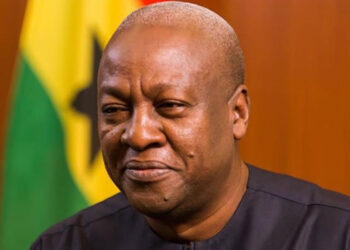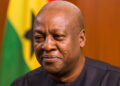
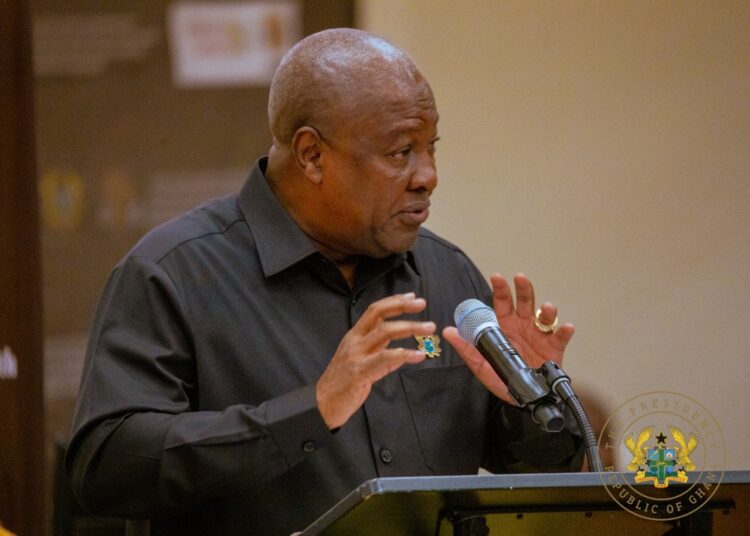
President John Dramani Mahama has warned that the world has become a “mad world,” pointing to conflicts in Gaza, Ukraine, and rising trade tensions among traditional allies, during a Special High-Level Reparations Dialogue at the University of the West Indies in Jamaica.
His remarks contrasted the optimism that followed the end of the Cold War with what he described as renewed global turmoil, while urging continued commitment to multilateralism.
President Mahama opened his reflection by recalling the arms race and ideological division that defined the Cold War era, drawing on his own experience in the Soviet Union during a pivotal period of political transformation.
“…indeed, I was in the Soviet Union at the time Gorbachev became the leader of the Soviet Union, and he began the whole idea of perestroika, glasnost, and all that. And with time, the Berlin Wall came down, and Eastern Europe virtually took down the Iron Curtain”.
President John Dramani Mahama
He described the sense of optimism that accompanied this period, particularly around expectations for how resources previously devoted to military competition might be redirected toward global development.
A More Sobering Present
Reflecting on that earlier optimism, President Mahama acknowledged that expectations from that period have not fully materialised, pointing to ongoing conflicts as evidence that the world continues to grapple with deep divisions.

“I look back today and I think we were overly hopeful. The world still has those extremes,” he said. He referenced the situation in Palestine and Gaza directly, describing events there in stark terms.
“If you see what’s happening in Palestine, in Gaza, I mean, the genocide of the Palestinian people. Today, if you see what is happening on the West Bank, people who have long settled on ancestral lands, they’ve lived there for centuries.
“Suddenly somebody comes and says, you should move from your land. And then they bring a bulldozer, bulldoze your house, and then the Israeli Defense Force comes and fights on behalf of the aggressor”.
President John Dramani Mahama
Referencing Ukraine and Wider Regional Tensions
President Mahama extended his reflection to the ongoing conflict between Russia and Ukraine, along with tensions involving Iran, the United States and Israel, describing the toll these conflicts continue to take.
Despite this sobering assessment, President Mahama urged those committed to democratic values and international cooperation not to lose hope, framing the current moment as one requiring greater unity rather than retreat.
“This is a time we should even come closer together. There are those who would want to disrupt the multilateral system so that they can run roughshod over everybody. The mightiest or the strictest rules”.
President John Dramani Mahama
Criticism of Recent Tariff Policies
President Mahama pointed to recent trade tariff decisions as an example of this disruptive approach, expressing particular surprise at tariffs imposed on close allies of the United States, including Canada.

“Canada is virtually like America’s sidechick, and it’s like a small brother who follows his big brother. And the kind of tariffs that are being slapped on Canada, I said, what did Canada do? Canada is your natural ally”.
President John Dramani Mahama
He extended this criticism to include Europe, questioning the logic of applying similar pressure to longstanding security partners within NATO. “It is the formation of the North Atlantic Treaty Organization that has given the kind of influence that America wills, and suddenly you slap tariffs on NATO. I don’t know. It’s a mad world now,” he said.
Hope for Restored Global Stability
Despite his critical assessment of current global dynamics, President Mahama closed his remarks with a note of cautious hope that international relations would eventually stabilise. “We’re hoping that calm will be restored somehow. We’ll be cured of our mental illness and calm will come back to the world,” he said.
President Mahama’s remarks came during a Special High-Level Reparations Dialogue at the University of the West Indies, an event centred on discussions of historical injustice and reparative justice tied to the transatlantic slave trade.
While his comments extended beyond the dialogue’s core theme into broader reflections on contemporary global conflict, they reflect a consistent thread running through his engagements during the Jamaica visit, connecting historical struggles for justice and self-determination to present-day international relations.
A Broader Context for the President’s Remarks
President Mahama’s reflections arrive at a moment when global attention remains fixed on several ongoing conflicts, including the war in Ukraine, tensions in the Middle East, and shifting trade relationships among traditionally allied nations.
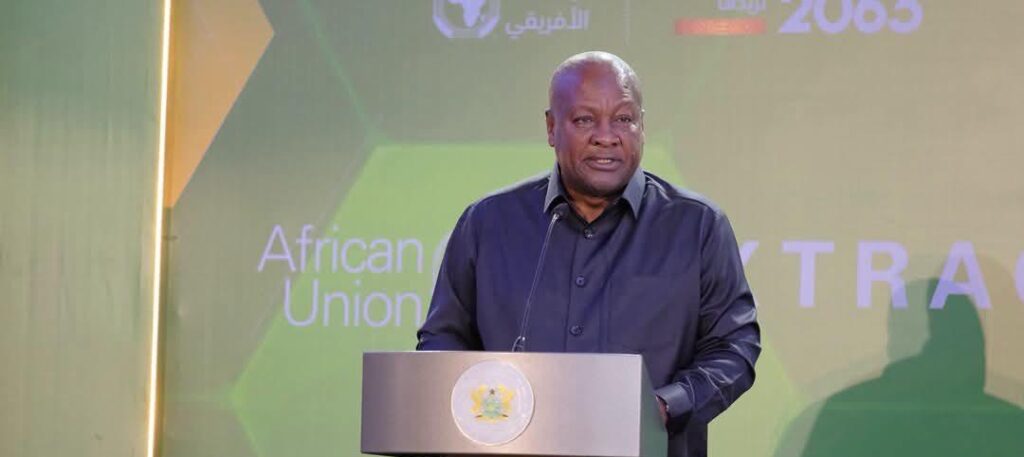
His comments, delivered before an academic and diplomatic audience at UWI, add the perspective of an African head of state to ongoing international discourse about the durability of multilateral institutions amid rising geopolitical tension.
As the President continues his engagements in Jamaica, his remarks at the Reparations Dialogue offer insight into how he connects historical themes of justice and liberation, central to the reparations discussion itself, with his broader concerns about the current state of global governance and international cooperation.
READ ALSO: Spain Reports 70,000 Ceuta Migrants Back in Morocco