
Political scientist Dr. John Osae-Kwapong says the Supreme Court’s ruling scrapping the party delegate system will push up the cost of contesting a primary in Ghana, but he expects the same shift to make vote buying far harder to sustain.
He spoke in an exclusive interview with The Vaultz News about the judgment, which gives parties one year to allow every registered member in good standing to vote directly in presidential and parliamentary primaries.
Dr Osae-Kwapong, a Democracy and Development Fellow at CDD-Ghana and Project Director of The Democracy Project, argued that a candidate who once spent money persuading a small college of delegates must now stretch the same resources across an entire constituency or nation.
That arithmetic, in his reading, prices financial inducement out of reach for most aspirants and forces internal contests back toward ideas, record and personal strength.
“Definitely. But for me, the implication is about the cost of running the campaign. Under the delegate system, candidates simply go and caucus with delegates, hold conversations with them, and leave. With an open primary, you have to canvass the entire constituency.”
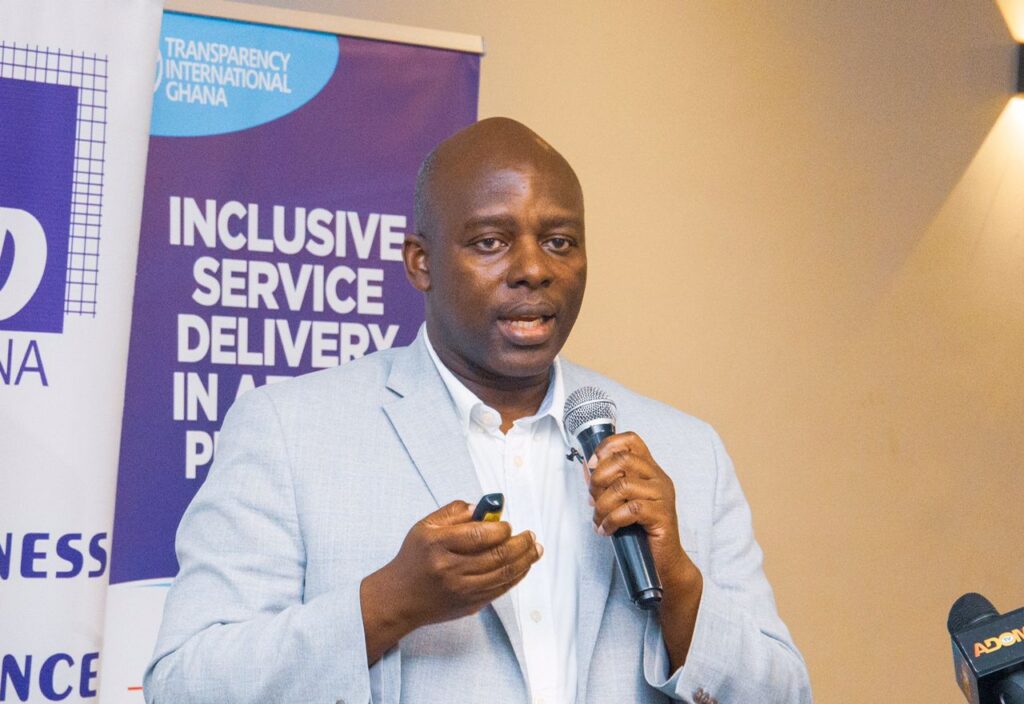
Dr. John Osae-Kwapong, Democracy and Development Fellow, CDD-Ghana; Project Director, The Democracy Project
The size of that constituency will determine the size of the bill. “Depending on how big or small that constituency is, it raises the operational cost of seeking the party’s ticket and then contesting the general election,” he said.
Not every aspirant faces the same adjustment. Dr Osae-Kwapong noted that a sitting member of parliament who already travels the entire constituency to defend a seat and a presidential candidate who campaigns nationally have long operated beyond the delegate college.
The shock lands hardest on those who built their strategy around a small electorate. He put a figure on the change to illustrate the scale. “If you previously needed GH¢10,000 to visit delegates, you may now need three, four or five times that amount to reach the entire constituency.”
Why a wider franchise raises the price of vote buying
Dr Osae-Kwapong accepted the warning from critics that widening the electorate could simply raise the price of entry rather than squeeze money out of politics. He treated the concern as serious, but incomplete.
“So it is a legitimate concern. I recognise it. But it also raises the cost of using financial inducement to win votes, and I am hoping that increased cost becomes a deterrent”.
Dr. John Osae-Kwapong, Democracy and Development Fellow, CDD-Ghana; Project Director, The Democracy Project
That deterrent effect sits at the centre of his case for the ruling. If the charge against the delegate system was that a handful of voters could be bought, then the remedy lies in making the electorate too large to buy.

He framed the outcome he wants as a shift in what actually decides a primary. Money will not vanish from Ghanaian politics, he conceded, but its influence should shrink relative to the substance a candidate brings. For him, the test of this reform will be whether party members reward argument over handouts.
“I am hoping that deterrent turns this into a competition of ideas. Even if money still plays some role, you elevate ideas and the strength of the candidate far above the use of money.”
Dr. John Osae-Kwapong, Democracy and Development Fellow, CDD-Ghana; Project Director, The Democracy Project
He was candid about the optimism running through that expectation, while insisting it rests on a practical limit rather than on faith. “That is my idealistic and hopeful expectation, because I do not believe candidates have unlimited resources to induce an entire constituency.”
The democratic case for scrapping the delegate system
Pressed to offer one argument to those warning the ruling will create trouble in the long run, Dr Osae-Kwapong returned to the internal life of the parties themselves.
“It makes the processes within our political parties more democratic. Instead of a small group hijacking the nominating process and determining who your parliamentary or presidential candidate will be, every registered member in good standing now has a voice and a say.
“It will make our parties and their internal processes more democratic; that is a win for democracy”.
Dr. John Osae-Kwapong, Democracy and Development Fellow, CDD-Ghana; Project Director, The Democracy Project
He then reached for a plainer version of the argument, one he credits to his mother, which exposes the inconsistency ordinary members feel at every election cycle.
“My mother would put it this way. When it comes to primaries, you say only a few delegates can decide who becomes the parliamentary candidate or flag bearer. But when it comes to the general election, suddenly you need my voice and my vote to elect the party’s candidate”.
Dr. John Osae-Kwapong, Democracy and Development Fellow, CDD-Ghana; Project Director, The Democracy Project
Dr Osae-Kwapong acknowledged that defenders of the old arrangement have a theory of their own, grounded in the logic of representation that runs through the wider political system.

“I have heard proponents of the delegate system argue that it is also democratic, because delegates vote on behalf of party members, and representation is a component of democracy. We do not all vote directly on bills before parliament; we go through our members of parliament.”
Dr. John Osae-Kwapong, Democracy and Development Fellow, CDD-Ghana; Project Director, The Democracy Project
He does not find that defence sufficient. Weighing the two positions, he settled on the comparison that has guided his stance on open primaries for years.
“But when all is said and done, my argument remains that an open primary makes political parties and their processes, especially the selection of a candidate for parliament or the presidency, more democratic than they currently are,” he said.
READ ALSO: Reform UK Pledges to Imprison Bosses Employing Illegal Migrants