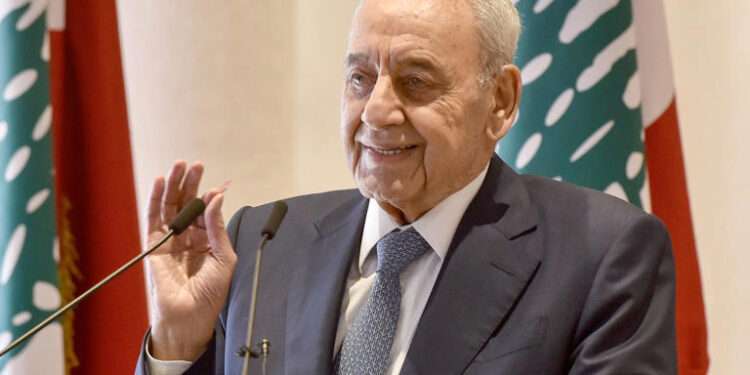
Lebanon’s parliament has voted to abolish the death penalty, becoming the first country in the Middle East to formally end capital punishment.
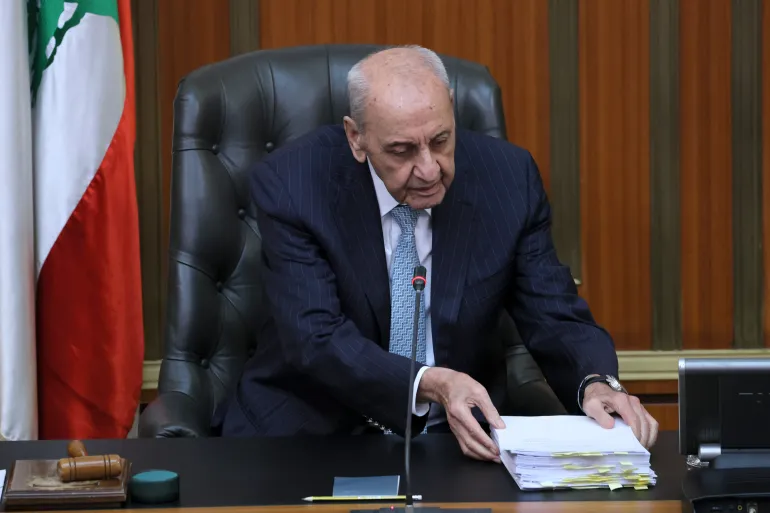
The 128-member parliament approved the legislation after lawmakers made several amendments to the proposed law. Most parliamentary blocs voted in favour, while the Hezbollah parliamentary bloc opposed the measure. Justice Minister Adel Nassar, who was present in parliament during the vote, described the decision as a “historic step” for Lebanon.
Under the new law, the death penalty will be replaced by life imprisonment with aggravated hard labour. However, questions remain over how the new punishment will be implemented, with some lawmakers saying the legislation does not yet clearly define what aggravated hard labour will involve.
Hard labour already exists within Lebanon’s legal system and has appeared in court rulings, but it has rarely been enforced in recent years. The country’s prisons are overcrowded and under-resourced, while Lebanon’s wider financial crisis has severely limited the capacity of the prison system to implement custodial sentences.
The parliamentary vote formally ends a longstanding practice in which Lebanon retained the death penalty in law but did not carry out executions. The country has observed an unofficial moratorium on executions since January 2004. Although no executions have taken place for more than two decades, Lebanese courts have continued to issue death sentences. Under the previous system, an execution required a decree signed by the President, Prime Minister and Justice Minister. No such decree has been signed since 2004.
Before the latest legislation, capital punishment could be imposed for some of Lebanon’s most serious offences, including aggravated murder, certain terrorism-related crimes in which people were killed, treason, espionage and offences against state security. According to figures from the Lebanese Ministry of Justice’s Directorate of Prisons, 85 people were facing death sentences at the end of 2025.
Previous attempts to abolish capital punishment had failed. Legislation introduced in parliament in 2004 did not pass, while another proposal put forward by the Justice Ministry in 2008 also failed to secure the necessary support.
Amnesty International welcomed the latest vote, describing it as an important development after years of maintaining a moratorium without formally removing capital punishment from the law.
Heba Morayef, Amnesty International’s Middle East and North Africa director, called the decision “a major milestone and a victory for human rights in the country.” “After more than two decades without executions, today’s step transforms a precarious hiatus in executions into lasting legal protection upholding the right to life and bringing Lebanon in line with the global trend towards abolition,” Morayef said.
The decision comes as Lebanon’s parliament considers another contentious legislation; a broad general amnesty law that could reduce sentences or lead to the release of some people convicted of violent offences. The proposed amnesty would be the largest since Lebanon’s 15-year civil war ended in 1990.
It has already drawn opposition from relatives of Lebanese soldiers and security personnel killed in attacks. Some families have protested against the proposed amnesty, arguing that those responsible for killing their relatives should face the harshest possible punishment. Some have said they expected perpetrators to be executed rather than receive reduced prison sentences or release under an amnesty.
Lebanon’s decision also places the country at odds with a number of regional developments involving capital punishment. Jordan resumed executions in June, carrying out its first executions since 2017. In Israel, lawmakers have approved legislation expanding the circumstances in which the death penalty can be imposed. Israeli Members of Parliament passed a law in May providing for capital punishment and public trials for people involved in the Hamas-led attacks and mass hostage-taking in October 2023.
Iran has also continued to use the death penalty, including in cases involving national security charges. UN Human Rights Chief Volker Türk has expressed concern about what he described as an increase in executions and warned that capital punishment was being used to create fear and suppress dissent.

Türk said earlier this month that at least 56 people had been executed in Iran on national security-related charges since March 19, including 27 cases linked to nationwide anti-government protests in January.
Against that regional backdrop, Lebanon’s decision marks a significant shift in its approach to criminal justice. While the country had effectively stopped carrying out executions more than two decades ago, capital punishment remained available to the courts.
The new legislation removes that possibility and replaces death sentences with life imprisonment and aggravated hard labour, although its implementation will depend partly on Lebanon’s ability to address longstanding challenges within its prison system. For supporters of abolition, however, the parliamentary vote represents the formal conversion of Lebanon’s long-running moratorium into a legal ban and places the country among nations that have rejected capital punishment as a form of criminal justice.
READ ALSO: Chief Justice: Lawyers Cannot Abstain from Cases Over Legal Vacation