
BOSTenergies has moved to address infrastructure constraints at its Kumasi Depot after discussions with fuel tanker drivers prevented a planned three-day strike that could have disrupted the movement of petroleum products from a key distribution point in the Ashanti Region.
The dispute centres on a damaged loading arm and inadequate parking capacity at the depot’s Bulk Road Vehicle (BRV) Park.
While BOSTenergies says petroleum demand continues to be met through the loading arms currently in operation, the episode exposes a less visible vulnerability in Ghana’s downstream energy system: fuel security depends not only on having petroleum products in storage, but also on having functioning infrastructure to move them efficiently into the market.
Kumasi Depot Faces Infrastructure Pressure
BOSTenergies says the damaged loading arm was already being addressed before the drivers announced their intention to strike, with a contractor engaged to replace the equipment.
The company says the intervention is intended to restore the loading facility to the required operational, reliability and safety standards.

“The concerns raised by the tanker drivers were already known to management and were actively being addressed.”
BOSTenergies
The immediate assurance that the depot can continue serving market demand is important.
A disruption at a petroleum depot does not necessarily create an immediate national fuel shortage, but prolonged restrictions on loading can slow the movement of products and place additional pressure on other distribution points.
That makes the condition of loading infrastructure an energy-security consideration, particularly in a market where petroleum products must be transported by road to consumers and businesses across different parts of the country.
200-Truck Facility Targets Distribution Bottleneck
Parking capacity presents a longer-term challenge.
BOSTenergies says it had already acquired land for a dedicated facility capable of accommodating 200 trucks and has now awarded a contract for its construction.
Until the new facility is completed, the company is leasing a third-party location to provide additional parking for BRVs.
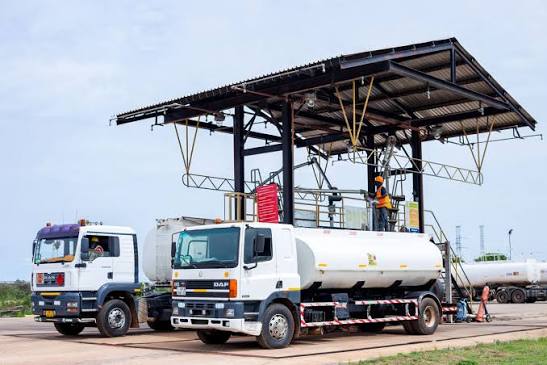
“The planned expansion is expected to significantly improve parking capacity and ease congestion associated with tanker operations at the Kumasi Depot.”
BOSTenergies
The planned expansion is significant because congestion around a petroleum depot can become more than a traffic-management problem.
For tanker operators, inadequate parking can increase waiting times and complicate the movement of vehicles through loading areas.
At the system level, prolonged delays can reduce the efficiency with which stored petroleum products are converted into actual market supply.
In other words, storage capacity only strengthens energy security when the infrastructure downstream of the storage tank can keep pace.
That is where the Kumasi investment becomes relevant to the wider energy sector.
Ghana’s petroleum supply chain involves importers, storage facilities, depots, tanker operators, Oil Marketing Companies and consumers.
Weakness at any major interface can affect the efficiency of the entire chain.
Strike Suspension Removes Immediate Supply Risk
Following engagement with the tanker drivers’ representatives, the planned industrial action has been suspended, allowing discussions with BOSTenergies to continue while the outstanding issues are addressed.

“The tanker drivers have agreed to suspend their intention to embark on the proposed three-day strike and continue dialogue with BOSTenergies as the outstanding concerns are addressed.”
BOSTenergies
The suspension is therefore a temporary resolution rather than the end of the infrastructure problem.
The more consequential question is whether the planned interventions are completed quickly enough to prevent the same concerns from becoming recurring operational constraints.
The damaged loading arm requires physical replacement, while the proposed 200-truck facility will require construction before its full benefits can be realised.
Until then, the depot remains dependent on existing loading infrastructure and interim parking arrangements.
Petroleum Security Extends Beyond Fuel Stocks
The episode offers a useful reminder about how Ghana’s downstream energy security should be measured.
Fuel availability is often discussed in terms of imports, storage volumes and national consumption.
But those indicators do not capture the ability of the system to move products from strategic storage locations to the businesses, filling stations and consumers that depend on them.
A depot with petroleum products available but inadequate loading or vehicle-handling infrastructure cannot perform at its full capacity.
That makes BOSTenergies’ intervention more than a response to a dispute with tanker drivers.

It is part of the broader requirement to keep Ghana’s petroleum distribution network operational, safe and capable of absorbing growing logistical demands.
BOSTenergies says it will continue engagement with the tanker drivers, the National Petroleum Authority and other relevant stakeholders.
The immediate strike threat may have been contained, but the underlying lesson is harder to ignore: Ghana’s fuel-security strategy must give as much attention to the infrastructure that moves petroleum as it does to the petroleum stored within the system.
READ ALSO: GSE Opens Week Under Pressure Despite Strong Gains