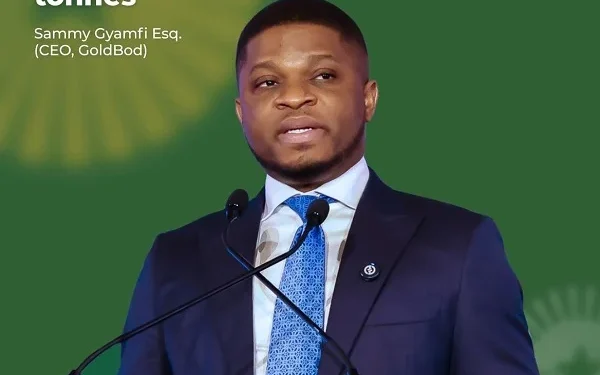
Ghana Gold Board Chief Executive Officer Lawyer Sammy Gyamfi has unveiled a package of measures the Board is deploying against illegal mining, ranging from speed boats for water-body enforcement to a national gold traceability system, in an address at the National Mining Dialogue 2026 in Accra on Tuesday, August 18, 2026.
Speaking under the theme “Rethinking the Social License to Operate,” Mr Gyamfi framed Goldbod’s contribution as running alongside the state’s enforcement effort rather than duplicating it, building on a donation of pickup vehicles and five million Ghana cedis to the National Anti-Illegal Mining Operations Secretariat the previous year.
His remarks set out four separate strands of activity, spanning enforcement logistics, sector formalisation, supply-chain traceability and environmental reclamation, each carrying its own 2026 or 2027 timeline.
Boats for the Water Bodies, Then a Formalisation Push
The Gold Board is currently procuring high-specification speed boats for NAIMOS, Mr Gyamfi said, intended to strengthen enforcement in and around the water bodies where galamsey has done some of its worst damage to rivers feeding the country’s water treatment system.

The larger structural commitment follows in January 2027, when Goldbod will launch an ASM formalisation and financing support programme built in collaboration with the Ministry of Lands and Natural Resources, the Minerals Commission and the ministry’s Outcomes Department.
The programme is designed to move artisanal miners toward legal, OECD-compliant status through regulatory compliance support, capacity building, and financing directed at concession viability, equipment and mining services.
Goldbod Unveils ASM Formalisation Drive, Speed Boats to Fight Galamsey. “We cannot continue to make mining the preserve of multinationals through large-scale mining,” he said.
He argues that the country’s youth need support and that many artisanal miners are willing to work responsibly if the government creates what he calls a congenial atmosphere for them to thrive.
He pointed to Peru as the model, saying that country’s ASM sector had been transformed by exactly that kind of state backing.
A Traceability System With Teeth
By the end of 2026, Mr Gyamfi said, the Ghana Gold Board expects to contract a technology-driven traceability system currently out to national competitive tender.
The system is meant to trace every ounce of gold Goldbod purchases back to its mine of origin, strengthening responsible sourcing and accountability across the value chain. The mechanism carries a financial penalty built into it.

Where gold is traced to a mine operating irresponsibly, Mr Gyamfi said, the state would have the option to confiscate it outright or purchase it at a punitive discount, a disincentive intended to make illegal and irresponsible mining less commercially attractive than formal, compliant production.
The tender fits a pattern Goldbod has been building through the year.
The Board has already begun profiling artisanal miners through its licensing, gold-buying and receipting systems to establish the geographical distribution of gold entering the formal market, an exercise Mr Gyamfi has said started roughly two months ago as the domestic gold trade came under Goldbod’s formal regulatory framework.
Reclaiming What Galamsey Destroyed
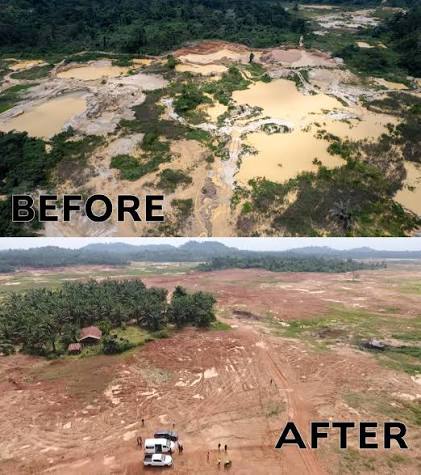
Under its statutory sustainability mandate, Mr Gyamfi said, the Gold Board has commenced reclamation of 50 hectares of degraded land in the Tano Nimiri Forest Reserve, land he noted was destroyed before Goldbod itself existed.
The Board intends to expand that programme by a further 150 hectares of devastated forest land in 2027. The environmental commitment extends to public water infrastructure damaged by mining pollution.
Goldbod is fully funding the rehabilitation of three of the six Ghana Water Limited treatment plants shut down over poor water quality linked to irresponsible mining and other activities: Daboase, Sekyere-Himeng and Bonsa, which together serve more than 76 communities and over 100,000 users across the Western and Central regions.
The remaining three plants, at Kwanyaku, Baafikrom and Asuokyiri, will be fully funded by the Board in 2027.
A Reform Programme Under Its Own Legal Mandate
The announcements build on a reform agenda Mr Gyamfi has pursued since his appointment as Goldbod’s first Chief Executive Officer in April 2025, under the Ghana Gold Board Act, 2025 (Act 1140).
Since then, the Ghana Gold Board has introduced a new licensing regime, rolled out District Gold Buying Centres, and begun the traceability system now going to tender.
Lawyer Sammy Gyamfi has argued in recent public remarks that Ghana’s galamsey crisis traces partly to decades of inadequate state support for artisanal and small-scale mining following the sector’s 1989 legalisation, with successive governments underinvesting in training, capacity building, equipment monitoring and reclamation.
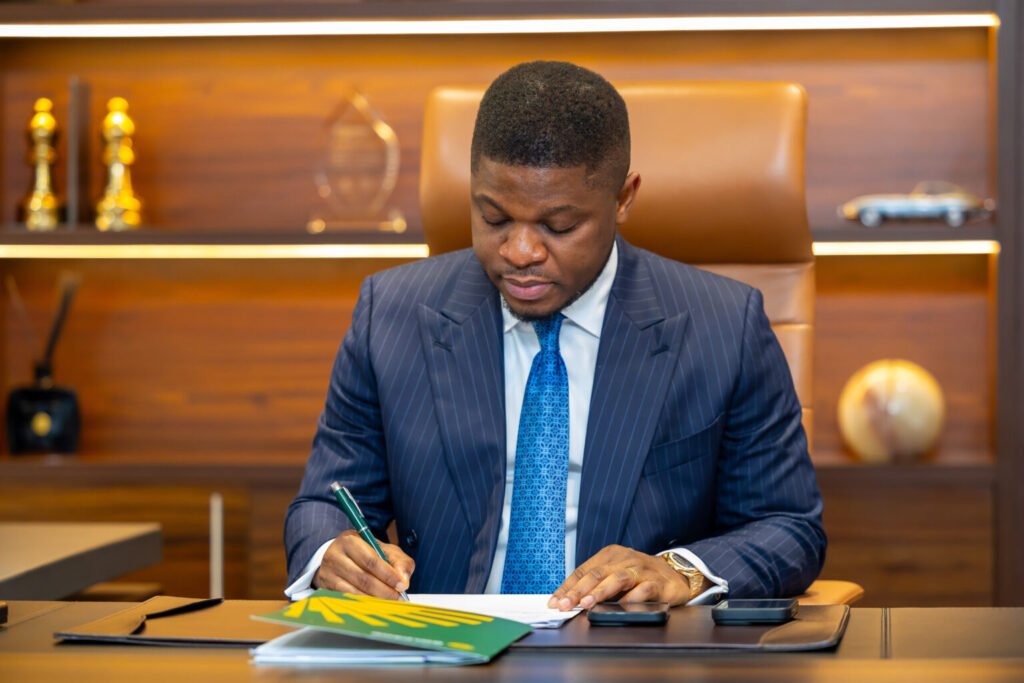
The measures announced at the Dialogue are pitched as beginning to close that gap rather than only policing its consequences. The National Mining Dialogue 2026 drew a cross-section of the sector’s regulators and stakeholders.
Attendees included Chief of Staff Dr Julius Debrah, Minister for Lands and Natural Resources Emmanuel Armah-Kofi Buah, Minerals Commission Chief Executive Isaac Andrews Tandoh, and Ga Mantse Nii Tackie Teiko Tsuru II, alongside licensed gold buyers, aggregators and small-scale mining leadership.
READ ALSO: Cedi Cuts 2026 Losses by More Than Half