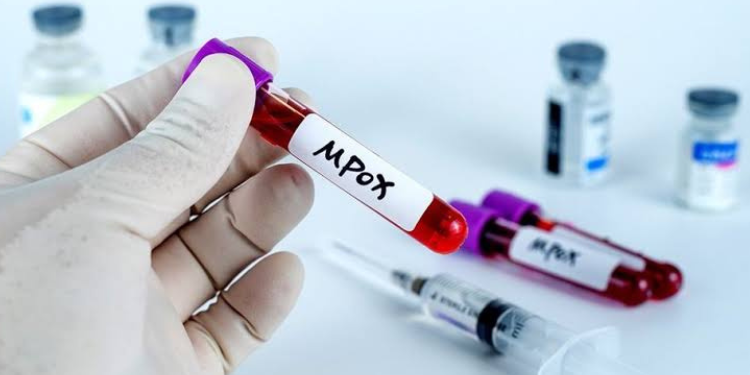
UNICEF has scaled up support to Guinea-Bissau’s Ministry of Public Health following the country’s first-ever mpox outbreak, as children under the age of 15 account for half of the 46 suspected cases recorded since the disease was detected.
Guinea-Bissau declared its first mpox outbreak on 4 July 2026 and has since confirmed seven cases, all involving adults, as of 17 August. Six of the confirmed infections were recorded in the Autonomous Sector of Bissau, while one case was reported in the Biombo Region. No deaths have been recorded so far.
However, the significantly higher number of suspected cases has emerged as a major concern for health authorities and international partners supporting the response.
Of the 46 suspected cases, 23 involve children below the age of 15. Sixteen of those children are between zero and four years old, placing a particularly vulnerable group at the centre of the country’s emerging public health challenge.
The situation is especially concerning because confirmed cases do not appear to be epidemiologically connected, raising the possibility that infections are occurring through undetected chains of transmission.
For a country reporting mpox for the first time, the absence of clear links between confirmed cases could make it difficult for health authorities to establish how extensively the virus is circulating within communities.
UNICEF Deputy Representative in Guinea-Bissau Sandra Martins described the outbreak as a significant public health event, even though the number of confirmed infections remains relatively low.
“This is the first time mpox cases have been reported in Guinea-Bissau, making even a small outbreak a major public health event.
“While the country’s surveillance system remains extremely fragile, we face the risk that cases are going undetected, particularly among children who are the most vulnerable to severe complications.”
Sandra Martins
The warning highlights critical gaps in Guinea-Bissau’s community-based surveillance capacity. Health authorities and partners continue to encounter difficulties in identifying contacts, testing samples and systematically tracing how infections are spreading.
These weaknesses could make it harder to detect cases early and prevent transmission, particularly in communities where access to healthcare and reliable public health information remains limited.
According to UNICEF, it is working alongside the Ministry of Public Health, the World Health Organization and other partners to strengthen the government-led response.
The support is focused on several critical areas, including surveillance and contact tracing, infection prevention and control, and water, sanitation and hygiene measures in healthcare facilities.
The agency is also working to ensure that children and families receive timely and accurate information about mpox, its symptoms and measures that can reduce the risk of transmission.
UNICEF Seeks Urgent Funding as Guinea-Bissau Confronts Surveillance Gaps

As Guinea-Bissau attempts to contain its first recorded mpox outbreak, UNICEF is warning that the country’s limited surveillance capacity could undermine efforts to identify infections before they spread further.
The agency is therefore supporting health authorities in strengthening systems for detecting suspected cases and tracing people who may have been exposed to the virus.
Community-based surveillance is particularly important because health systems may not capture every person who develops symptoms. Individuals living far from healthcare facilities or those who face barriers to accessing medical services may remain outside formal monitoring systems, allowing infections to go undetected.
The high number of suspected infections among children makes this challenge more urgent. Of the 23 suspected cases involving children under 15, 16 are aged between zero and four. Young children can be particularly vulnerable when infectious diseases spread, making early recognition of symptoms and timely access to care essential.
UNICEF is encouraging families to seek medical attention promptly when symptoms associated with mpox appear.
“With early detection, care, and prevention, mpox can be managed and its spread reduced. We urge families to seek care immediately if a child or family member develops a rash, fever, swollen lymph nodes or other symptoms, and to follow guidance on handwashing, avoiding close contact with suspected cases, and reducing stigma.”
UNICEF
These interventions are intended to protect healthcare workers, patients and families while reducing the possibility of infections spreading within medical facilities.
Despite the ongoing response, UNICEF believes that further resources are urgently needed.
The agency is looking for more than $150,000 to fund specific and crucial components of its mpox campaign in Guinea-Bissau.
It stated that flexible emergency funding is required to deploy critical resources and safeguard vulnerable populations as the outbreak progresses.
READ ALSO: Strongman Burner to Drop New Yaanom Featuring Legend Tinny Tomorrow