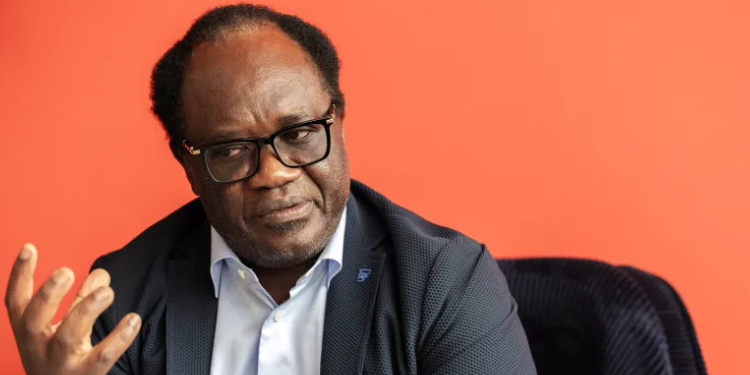
Zambian opposition leader Brian Mundubile has been summoned by police for questioning over an alleged plot that threatens national security, deepening political tensions in the aftermath of an election he has rejected as fraudulent.
Mundubile, who finished second in last week’s presidential election, has accused President Hakainde Hichilema’s government of manipulating the vote to secure a second term for the incumbent.
President Hichilema, who has been in power since 2021, has rejected the allegations and was declared the winner with 60% of the votes cast.
The opposition leader, who has said he intends to challenge the election result in court, has remained out of public view since police raided his residence shortly after the August 13 election.
The operation resulted in the arrest of several leading opposition figures and the death of former Minister Mutotwe Kafwaya, who according to the Zambian police was killed in an exchange of gunfire.
In a statement, the Zambian police indicated that they wanted to question Mundubile and his running mate, Makebi Zulu, as part of an investigation into an alleged scheme involving activities considered a threat to national security.
Police added that the two opposition figures had sought refuge “under international law with a known international organisation,” although the authorities did not identify the organisation involved.
Call-out notices were subsequently served on the lawyers representing Mundubile and Zulu, according to police.
The political tensions escalated after police announced that 11 people, including six opposition figures, had been arrested during an operation.
Mundubile’s NRPUP party rejected the accusations, describing the government’s claims as false and unfounded.
The opposition’s concerns have extended beyond the arrests to the conduct of the election itself. Mundubile has alleged irregularities in the counting process, claiming that documents recording election results may have been tampered with.
The allegations have yet to be independently established, but they have contributed to growing questions over the credibility of the electoral process.
Hichilema Re-Elected as Opposition Challenges Election Credibility
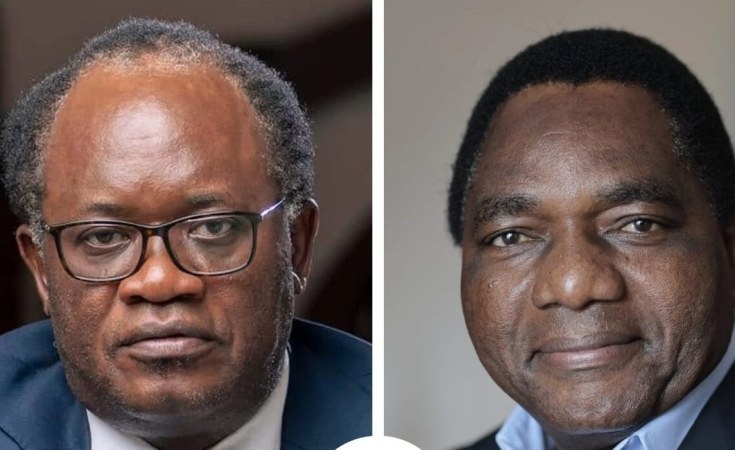
Meanwhile, the Electoral Commission of Zambia announced that Hichilema had secured 60% of the vote, giving the President a decisive victory over Mundubile, who received nearly 38%.
President Hichilema welcomed the result and thanked voters for giving him another mandate.
“We are truly humbled by the trust you have placed in our hands. To those citizens who preferred the ideas presented by our opponents, we hear you, and we will continue to work for you.”
President Hakainde Hichilema
Hundreds of supporters of Hichilema’s United Party for National Development took to the streets of Lusaka after the result was announced, wearing the party’s red colours, dancing, singing and setting off firecrackers to celebrate the president’s victory.
But the celebrations have been overshadowed by allegations from the opposition and concerns raised by election observers over the conduct of the campaign and vote-counting process.
The Electoral Commission temporarily suspended the counting of ballots for around six hours following reports of violence against polling officials and the alleged theft of ballot papers. Counting resumed after the commission said the security threat had been contained.
International observers, including the European Union, warned that the interruption could undermine confidence in the electoral process. Observer missions also raised concerns about restrictions placed on opposition activities during the campaign, saying they may have contributed to an uneven electoral contest.
Oxford Economics Africa similarly warned that events surrounding the election had raised serious questions about the credibility of the outcome.
The election had been closely watched as a test of Hichilema’s first term in office. The President has pointed to economic growth, debt restructuring and declining inflation as major achievements of his administration.
Yet the economic gains have not translated into significantly improved living standards for many Zambians, according to critics. More than 70% of Zambia’s population of about 22 million people lives on less than $3 a day, according to the World Bank.
Zambia’s political environment has therefore entered a sensitive period in which economic pressures, opposition grievances and security concerns are converging.
The country has historically maintained a reputation for peaceful political transitions. Since the return to multiparty politics in 1991, every change of president has been achieved through elections.
The developments following the latest elections, however, have placed that democratic record under renewed scrutiny. With Mundubile preparing to challenge the election result and now facing a police summons linked to an alleged national security plot, pressure is mounting on the Zambian government to ensure that political disputes are handled through transparent legal and constitutional processes.
READ ALSO: Lasmid Drops New Single “Liquor Store”