
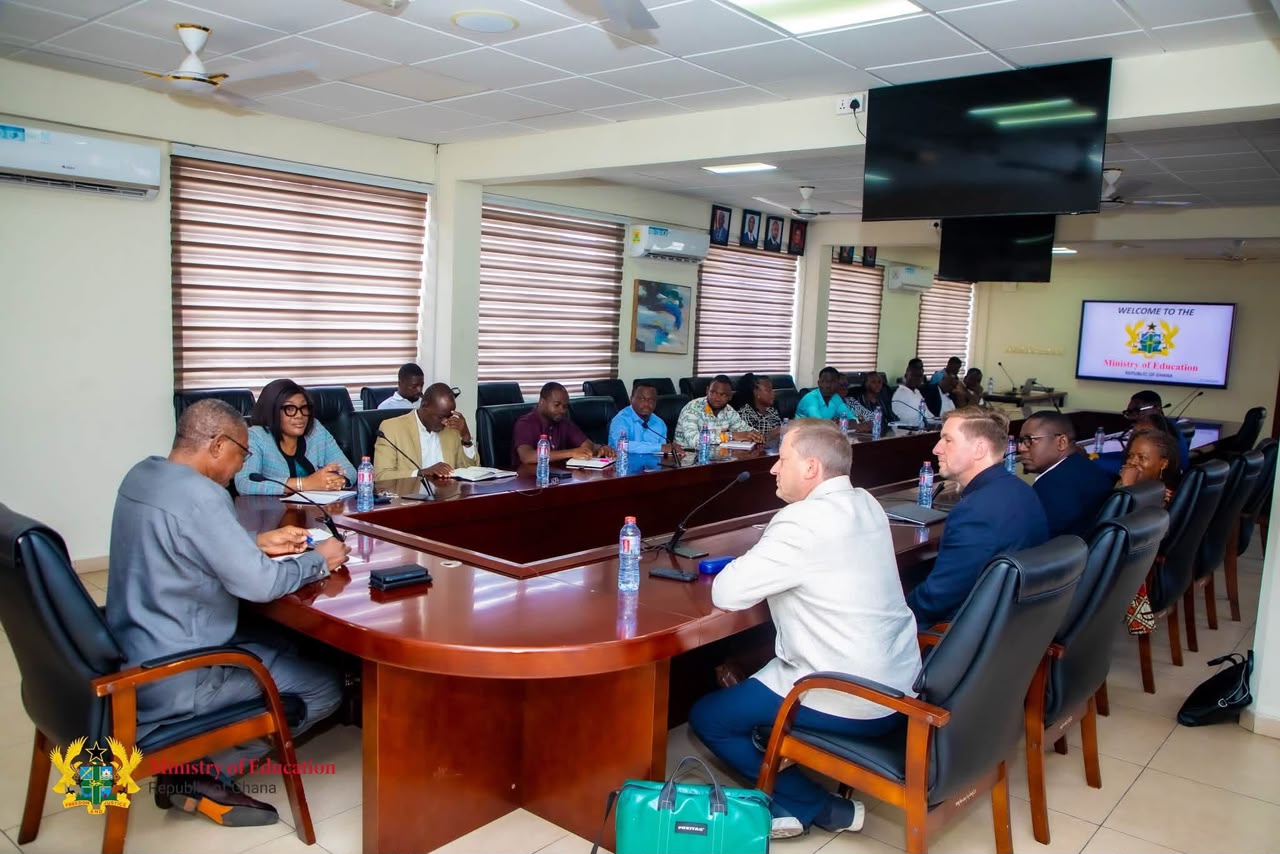
The Ministry of Education has reaffirmed its commitment to deepening collaboration with the Jacobs Foundation as part of ongoing efforts to improve foundational learning and overall education outcomes across Ghana, following a courtesy call by a delegation from the Foundation at the Ministry’s offices in Accra.
The delegation was received by the Deputy Minister for Education, Dr Clement Abas Apaak, in an engagement that provided both sides the opportunity to review progress on their existing partnership and discuss avenues for strengthening collaboration going forward.
Foundation’s Support Helps Unlock US$40 Million Grant
Central to the discussions was the role the Jacobs Foundation has played in helping Ghana access US$40 million under the Global Partnership for Education (GPE) Multiplier Grant, a facility designed to leverage additional financing for education systems in participating countries.
Officials at the meeting noted that this support has been instrumental in positioning Ghana to draw down funding that might otherwise have remained inaccessible without the Foundation’s technical and advocacy backing.
Dr Apaak used the engagement to acknowledge the significance of this support, describing the Foundation’s involvement as a catalytic contribution to the country’s broader education financing efforts.
“The support of the Jacobs Foundation has been instrumental in helping us unlock resources that will directly benefit Ghanaian children, particularly in the areas of foundational learning,”
Dr Clement Abas Apaak

Partner Mobilisation Doubles Total Funding to US$80 Million
Beyond the initial US$40 million secured through the GPE Multiplier Grant, the engagement also highlighted the additional impact of broader partner mobilisation efforts, which have brought the total funding available for education interventions in Ghana to US$80 million.
This doubling of resources, officials noted, reflects the multiplier design of the GPE facility, under which initial grant commitments are matched or expanded through contributions from other development partners.
The delegation and Ministry officials discussed how this expanded pool of funding would be channelled toward key education interventions, with particular attention to initiatives aimed at strengthening foundational literacy and numeracy, areas that have remained a persistent policy priority for the Ministry in recent years.
Focus On Underserved Communities Reaffirmed
A recurring theme throughout the engagement was the shared commitment of both the Ministry and the Jacobs Foundation to ensuring that the financial investment translates into measurable improvements in learning outcomes, particularly for children in underserved communities.
Officials from both sides stressed that mobilising funding, while significant, represents only one part of the broader task, with implementation and monitoring seen as equally critical to the partnership’s long-term success.
Dr Apaak reiterated the Ministry’s determination to ensure that resources reach the children who need them most, noting that government’s broader education reform agenda places strong emphasis on equity and closing learning gaps between advantaged and disadvantaged communities.
“Our priority remains ensuring that every cedi invested translates into real improvements in how our children read, count and learn, especially those in communities that have historically been left behind.”
Dr Clement Abas Apaak
Representatives of the Jacobs Foundation, for their part, reaffirmed the organisation’s continued commitment to supporting Ghana’s education sector, describing the courtesy call as an opportunity to reinforce the working relationship that has developed between the Foundation and the Ministry over recent years.
Both sides indicated an interest in deepening technical collaboration going forward, particularly as implementation of the newly unlocked funding gets underway.
Broader Implications for Ghana’s Education Financing
The engagement comes at a time when Ghana’s education sector continues to grapple with persistent foundational learning challenges, despite years of policy interventions aimed at improving literacy and numeracy outcomes at the basic education level.

The successful mobilisation of US$80 million in combined funding, anchored by the Jacobs Foundation’s support in unlocking the GPE Multiplier Grant, is likely to be viewed as a significant boost to ongoing efforts to address these gaps.
With funding now secured, attention is expected to shift toward implementation, and how effectively the Ministry and its partners are able to translate this substantial financial commitment into tangible learning gains for children across the country, particularly those in underserved and hard-to-reach communities.
READ MORE: Ghana, Korea Deepen Heritage Cooperation Through New Climate Resilience Project