The Minister Designate for Environment, Science and Technology, Honourable Zanetor Rawlings, has called for a unified government response to illegal mining, arguing that the scale of the galamsey problem requires several state institutions to work towards the same goal. The Korle Klottey Member of Parliament made the call during her vetting before Parliament’s Appointments Committee.
Dr Agyeman Rawlings indicated that illegal mining cuts across several areas of government responsibility, making isolated interventions difficult to sustain. She pointed to the involvement of institutions under the environment, lands and local government sectors as evidence of the need for closer collaboration.

“The fight against illegal mining and the subsequent damage it does to the environment and human life are an all-of-government and all-of-society imperative. I do believe that the easiest way to address it is to have effective coordination between the Ministries, Departments and Agencies.”
Honourable Zanetor Rawlings
The Korle Klottey MP explained that her proposed approach would begin with direct engagement among ministers whose portfolios have a bearing on illegal mining. Such discussions, she indicated, would help establish a shared understanding of the problem and the responsibilities of each institution.
Honourable Rawlings identified the Ministry of Lands and Natural Resources and the Ministry of Local Government as key partners in the proposed coordination. She also placed the Environmental Protection Agency at the centre of efforts to understand the environmental situation and assess interventions already underway.
Her proposal seeks to address gaps that can emerge when institutions pursue similar objectives independently. Bringing the relevant ministries together, therefore, would help create clearer lines of responsibility and improve the flow of information between agencies.
The Minister-Designate also proposed stronger monitoring of measures being implemented against galamsey. Regular reports, she indicated, would allow government to track progress, identify weaknesses and determine whether interventions were producing the desired results.
As a Member of Parliament representing an urban constituency, Honourable Rawlings has also been involved in parliamentary discussions on national development and public policy. Her proposed environmental strategy places institutional cooperation at the centre of tackling a problem that affects water resources, farmland and communities across the country.
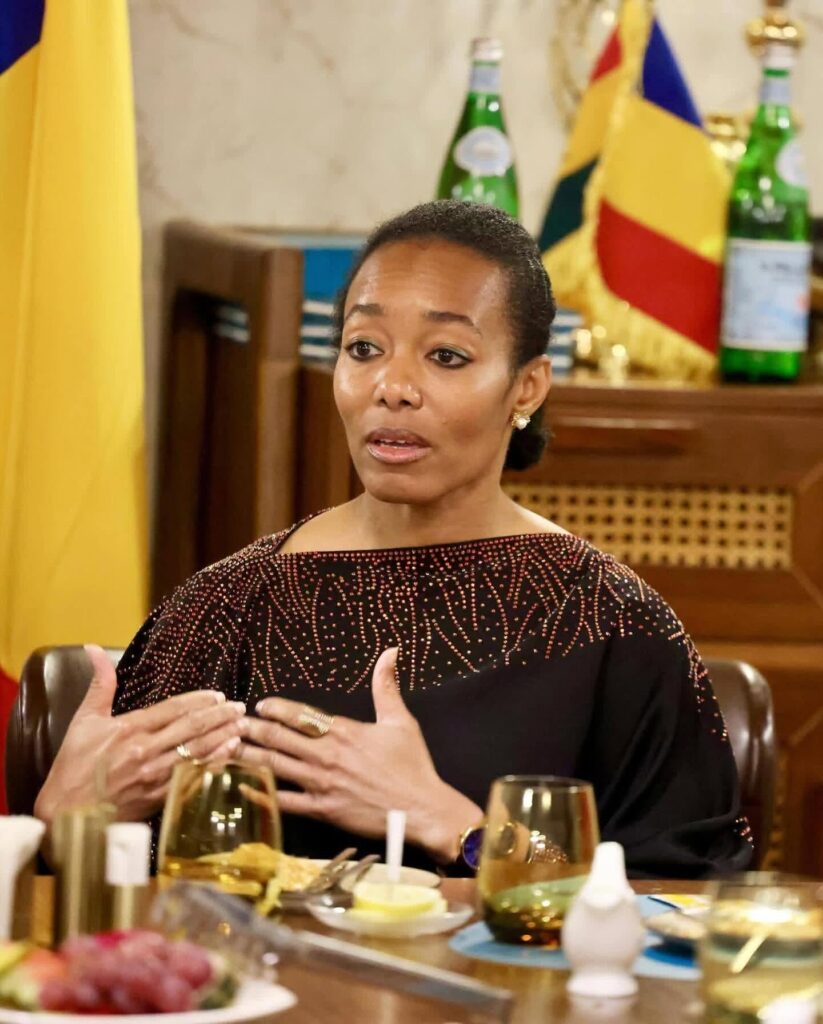
She further indicated that the Environmental Protection Agency would be among the institutions from which she would seek a detailed briefing if approved for the portfolio. The information would help establish the current state of environmental interventions and guide decisions on areas requiring further action.
The proposed engagement would also bring together political and technical actors whose responsibilities intersect in the fight against illegal mining. Such cooperation would give government a common framework for responding to the activities of illegal miners and protecting affected communities.
Scientist Exodus Threatens Ghana’s Research Future
The Minister-Designate for Environment, Science and Technology, Honourable Zanetor Rawlings, also drew attention to the growing loss of scientific personnel from key research institutions, warning that Ghana needs stronger incentives to retain its scientific workforce. She linked the challenge to working conditions, institutional resources and uncertainty surrounding long term professional advancement.
The Korle Klottey Member of Parliament identified institutions such as the Ghana Atomic Energy Commission, the Nuclear Regulatory Authority and the Council for Scientific and Industrial Research among those affected by the departure of skilled personnel. The situation, she indicated, could weaken the country’s ability to sustain scientific research and innovation.
“The rate that we see is not just within the agencies of the ministry. I think we’re having a serious brain drain.”
Honourable Zanetor Rawlings
Honourable Rawlings proposed improvements in the conditions under which scientists work as part of the response. She also called for research institutions to receive sufficient equipment and financial support to enable scientists to carry out meaningful work.
Another priority she identified was the creation of clearer career paths within scientific institutions. Predictable professional progression, she explained, could give researchers greater confidence about their future and provide an incentive to build their careers in Ghana.

The Minister-Designate stressed that financial resources alone would not resolve the problem. She indicated that discussions with scientists would be necessary to understand the specific factors driving their decisions to leave or remain within the country.
Her proposed approach would involve engaging scientists who continue to work within Ghana’s research institutions. Their experiences, she suggested, could provide practical guidance for designing policies that respond directly to the realities confronting the scientific community.
Honourable Rawlings linked the retention of scientists to the country’s wider development ambitions. Strong research institutions require skilled professionals, appropriate facilities and stable career structures to generate the knowledge needed for national progress.
The issue also extends beyond the mandate of the Environment, Science and Technology Ministry. Collaboration with research institutions and other government bodies would therefore be necessary to develop measures that address the different dimensions of the scientific workforce challenge.
READ ALSO: We Need Biological Alternatives To Plastic — Minister-Designate For Environment