United Nations Environment Programme (UNEP) has warned that rising demand for critical energy transition minerals has intensified pressure on natural resources, urging countries to combine responsible mining with stronger recycling and circular-economy practices to secure the materials needed for the global shift to clean energy.
According to the United Nations Environment Programme (UNEP), minerals including copper, lithium, cobalt, nickel and rare earth elements have become increasingly important to the world’s efforts to reduce carbon emissions, as they form the foundation of technologies ranging from electric vehicles and batteries to wind turbines and electricity networks.
The growing importance of these minerals has placed resource security at the centre of the global energy transition.
As countries accelerate investments in renewable energy, electrification, digital infrastructure and energy storage, demand for the materials needed to build these systems is expected to rise sharply.
Elisa Tonda, Chief of Resources and Markets at UNEP, explained that “critical energy transition minerals are one of the building blocks of the low-carbon economy”
According to projections cited by UNEP, demand for critical minerals is on track to double by 2040, driven not only by the clean energy transition but also by the rapid expansion of data centres, consumer electronics and other technologies. If the world achieves its net-zero ambitions by 2050, demand could increase six-fold.
The scale of the expected increase is raising concerns over whether existing supply chains can provide enough minerals without creating new environmental and social problems.
For UNEP, meeting future demand will therefore require more than simply expanding mining operations. The organisation is calling for responsible extraction, stronger environmental and social safeguards, fairer distribution of mining benefits, greater resource efficiency and increased circularity.
“We have to keep resources in the economy for as long as possible, circulating at their highest possible value. It is essential to meet this growing demand with solutions that protect the environment, respect people and support local communities.”
Elisa Tonda,
The challenge is particularly evident in the case of copper, a mineral that has become indispensable to an increasingly electrified global economy.
Copper is used extensively in electricity transmission, renewable energy infrastructure, electric vehicles, buildings, railways and data centres. Electric vehicles can require up to four times as much copper as conventional vehicles powered by internal combustion engines, increasing pressure on supplies as transportation systems move towards electrification.
The United Nations projects that global demand for copper will increase by more than 40 per cent by 2040. At the same time, mined production may struggle to keep pace with consumption.
Moreover, a study by S&P Global cited by UNEP indicates that mined copper production could peak around 2030 before flattening or declining, creating the prospect of a widening gap between available supply and future demand.
This has placed greater emphasis on what experts describe as the “urban mine”: the enormous quantity of copper already embedded in products and infrastructure around the world.
Unlike many resources, copper can be recycled repeatedly without losing its essential properties. This makes existing copper stocks a potentially important source of supply as demand accelerates.
According to Inka Guixà Fisas, CEO of Spain-based copper recycling company La Farga, “one of the world’s greatest copper resources is all around us.”
“It’s in construction, in railways, in data centres, in vehicles. Every product collected is an opportunity to recover copper, support innovation and give this valuable material a new life.”
Inka Guixà Fisas
An estimated two-thirds of copper produced over the past century remains in use, much of it in the form of wires, pipes and other components. If properly collected and recycled, these materials can be returned to the economy and used in new products
Copper Supply Gap Widens
Despite the potential of recycling, UNEP noted that the world cannot rely on secondary materials alone to satisfy rapidly growing demand.
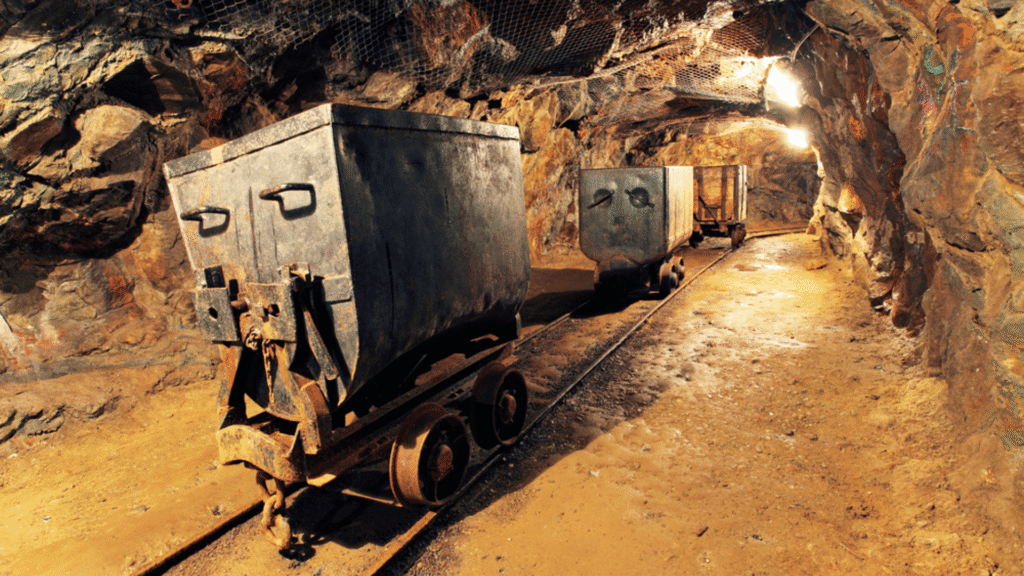
Forecasts from McKinsey indicate that total global copper supply, including recyclable copper, could reach about 30.1 million tonnes by 2031, while demand could climb to approximately 36.6 million tonnes. That would leave a potential shortfall of 6.5 million tonnes within the next five years.
The figures underline a difficult reality confronting policymakers: even as countries seek to reduce their dependence on newly extracted resources, additional mining will remain necessary to supply the minerals required for the energy transition.
The challenge, therefore, is how to expand production without repeating some of the environmental and social damage historically associated with mining.
Aimee Boulanger, Executive Director of the Initiative for Responsible Mining Assurance (IRMA), indicated that “mining is an industry with the incredible upside of providing materials we all need every day, and yet it is uniquely destructive in the way it gets those materials. Those impacts can last for centuries.”
“Responsible mining should respect human rights and the aspirations of communities who live closest to mining. It should provide safe, healthy, supportive workplaces for the workers. It should minimize harm to the environment, and it should leave positive legacies.”
Aimee Boulanger,
READ ALSO: Atletico Madrid Board Entrenches Stance on Julian Alvarez Amid Barcelona Interest