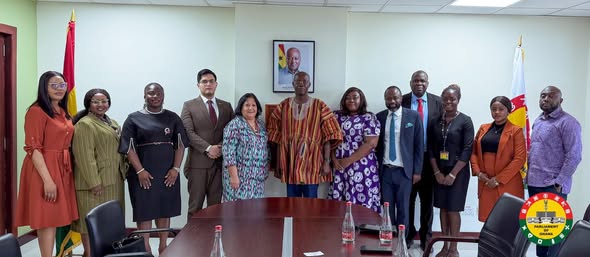
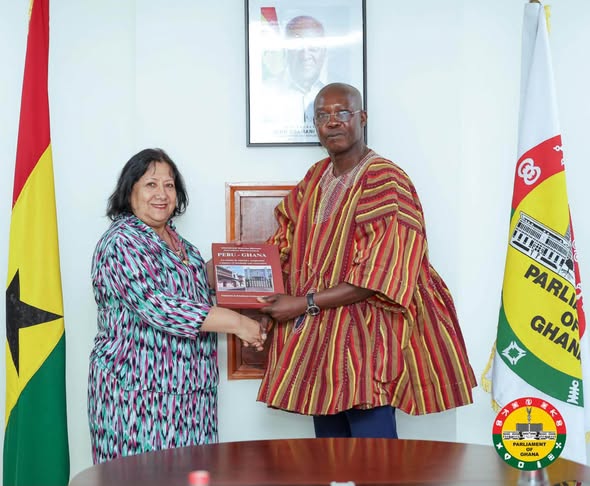
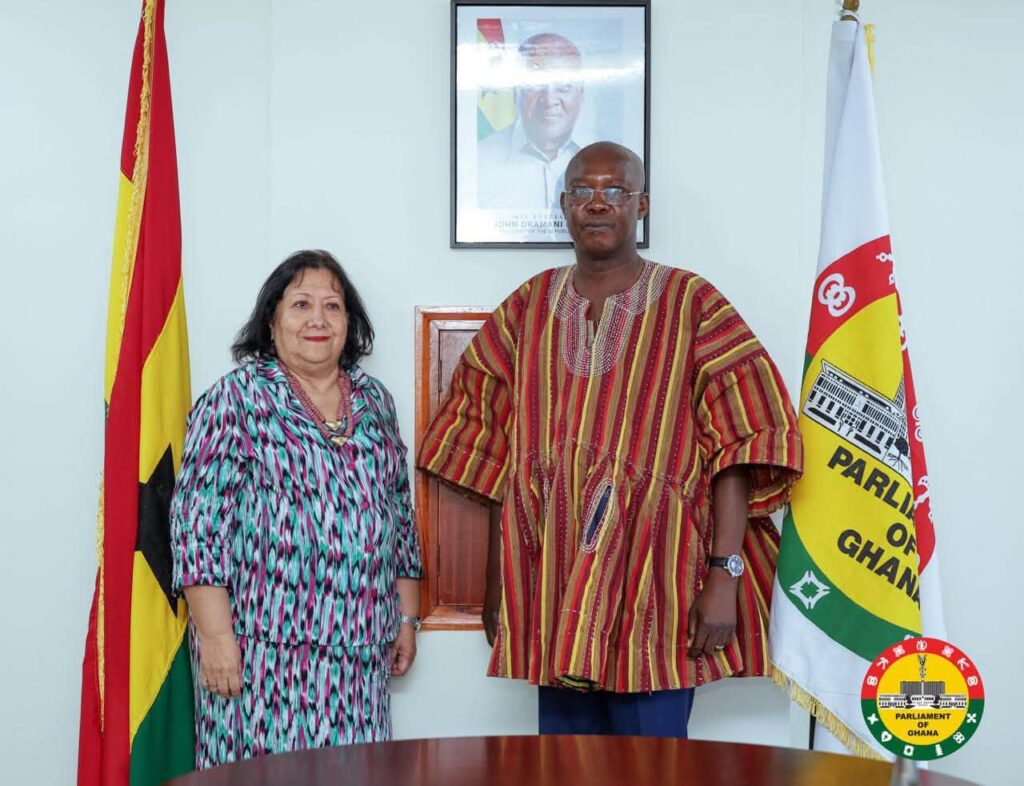
The First Deputy Speaker of Parliament, Bernard Ahiafor, today hosted the Ambassador of Peru for a pivotal bilateral session aimed at accelerating critical institutional reforms and technological adoption in Ghana’s extractive and agricultural landscapes.
Focusing heavily on standardizing natural resource governance, the high-level dialogue mapped out concrete avenues for inter-parliamentary cooperation to tackle illegal small-scale mining, locally known as galamsey, while simultaneously expanding economic trade channels.
The meeting marked a strategic shift toward structured bilateral frameworks, leveraging technical knowledge transfer between two mineral-rich developing nations to address environmental degradation and optimize value addition within primary commodity export networks.
“A key outcome of the meeting was the proposal to establish a Parliamentary Friendship Association between the Parliament of Ghana and its Peruvian counterpart. The discussions concluded with a mutual interest in international collaboration to combat illegal mining and a shared openness to investment in Ghana’s cocoa sector, paving the way for a future of enhanced bilateral cooperation. The First Deputy Speaker assured the Ambassador that steps will be taken to formalise this association to promote greater legislative dialogue and exchange.”
Parliament of Ghana
Expanding on this foundational diplomacy, both delegations underscored the urgency of establishing dynamic regulatory enforcement mechanisms tailored to artisanal extraction.
The First Deputy Speaker assured the Peruvian envoy that prompt legislative steps will be taken to institute a Parliamentary Friendship Association, a body designed to facilitate sustained legislative dialogue, shared policy evaluation, and operational benchmarks between the two national assemblies.
Beyond exchange mechanisms for regulatory systems in small-scale mining, the dialogue probed multi-sectoral ventures encompassing technical knowledge transfer, cocoa value addition, domestic cocoa consumption strategies, and advanced sustainable aquaculture practices.
Framework for Transnational Mining Governance
The collaborative focus on artisanal gold mining comes at a crucial juncture for Ghana’s extractive sector, where unregulated extraction continues to pose severe threats to water bodies, public health, and agricultural land reserves.
Peru brings invaluable historical experience to this alliance, having implemented complex legal formalization programs along with strict traceability protocols within its own artisanal and small-scale gold mining sector in regions like Madre de Dios.
Ghana’s current strategy centered on licensing small-scale operators, enforcing environmental compliance, and integrating informal miners into legal supply chains stands to benefit immensely from South-South technical exchanges that bypass high-cost, Western-centric regulatory models in favor of field-tested frameworks.
Formalizing illegal operations requires robust regulatory oversight combined with technological intervention.
By aligning legislative frameworks, the two nations aim to shut down black-market gold trade corridors that facilitate illegal mining across developing economies.
Shared international mechanisms offer a unified voice in global forums, ensuring that international buyers strictly enforce responsible sourcing standards for precious minerals extracted by small-scale enterprise operators.
Technological Knowledge Transfer & Resource Stewardship
Beyond regulatory oversight, effective extractive governance relies heavily on technology transfer to remediate degraded mining landscapes and introduce non-cyanide, mercury-free mineral processing methods.
Peru’s advanced metallurgical processing techniques present a viable roadmap for Ghanaian small-scale miners seeking higher recovery yields without ecological destruction.
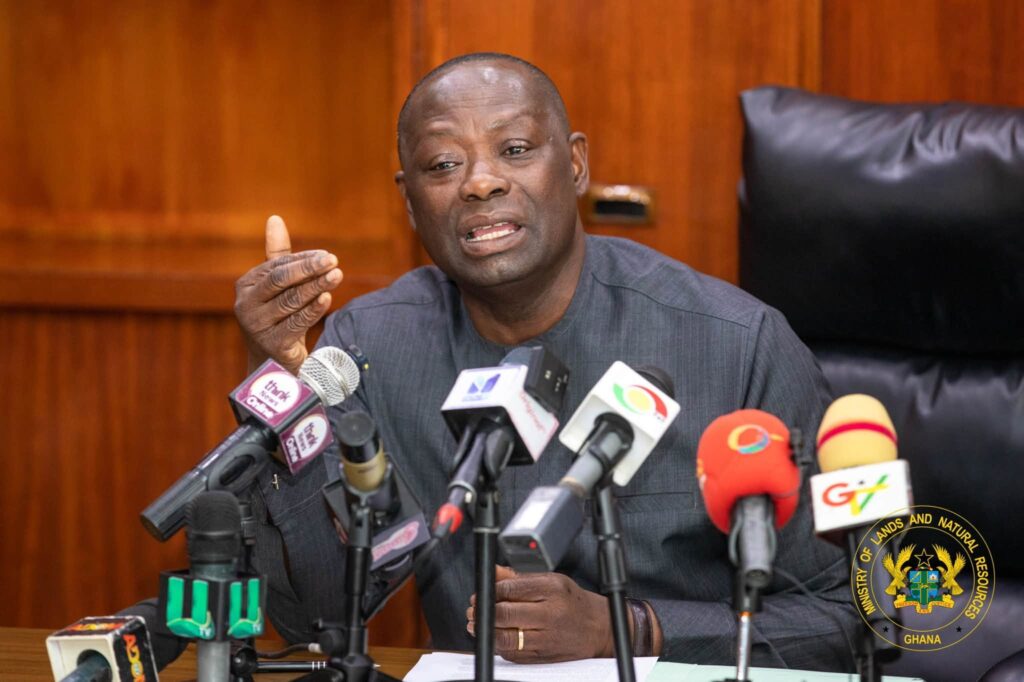
Establishing direct technical links between Peruvian mining institutes and Ghanaian mining regulatory agencies promises to democratize modern geophysical mapping, modern dredging suppression technology, and sustainable tailings management systems across West Africa.
Furthermore, integrating mining governance with agricultural protection remains a vital cornerstone of long-term economic stability.
By linking environmental remediation strategies in mining zones to agricultural revival particularly within cocoa production and fish farming this bilateral partnership sets a comprehensive precedent for natural resource management.
Bridging state-level regulation with practical operational support ensures that small-scale extraction can co-exist alongside vital agricultural ecosystems, building a resilient economic foundation for both nations.
READ ALSO: Kuwait, Pakistan Deepen Defence Ties