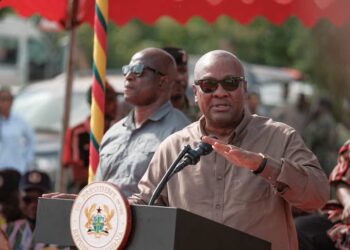
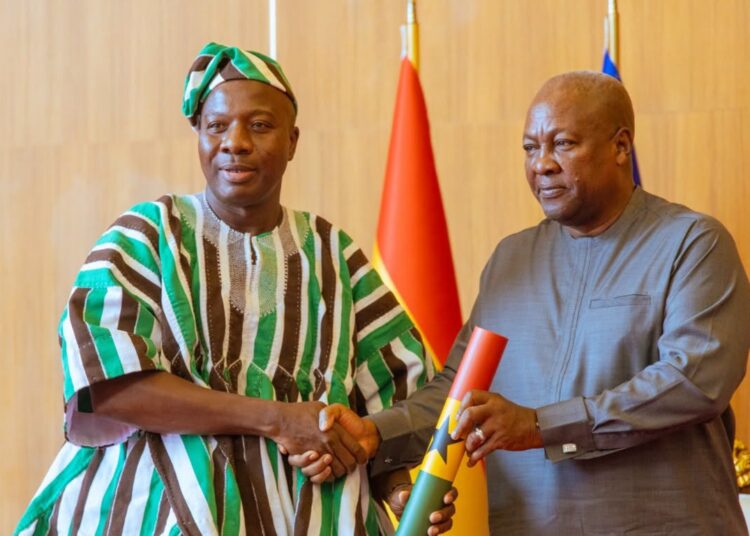
President John Dramani Mahama has charged Mahama Ayariga to make decentralisation meaningful to ordinary Ghanaians and to restore order to the country’s cities and towns.
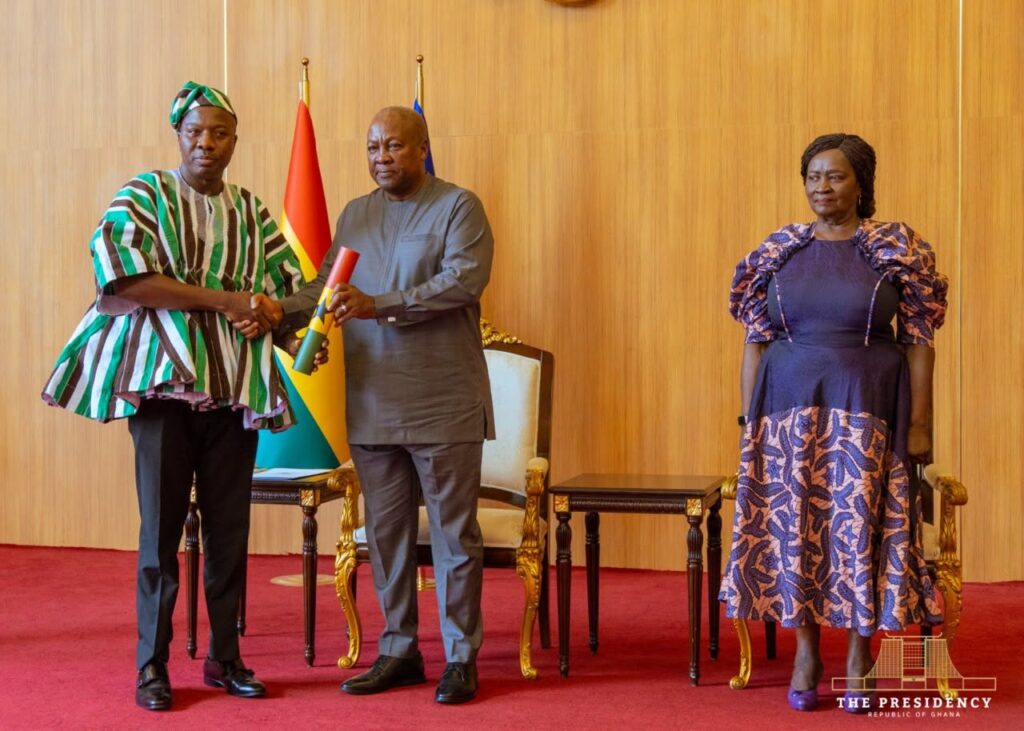
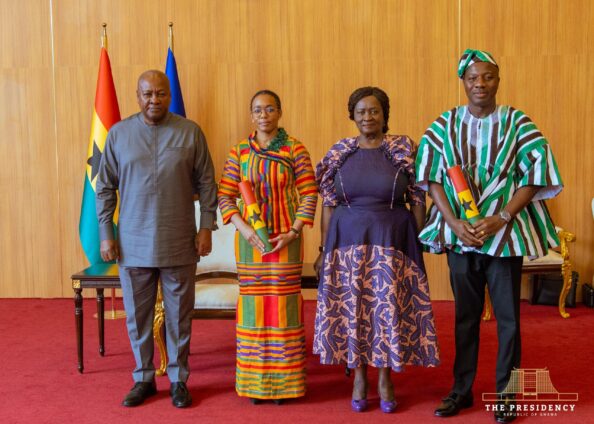
He delivered the charge at Jubilee House in Accra on Saturday, moments after swearing in the Bawku Central MP as Minister for Local Government, Chieftaincy and Religious Affairs.
The President framed the assignment around a single argument. Local government is where citizens most directly encounter the state, and the assemblies that deliver it must become more accountable, financially disciplined, and responsive to the communities they serve.
Where Citizens Meet the State
President Mahama located the ministry’s significance in the daily transactions between residents and their metropolitan, municipal and district assemblies. Communities expect functioning social services, working markets, clean surroundings, reliable local roads, effective planning, and public services that respond when called upon.
That expectation, on his account, is the standard against which the ministry should measure itself. He told Hon. Mahama Ayariga he assumes the portfolio at an important moment in national development, and asked him to close the distance between the promise of decentralisation and what citizens actually receive from their assemblies.
The financial discipline element of the charge speaks to a structural weakness. Assemblies remain heavily dependent on transfers from the District Assemblies Common Fund, and their own revenue effort has long underperformed.
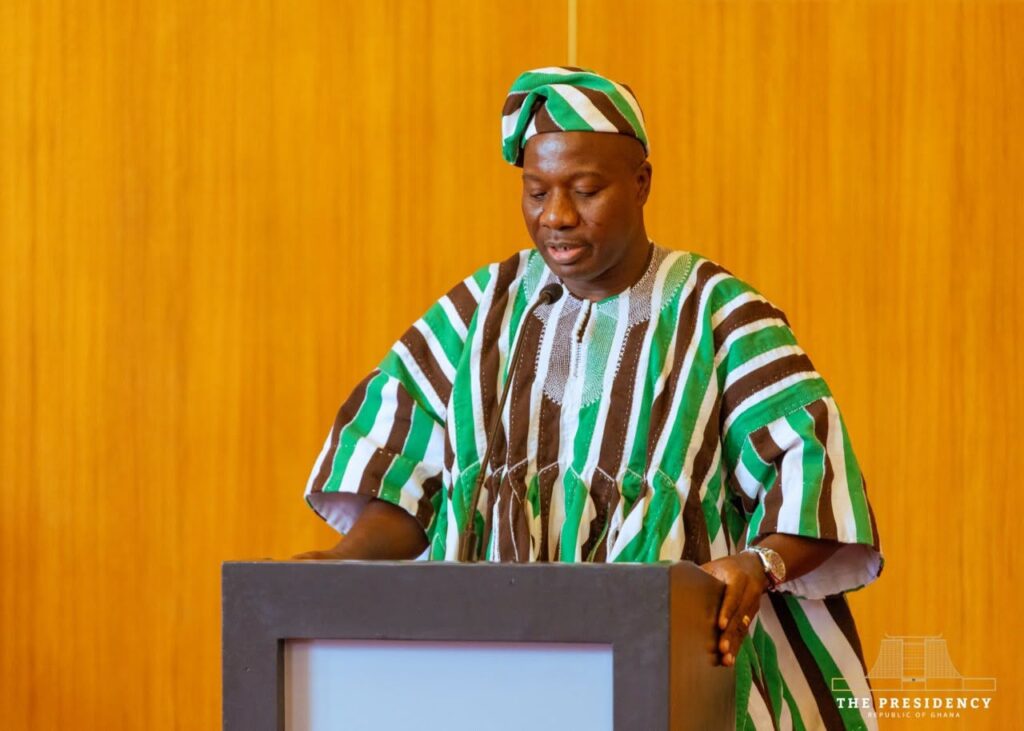
Hon. Mahama Ayariga addressed that directly at his vetting on Thursday, telling the Appointments Committee he would introduce a digital system to bring transparency to the collection of property rates, market tolls and other internally generated funds, with central monitoring to establish accountability.
Restore Order to Our Cities and Towns
The second limb of the charge was blunter. President Mahama listed poor spatial planning, uncontrolled development, sanitation challenges, congestion, and the persistent encroachment on public spaces, and said none of it can continue to be left unchecked.
Each item on that list falls within the ministry’s authority through the assemblies and their planning and building inspectorates. The President’s framing places responsibility for enforcement squarely with the ministry rather than treating urban disorder as an inevitability of growth.
Mahama Ayariga also used his vetting to raise a related enforcement question, calling for closer attention to how small-scale mining licences are issued at the local level and arguing that Metropolitan, Municipal and District Chief Executives must ensure mining within their jurisdictions is conducted lawfully.
That position places a share of responsibility for illegal mining with the chief executives his ministry supervises.
Wisdom, Patience and Impartiality on Chieftaincy
The chieftaincy and religious affairs side of the portfolio drew the most carefully worded part of the President’s charge. It calls particularly for wisdom, patience and impartiality, he said.
He described traditional authorities as indispensable partners in development and custodians of national heritage, and said religious institutions continue to make invaluable contributions to education, healthcare, social protection, peacebuilding and national cohesion. Both, he instructed, must be engaged with respect and fairness.
Ghana’s religious and cultural diversity must remain a source of strength rather than division, President Mahama said, adding that government must at all times protect freedom of worship, promote tolerance and ensure that no citizen is marginalised because of their faith or their ethnic affiliation.
The instruction on impartiality carries particular weight given who received it. Hon. Mahama Ayariga represents Bawku Central, a constituency at the centre of a chieftaincy conflict that has resisted resolution across successive administrations and has cost lives. He now holds the ministerial brief for chieftaincy itself.
A Minister the President Says Is Ready
President Mahama set out the case for the appointment in terms of accumulated experience. Hon. Mahama Ayariga brings the record of a legislator, a lawyer and a former Minister of State, having served in both Youth and Sports and Environment, Science and Technology.
“Your years in public life have given you a deep appreciation of public administration, parliamentary accountability and the importance of building consensus across our diverse societies”.
HE President John Dramani Mahama
The consensus point connects to the work Hon. Mahama Ayariga will now do with traditional and religious institutions, where the ministry’s influence rests more on persuasion than on direct authority.
He also arrives having just vacated the Majority Leadership of Parliament, a role he held until the reshuffle and which has passed to James Agalga, MP for Builsa North.
A Tall Mountain to Climb
The scale of the assignment did not go unremarked in Parliament. Approving the nomination on Thursday, Speaker Alban Bagbin singled Mahama Ayariga out, telling him he had a very tall mountain to climb while assuring both new ministers of the House’s support.
President Mahama also set the two ministries a joint task. Sanitation, land use planning, waste management and climate resilience all sit across the boundary between Local Government and Environment, and the President said he expects Hon Mahama Ayariga and Dr Zanetor Agyeman-Rawlings to work closely rather than in parallel.
Responding on behalf of both ministers,Hon. Mahama Ayariga said Ghana’s cities, municipalities, metropolises, districts, zones and units would be better governed under the President’s leadership, and undertook that the ordinary Ghanaian would be at the forefront of everything the two of them do.
What that commitment amounts to will be measured in the assemblies rather than at Jubilee House, and the first test is whether the revenue system he promised at vetting arrives before the next budget cycle.
READ ALSO: 37 Killed In Russian Attack Near Kyiv