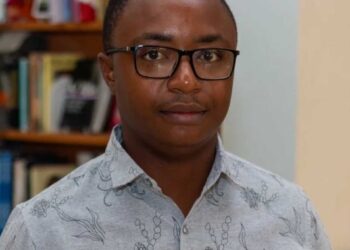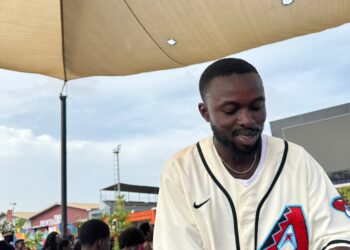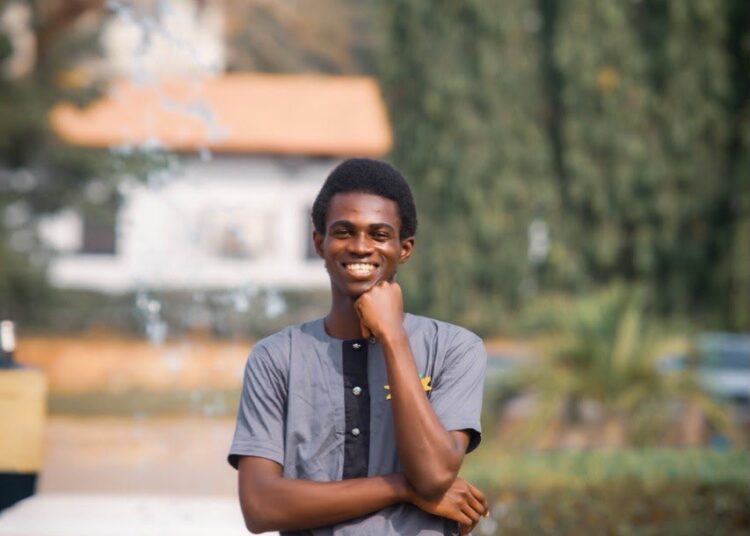
Ghanaian poet Bright Aboagye was longlisted for the Alhaji Arole Agarawu African Poetry Prize 2026 with his manuscript Bright Poems of Lyric, selected from 356 submissions.
The Alhaji Arole Agarawu Foundation has released the longlist for its debut African Poetry Prize, narrowing down 356 submissions from poets across the continent and its global diaspora to 30 manuscripts.
The prize, launched earlier this year, is named in honour of Alhaji Arole Agarawu (1930s–1995), a West African songwriter and composer whose work shaped Yoruba musical traditions such as Sakara, Apala and Waka but went largely uncredited during his lifetime. The Foundation was established by Nigerian poet Adedayo Agarau, an Iowa Writers’ Workshop graduate and former Wallace Stegner Fellow at Stanford, who has said the prize is meant to turn that history of overlooked recognition into a platform celebrating contemporary African voices.
In a recent interview, Aboagye reflected on the recognition, his craft, influences, and the realities of writing poetry in Ghana, offering candid insights even after learning the work did not advance further.
“Honestly, it means nothing to me,” Aboagye said of the longlist moment.
“As a person who pushes myself to be there, it is just another step towards being recognised. As I said, it is an opportunity to help me grow as a person. I know most of the nominees. Joel in Nigeria is my friend and we talk about writing. He sometimes reads my work and I read his. Seeing my name alongside his was a joy”
Bright Aboagye, Poet
The collection’s title centres on the idea of lyric as song-like storytelling. “Lyrically, they are like songs. They tell stories in the way songs do,” he explained.
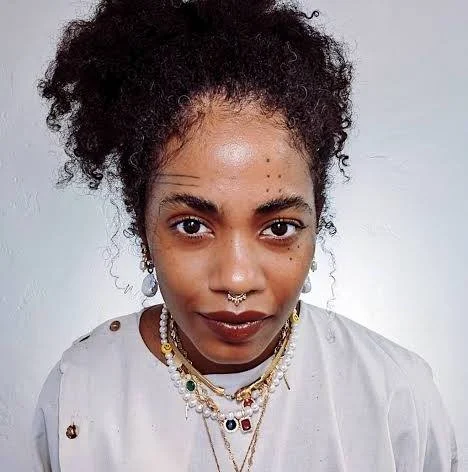
“My favourite poet, Aja Monet, does this in her work, and I was seeking to do something similar with mine. She has always been an inspiration to me”
Bright Aboagye, Poet
Aboagye described a central preoccupation running through the ten poems: “The manuscript eulogises melancholia, a quality I picked up from listening to Lana Del Rey a lot, especially her albums Norman Fucking Rockwell! and Did You Know That There’s a Tunnel Under Ocean Blvd. Every poem sings to that. However, they also draw me into my own gloominess and my persona of never quite reaching where I want to be.”
The prize itself commemorates Alhaji Arole Agarawu, a songwriter whose contributions went largely uncredited during his lifetime. Aboagye admitted he had not known of the figure before submitting.
“Prior to the submission, I had never heard of Alhaji Arole Agarawu. There is very little information about him on the internet. It is extremely lonely at the end of the day when you cannot find anyone to share in your joy or be a part of it. That is something I see and resonate with. Even in finding my own place within this, there was a need to find my voice”
Bright Aboagye, Poet
His poetic influences span continents and generations.
“My main influences are Akwaeke Emezi and Aja Monet. Everyone knows how much I go crazy for these two. I have all their books and works. I listen to Aja’s recent release, the color of rain, especially ‘elsewhere’, but ‘when the poems do what they do’ is a gem. I told her about it on Twitter once, and she was ecstatic. I also love Marvellous Igwe’s work, as well as Adedayo Agarau and Romeo Oriogun. Then there are these two Ghanaians who I feel are killing it: Daniel Naawenkangua Abukuri and Edinam Denoo”
Bright Aboagye, Poet
On craft, Aboagye emphasised deliberate work with language and sound. “I like to play with sentences and words. I specifically look at the page and strike things out to say what I want to say. My poems ‘How Do I Sing My Pain’ and ‘Tempus’ were written because I wanted to vent, and in venting, I wanted the sentences to sing out these words.”
Origin for the Poetry Engagement
His serious engagement with poetry began in an academic setting. “I did creative writing under Prof. Anyidoho and Dr. Mawuli, though I quit the class after a semester, perhaps way too quickly. If I am being honest, my serious writing of poems started from that creative writing class.”
Aboagye has published with platforms such as lọunlọun, drawn by their commitment to African historical memory and difficult stories. “I am proud of the Lounloun story. I look back at that period in my life, June 3rd, circle disaster when I was looking for a car to get back home, and I am proud that such stories are allowed to be told. The team at Lounloun are also so generous that they have created space for these stories to be told.”
Asked about the hardest aspects of writing poetry in Ghana, whether audience, publishing, funding or visibility-his response circled back to the value of spaces that permit personal and collective narratives to surface, underscoring a broader sense of pride in platforms that make room for lived experience.
Looking ahead, the longlist outcome was already known by the time of the interview. “Unfortunately, it didn’t move forward. I received the email on Sunday. Nonetheless, I have been shortlisted for another prize with my full-length play. This is how it is. I have learned to expect these things.”
He is currently prioritising reading over producing a full collection or chapbook.
“Currently, I am a reader. There are a few works I would like to bring together as a collection. However, after meeting the daughter of Ama Ata Aidoo, Kinna, and realising how widely she has read, I have recognised that I deserve to be a reader. I am reading works from all around the globe to equip myself”
Bright Aboagye, Poet
To younger Ghanaian poets who feel the industry has little space for them, Aboagye offered measured encouragement: “I sometimes wish I knew the best words to say, but I do not. Other than keep trying and your work will put you there, and there is always space for anyone.”
Aboagye’s reflections portray a writer who treats recognition as incremental rather than definitive, who draws from both local and international voices, and who balances the solitary labour of the page with an awareness of community, history and the necessity of continued reading.
His longlisting for the Alhaji Arole Agarawu African Poetry Prize places him among a cohort of emerging African poets while his own trajectory marked by early classroom beginnings, publications that reclaim difficult memories, and a growing list of influences suggests a practice still unfolding.
READ ALSO:Ghana’s Herbal Medicine System Suffers From Parallel Practice, Not Integration – Dr Donkor