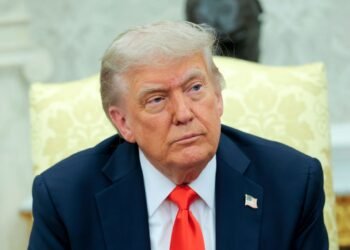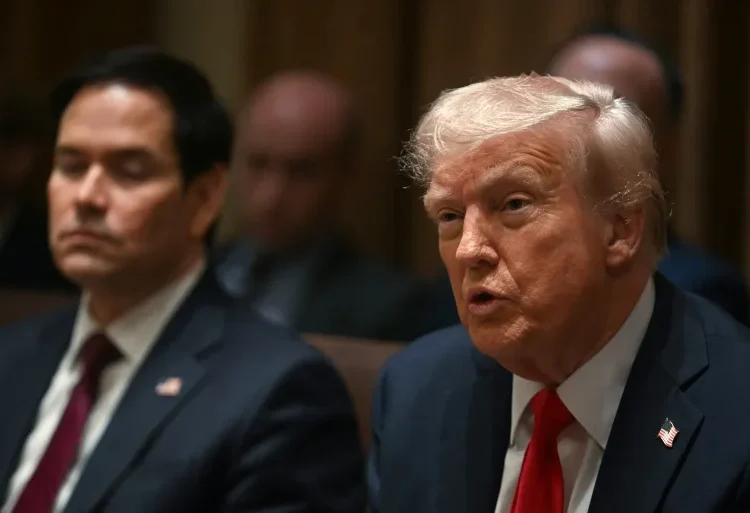
U.S. President Donald Trump has vowed to respond to Iran after Tehran launched a retaliatory attack on a military base hosting U.S. troops in Jordan, warning that the latest escalation could lead to further confrontation as the conflict between Washington and Tehran enters its seventh month.
Trump said that the United States would respond forcefully to the Iranian attack, which followed U.S. strikes on Iran’s Larak Island on Sunday.
The latest escalation began when U.S. forces struck two rocket launchers on Larak Island in the Strait of Hormuz. Washington said that the launchers were being prepared for use in an operation involving rockets carrying naval mines, which could have threatened one of the world’s most important maritime routes.
Iran condemned the U.S. attack and quickly responded with strikes against American military facilities in the region. The exchange has raised fresh concerns that the conflict could expand beyond the immediate confrontation between the two countries and further destabilise the wider Middle East.
The renewed exchange of attacks marks the first direct military confrontation between the two countries since July and comes amid continued uncertainty over efforts to bring the conflict to an end. “We’re going to hit them hard,” Trump told a news agency, adding that “there will be a response.”
The Iranian attack demonstrated Tehran’s continued ability and willingness to retaliate against U.S. military targets after coming under direct attack. Jordanian authorities have previously sought to prevent their territory from becoming a battlefield between regional and international powers, while the presence of U.S. forces in the country has made the kingdom an important part of Washington’s regional military posture.
Trump also intensified his criticism of Iran’s leadership, repeating his long-standing claim that the country’s political system is close to collapse. “Iran is officially a Failed Nation,” Trump wrote in a social media post, adding, “IT IS DEAD!”
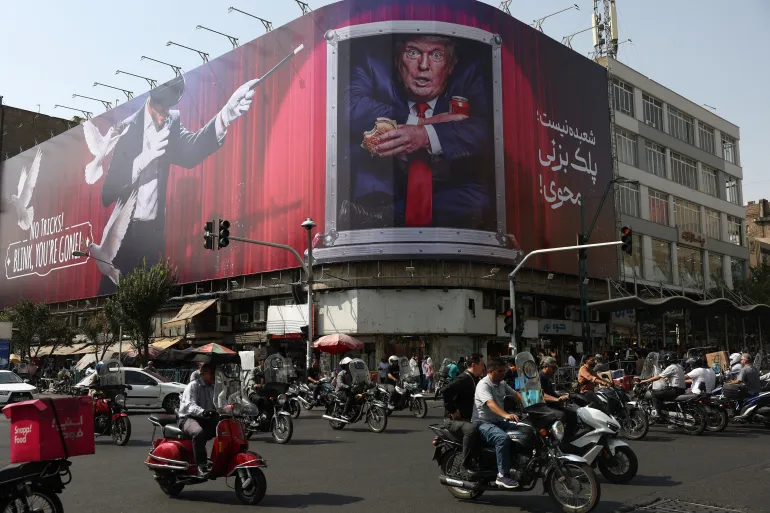
He went on to list what he described as severe weaknesses in Iran, including the condition of its armed forces, economy and political leadership. Trump claimed that Iran’s inflation had reached 300% and said the country’s leaders were in “total disarray and incapable of properly representing the country.”
The US President has made similar claims since the beginning of the conflict, arguing that sustained military and economic pressure would eventually force fundamental changes in Tehran. However, Iran’s government has remained in place, with no major defections reported from the country’s senior leadership or security establishment.
The Islamic Revolutionary Guard Corps has continued to play a central role in Iran’s military response and remains one of the country’s most powerful security institutions.
Trump Raises War Crimes Allegations
Trump also accused Iran’s leadership of preventing the collapse of the government by violently suppressing anti-government protests. He claimed in another social media post that more than 100,000 protesters had been killed and said those responsible “must be tried for war crimes against humanity.”
The figure represents a substantial increase from an earlier death toll cited by Trump, when he accused Iranian authorities of killing as many as 60,000 people during demonstrations earlier this year. However, it remains unclear how Trump arrived at the new figure of more than 100,000 deaths.
Iranian authorities have reported a significantly lower toll, putting the number at 3,117 deaths, including members of the security forces. Tehran has blamed the unrest on what it describes as Israel-backed “rioters.”
The sharply different casualty figures have not been independently reconciled, reflecting the difficulty of verifying information emerging from the conflict and political unrest. The latest confrontation comes after the Trump administration had indicated that it was shifting greater attention toward economic pressure rather than continued military operations against Iran.
Washington has sought to use sanctions and other economic measures to weaken Tehran’s ability to finance its military activities and regional operations. The renewed exchange of strikes, however, demonstrates the difficulty of separating military confrontation from the broader economic campaign.
Any further U.S. retaliation could trigger another Iranian response, creating a cycle that risks prolonging the conflict. The Strait of Hormuz remains another major concern. The narrow waterway carries a significant share of global oil and gas shipments, meaning continued military tensions around it could have consequences far beyond the Middle East.
For now, Trump has offered no detailed indication of the timing or form of the U.S. response. Iran, meanwhile, has demonstrated that it remains capable of striking American forces in the region despite months of military and economic pressure.
The latest escalation therefore leaves the conflict at a potentially sensitive point, with both sides maintaining opposing positions and no clear indication that a lasting agreement is close. Trump’s threat of retaliation could further raise tensions, while diplomatic efforts to prevent a wider regional confrontation remain under pressure.
READ ALSO: Messi Announces Retirement From International Football After 21 Years With La Albiceleste