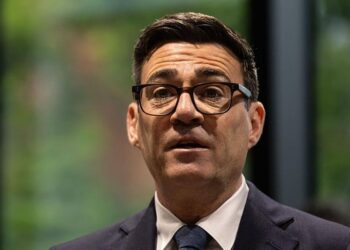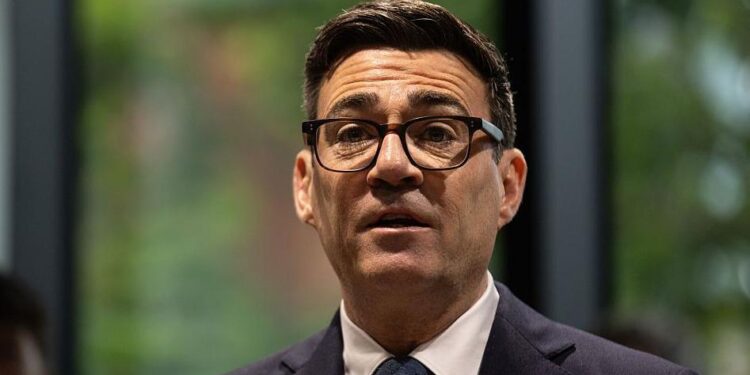
UK Prime Minister Andy Burnham is set to use his first statement to the House of Commons to present a vision of a more optimistic Britain, while outlining an agenda centred on stronger public control of essential services and a major shift of political power away from Westminster.
The Prime Minister is expected to inform MPs that a “sense of optimism” will underpin his approach to governing, as he seeks to translate the political momentum that carried him into Downing Street into a broader programme for economic and institutional change.
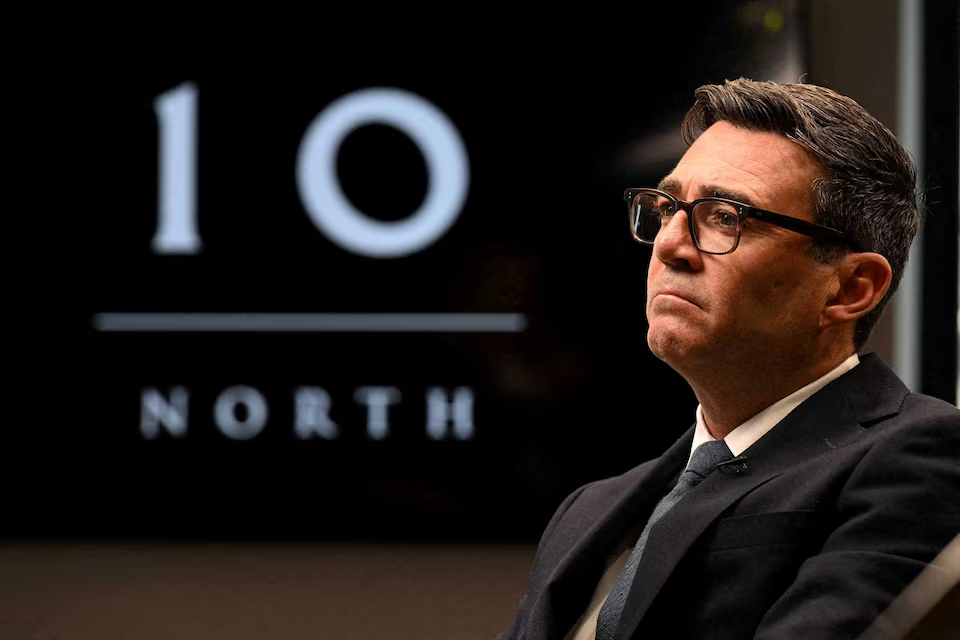
Burnham’s statement will focus on two central pillars of his government’s growth strategy: expanding public control over essential services and decentralising decision-making, particularly through the establishment of No 10 North, a new government unit based in Manchester.
The Prime Minister is expected to argue that the Manchester-based unit represents more than a symbolic relocation of government activity, but a fundamental change in the way Britain is governed. His wider objective is to move political power and economic opportunity beyond London and create a stronger sense of possibility across the country.
He will promise to “unlock a feeling of positivity and possibility” in every part of Britain, positioning optimism as a political response to years of economic pressures, rising household costs and declining confidence in public institutions.
The Commons appearance will nevertheless represent a significant moment for a Prime Minister who has enjoyed a relatively easy start to his tenure.
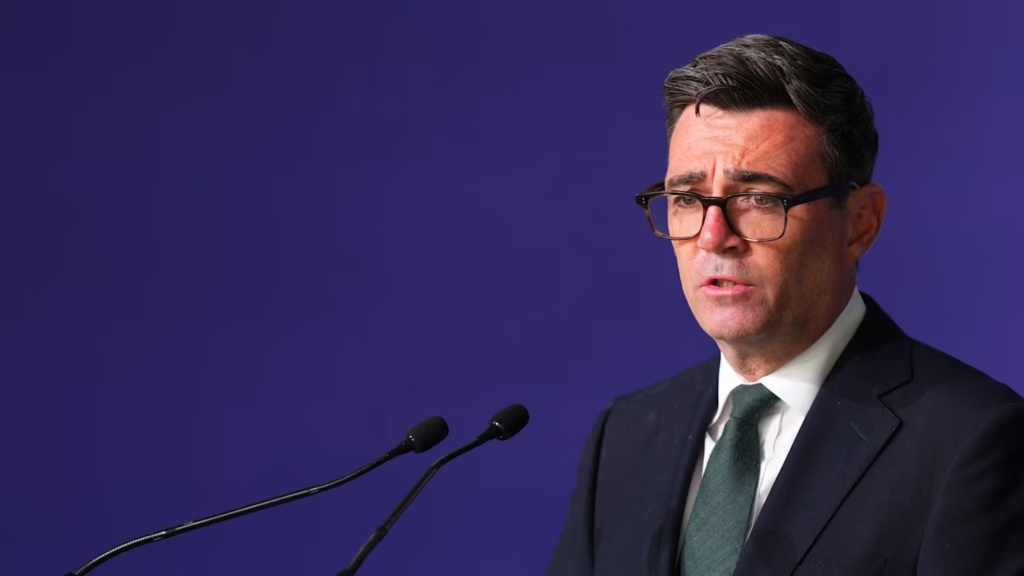
Burnham entered Downing Street while Parliament was in its summer recess, giving him several weeks to travel around the country and announce measures intended to demonstrate the practical direction of his government.
Among those measures are a proposed £2 cap on bus fares, plans to remove VAT from domestic energy bills and a 20% reduction in business rates for pubs, clubs and music venues next year.
The announcements have allowed Andy Burnham to shape the early narrative around his government before facing sustained scrutiny from MPs. That period of political breathing space is now coming to an end.
His first Commons statement will give Parliament and the wider public a major opportunity to assess how effectively he can defend his programme under pressure.
The Prime Minister will meet his Cabinet before appearing before MPs to deliver a statement setting out his government’s direction. He will then face questions in the Commons, with his performance likely to shape perceptions of his leadership at a critical early stage.
Opposition Parties Prepare for Clash Over Economy, Public Services and Taxation

Andy Burnham’s plans to expand public control over essential services are expected to become one of the defining areas of political debate as Parliament returns.
The Prime Minister is expected to reveal more about his proposals to bring some privatised services back under public control, arguing that such a move could reduce pressure on household budgets and make essential services more affordable.
The Conservatives and Reform UK are preparing to challenge that argument, particularly over the question of how the policies would be funded and whether taxpayers could ultimately face higher bills.
Conservative leader Kemi Badenoch has already reshaped her shadow cabinet ahead of the parliamentary confrontation, promoting Andrew Griffith to become shadow chancellor as the party sharpens its attacks on Labour’s handling of the economy and taxation.
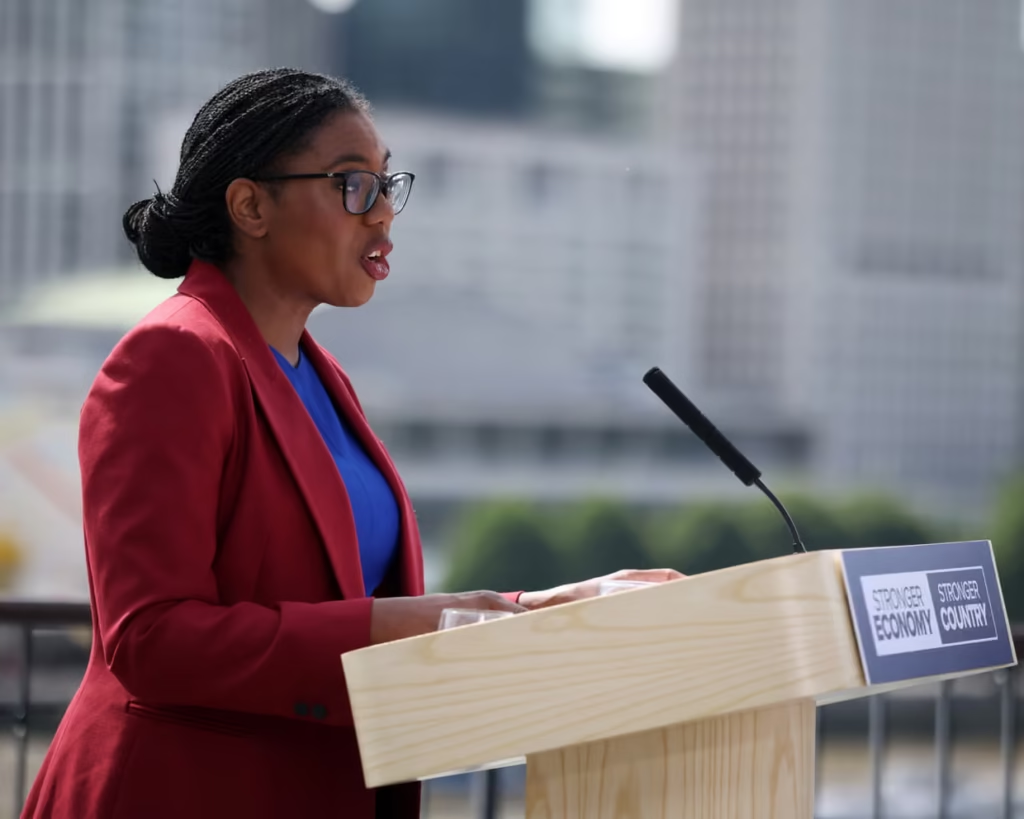
Griffith has pledged that a future Conservative government would deliver “lower, simpler taxes, get Britain drilling again to bring down energy costs, slash the red tape holding Britain back, and scrap the job-killing measures in Labour’s (Un)Employment Rights Act.”
Labour and the Liberal Democrats, however, have sought to undermine his economic credentials by pointing to his role as a Treasury Minister under former Prime Minister Liz Truss, when he publicly defended her controversial “mini-budget.”
Labour Party Chair, Bridget Phillipson, accused the Conservatives of returning to policies associated with the economic turmoil of the Truss administration.
Moreover, Liberal Democrat Treasury spokesperson, Daisy Cooper, similarly argued that Griffith’s appointment demonstrated that the Conservatives were “happy to forfeit any claim to economic credibility.”
Andy Burnham will also face pressure from the Greens, whose leader Zack Polanski has argued that the Prime Minister’s proposals for greater public control do not go far enough.
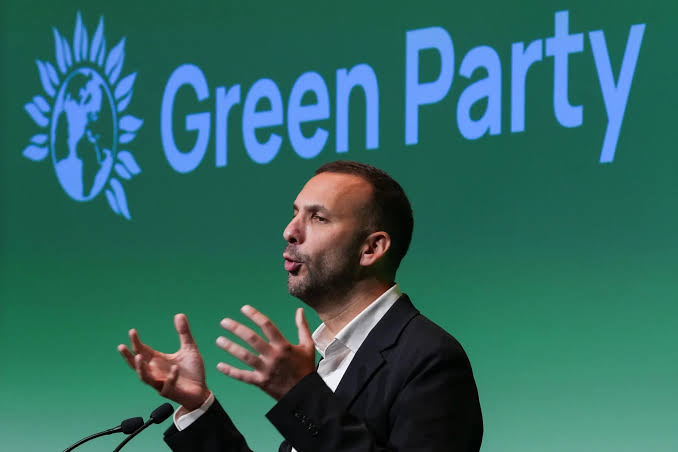
Polanski described Burnham’s approach as “just tinkering” and called for more radical measures, including higher taxes on wealthy individuals, public ownership of water and energy companies, rent controls and an end to new North Sea drilling.
The Liberal Democrats are also preparing to challenge Burnham over his plans to address the crisis facing Britain’s prison system. The Party’s Justice spokesperson, Jess Brown-Fuller, has criticised Labour’s proposal to build new prison cells, arguing that the programme is not supported by additional funding.
She noted that the policy demonstrated “just how unserious this Government remains about fixing our justice system.”
Beyond the immediate political exchanges, Burnham faces a succession of major decisions that could define his premiership.
Defence spending is among the most pressing. His government must determine how to finance defence commitments inherited from the previous administration and how quickly spending should increase to meet NATO obligations.
Energy policy will also require difficult choices. Ministers are expected to decide whether to approve new oil and gas drilling in the North Sea while simultaneously considering whether additional assistance should be provided to households facing higher energy bills during the winter.
The government’s first Budget will provide another major test, particularly if Labour considers tax increases to finance its spending commitments.
Longer-term challenges will include welfare reform, social care and Britain’s relationship with the European Union, all of which carry significant political and economic consequences.
Burnham’s first Prime Minister’s Questions session will therefore provide an immediate test of his ability to defend his agenda against opposition attacks.
READ ALSO: Nevada Jury Convicts Keffe D in Tupac Shakur Murder Case