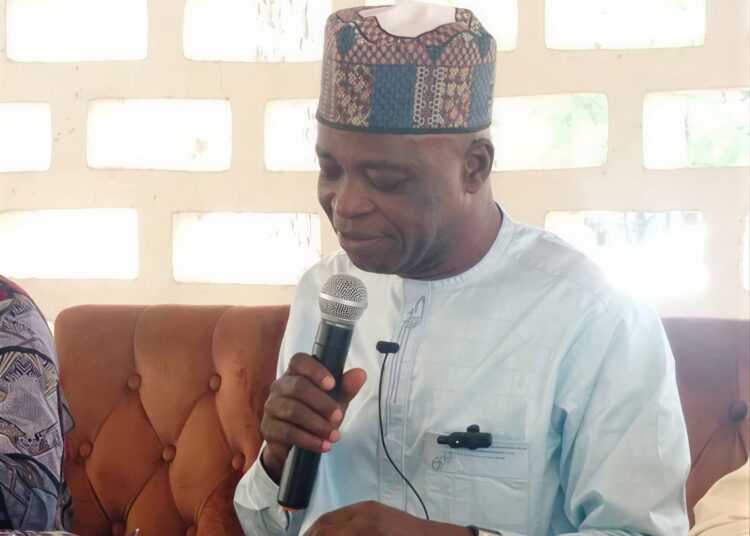
The Northern Regional Minister, Honourable Ali Adolf John Mburidiba, has directed education authorities in the region to intensify monitoring of caterers under the Ghana School Feeding Programme to ensure pupils receive meals on all scheduled school days.
Honourable Mburidiba said caterers engaged under the programme must provide meals from Monday to Friday, except on officially recognised occasions such as public holidays, when appropriate records must support any variation in the feeding schedule.
The directive follows reports presented to the Minister suggesting that some caterers under the previous administration failed to provide meals consistently throughout the five school days. He warned that such practices could undermine the purpose of the programme and deprive children of an important incentive for staying in school.

Addressing education officials, the Northern Regional Minister stressed that the feeding programme directly affects children within communities and therefore demands a high level of responsibility from those contracted to provide meals.
He questioned why pupils should receive meals on some school days and go without food on others when the programme requires regular feeding throughout the academic week. “We must feed children five days every week without fail,” the Minister cautioned.
Honourable Mburidiba consequently instructed the Regional Director of Education to work with the various district education offices to establish whether irregular feeding practices remain within schools across the region. The Minister asked the education authorities to determine the most effective monitoring mechanism, including the possible deployment of circuit supervisors to inspect schools and submit findings on compliance by caterers.
He also directed that a report detailing the situation should reach his office within the following week, with particular emphasis on whether caterers continue to disregard the required feeding schedule. The exercise, he explained, should not simply identify problems but also establish the individuals or companies responsible for breaches of the programme’s requirements.
Where investigations confirm that a caterer consistently fails to meet the conditions of the contract, Honourable Mburidiba called for appropriate action, including the removal of the caterer and replacement with a suitable provider.
School Feeding Figures Must Match Registers Across Every Northern School
The Northern Regional Minister, Honourable Ali Adolf John Mburidiba, also ordered a comprehensive verification of school enrolment figures used under the Ghana School Feeding Programme following reports of discrepancies between feeding records and actual school registers.
Honourable Mburidiba directed the Regional Education Directorate to obtain school-by-school enrolment figures from across the region and compare them with records held by the Ghana School Feeding Programme. The exercise, he explained, should establish whether the numbers submitted for feeding correspond with the actual populations recorded by individual schools.
The Minister emphasised the verification has become necessary after information emerged that some figures used for the School Feeding Programme differed from the registers through which schools record pupil attendance and enrolment.

He argued that such discrepancies could have implications beyond record keeping because inflated figures may affect how government allocates limited resources to schools and determines where additional institutions should be brought onto the programme.
Honourable Mburidiba therefore tasked circuit supervisors and district education officials with ensuring that the figures held at the regional level accurately represent the number of pupils enrolled in each school.
The Northern Regional Minister explained that school feeding records should also correspond with figures used for other official educational activities. He specifically pointed to examination registration and related administrative processes, where inconsistencies could create difficulties in determining the actual size of a school population.
For him, reliable data remains essential to sound planning within the education sector. Without accurate enrolment information, he cautioned, authorities could struggle to determine where resources should be directed and which communities require additional support.
The issue also carries implications for the possible expansion of the School Feeding Programme to schools currently outside its coverage. Honourable Mburidiba warned that exaggerated enrolment figures in participating schools could absorb resources that might otherwise support pupils in uncovered schools.
He illustrated the problem by referring to a school with an actual population of 500 pupils but reporting a significantly higher number for feeding purposes. When similar discrepancies occur across several schools, he explained, the accumulated difference could represent enough resources to extend the programme to another school.
The Minister consequently urged education authorities to treat the verification exercise as an opportunity to improve the quality of information available for future planning. He wants officials to establish accurate figures before decisions on expanding the programme receive consideration.
Honourable Mburidiba also connected the programme’s enrolment objective to the presence of food in schools. He explained that the availability of meals can encourage parents to enrol their children, particularly when families recognise that pupils can receive food while attending school.
Once children begin attending regularly and continue receiving meals, the programme can also support retention. The Minister believes that this combination of enrolment and retention forms an important part of the rationale behind the government’s investment in school feeding.
He said the programme should therefore produce dependable information on the number of children it serves. Accurate figures would not only improve accountability but also help authorities measure whether the initiative continues to attract and retain pupils as intended.
In his view, circuit supervisors could play a significant role because of their direct connection with schools and their ability to observe conditions at the local level. Their involvement could help bridge the gap between administrative records and the realities within classrooms.
READ ALSO: Political Support for Free SHS Gives Room to Fix Gaps – Dr Sarkodie