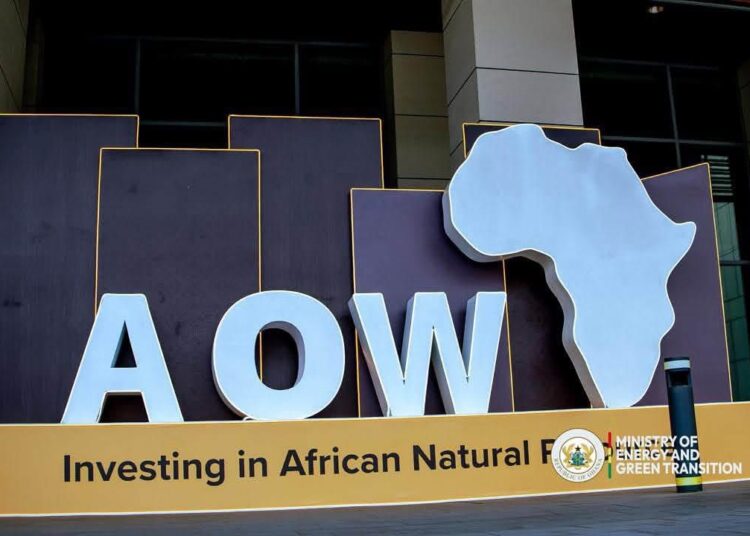
Africa Oil Week 2026 has ended in Accra, but for Ghana’s upstream petroleum sector, the more important work begins after the conference.
Over three days, the event brought together governments, national oil companies, international operators, financiers, technology providers and industry institutions around a central question: how can Africa attract the capital and technical expertise required to develop its remaining petroleum resources while retaining a greater share of the resulting economic value?
For Ghana, the conference provided a concentrated platform to present its upstream investment proposition at a time when exploration activity, fiscal competitiveness and the future development of existing resources remain critical to the country’s energy and economic outlook.
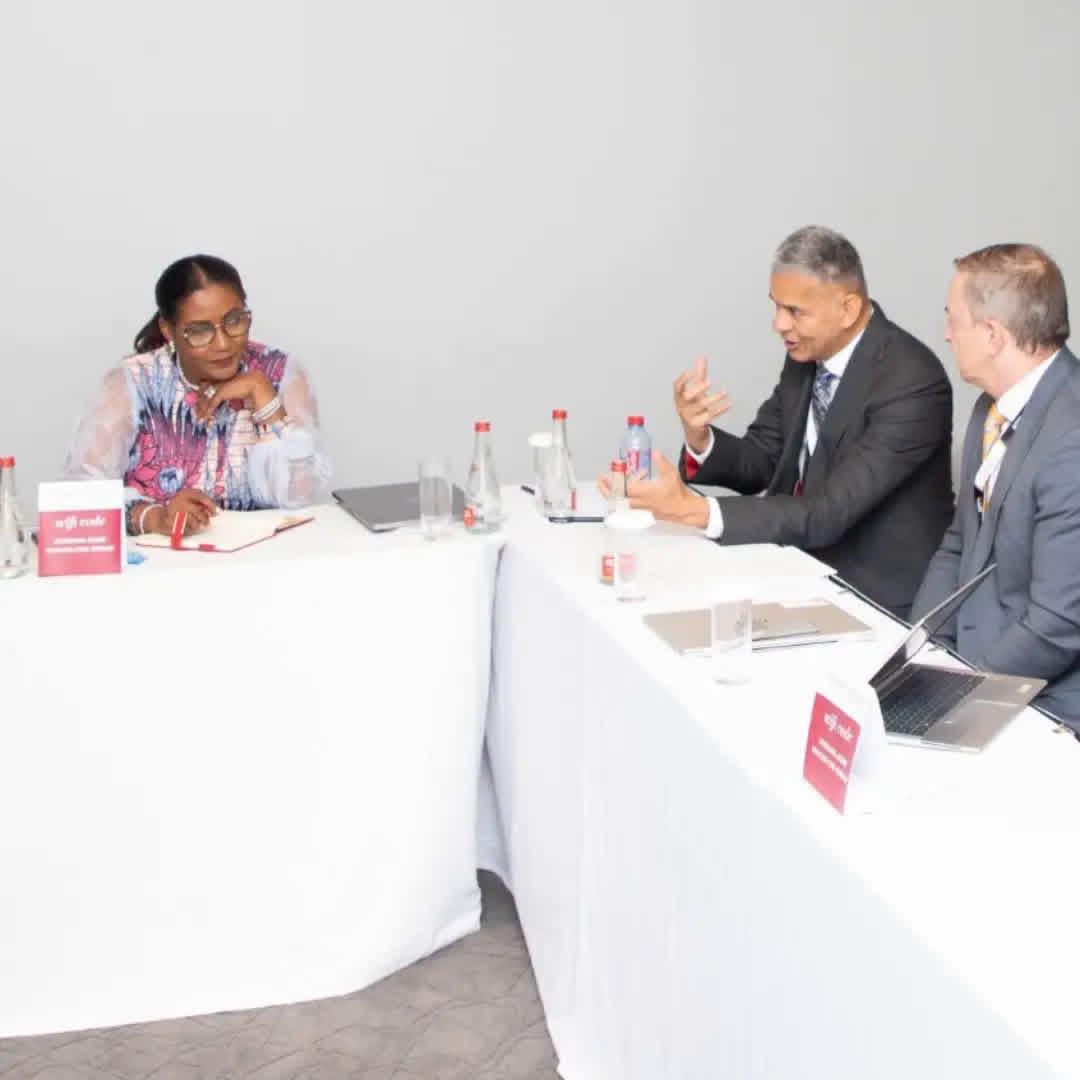
The Petroleum Commission placed Ghana’s investment opportunities at the centre of its engagements, holding discussions with major international industry players including Chevron, Baker Hughes, ExxonMobil, Shell, Petrobras, Murphy, Eni, BP, SLB, Viridien, Shearwater and TGS, alongside discussions with the Uganda National Oil Company and other stakeholders.
The significance of those engagements extends beyond the number of meetings held. Ghana’s challenge is increasingly about converting investor interest into exploration commitments, farm-in arrangements, technical partnerships and eventually production.
AOW 2026 therefore served less as an endpoint and more as a marketplace in which Ghana had to demonstrate why its remaining resources merit capital allocation amid intense competition from other African petroleum jurisdictions.
Investment Must Translate Into Exploration And Development
The conference came against a backdrop of a broader push by government to make Ghana’s upstream petroleum sector more competitive and attractive to investors.
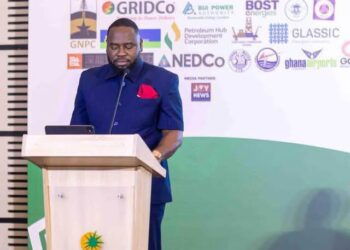
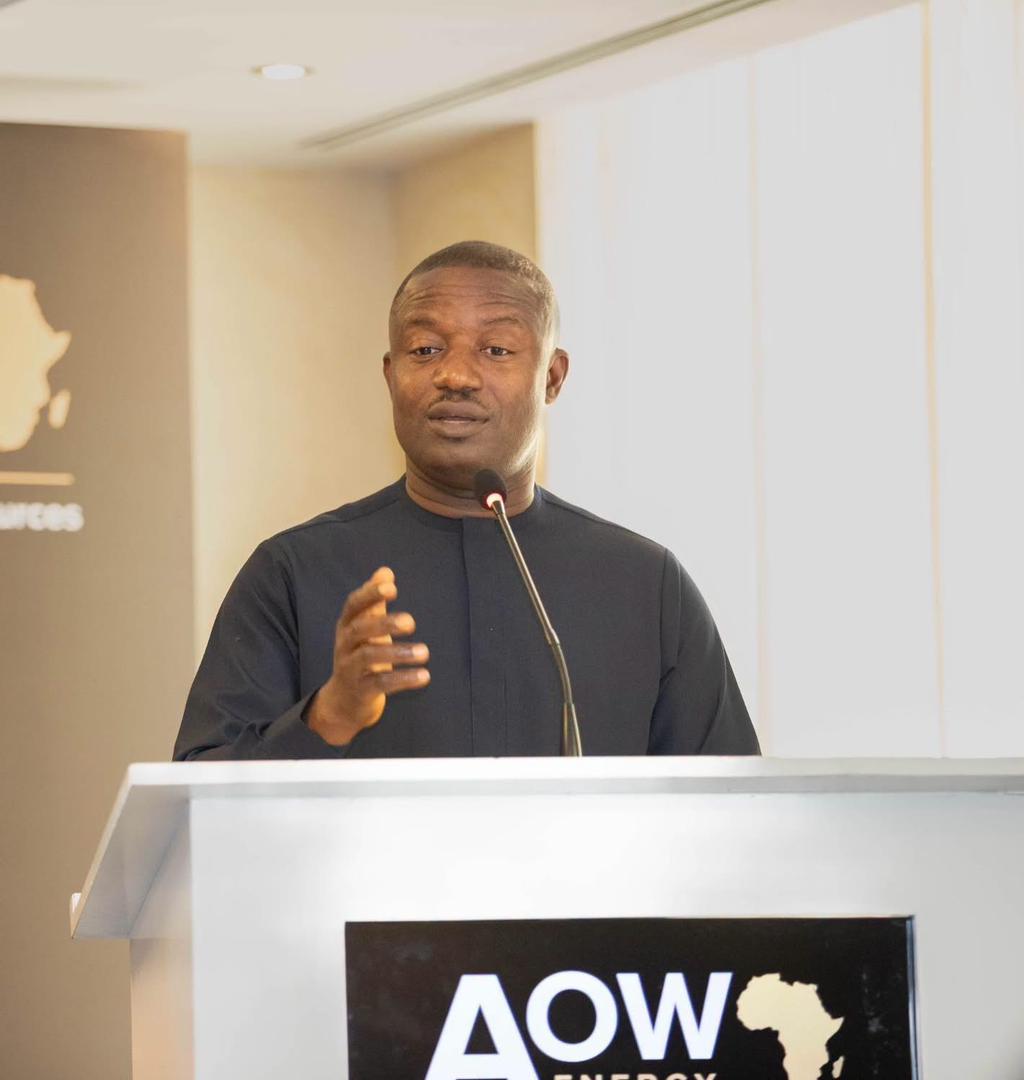
Opening the conference, Energy and Green Transition Minister Dr. John Abdulai Jinapor outlined fiscal and regulatory reforms intended to improve investor confidence, create a more predictable investment environment and unlock new exploration and development opportunities.
“Our ambition is to move from resource extraction to value creation, drive industrialisation, create jobs and strengthen energy security.”
Dr. John Abdulai Jinapor, Minister for Energy and Green Transition
The emphasis on competitiveness is particularly important because Ghana cannot assume that the existence of commercially viable hydrocarbons automatically guarantees investment.
International capital is increasingly selective, with investors comparing geological prospectivity, fiscal terms, regulatory certainty, infrastructure, political risk and expected returns across jurisdictions.
The policy challenge is consequently two-sided. Ghana must offer sufficiently attractive conditions to bring capital into the sector, while ensuring that concessions do not undermine the state’s long-term fiscal position or weaken the domestic value captured from petroleum development.
That balance was also reflected in the message delivered by Vice President Prof. Naana Jane Opoku-Agyemang at the Presidential Dinner preceding the conference.
“Ghana remains open to serious, long-term investment that is mutually beneficial.”
Prof. Naana Jane Opoku-Agyemang, Vice President of Ghana
The statement captures an increasingly important distinction in Africa’s petroleum debate.
Investment is necessary, but the quality, structure and domestic economic impact of that investment matter just as much as the headline value of capital committed.
For Ghana, future upstream investment therefore needs to generate more than crude oil production.
It must support local technical capacity, domestic businesses, government revenues, infrastructure development and linkages with the wider economy.
Infrastructure Emerges As A Critical Investment Link
The discussions at AOW 2026 also demonstrated that Ghana’s upstream prospects cannot be separated from the infrastructure required to commercialise them.
Ghana Gas used the conference to present a portfolio of midstream infrastructure projects intended to expand capacity, strengthen supply routes and deepen the domestic gas value chain.
Among the opportunities highlighted by Deputy Chief Executive Officer, Technical, Ing. Dr. Robert Kofi Lartey, were the Takoradi–Tema Pipeline, the third unit of the Mainline Compressor Station and the recovery and commercialisation of C5 pentane from the Atuabo Gas Processing Plant.
The significance is broader than the individual projects. Ghana’s ability to attract upstream investment increasingly depends on whether investors can see a credible pathway from discovery to processing, transportation, markets and revenue.
The same infrastructure question emerged from the presentation by Tema Oil Refinery Managing Director Edmond Kombat on bankable downstream projects.
TOR presented opportunities ranging from expansion of existing refining capacity to a proposed 100,000-barrel-per-day modular refinery, petrochemical development and additional storage infrastructure.
These discussions point towards a more integrated understanding of Ghana’s petroleum sector.
Upstream investment creates greater economic value when exploration, gas processing, transportation, refining, storage and petrochemicals are developed as interconnected components rather than isolated projects.
The proposed South Deepwater Tano transaction further strengthened that narrative.
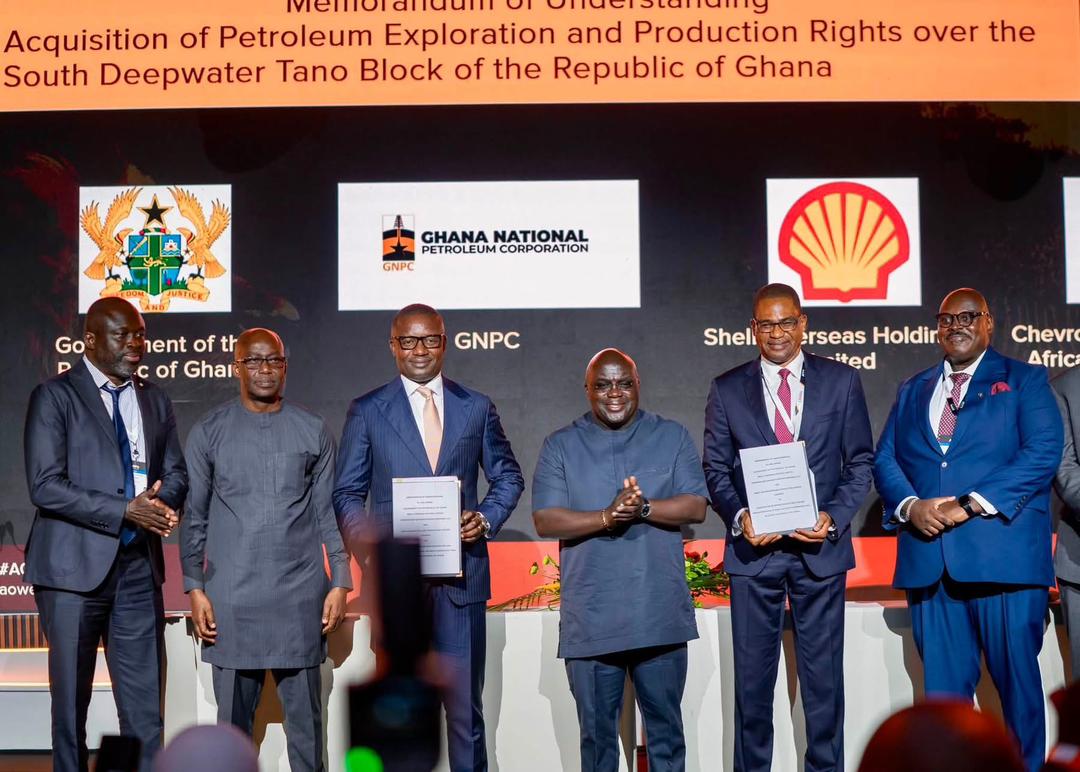
Government, GNPC, Shell Overseas Holdings Limited and Chevron Sub-Saharan Africa Ventures Ltd. signed an MoU covering the acquisition of petroleum exploration and production rights over the South Deepwater Tano Block during AOW 2026.
GNPC Chief Executive Kwame Ntow Amoah signed the agreement on behalf of the Corporation, providing a concrete example of the type of partnership Ghana sought to encourage throughout the conference.
African Participation Becomes Central To The Next Phase
Another defining feature of AOW 2026 was the growing emphasis on African participation in petroleum development.
The argument is no longer simply about attracting international oil companies. African states increasingly want to build stronger national companies, technical institutions and domestic supply chains capable of participating meaningfully in the industry.
For Ghana, this places greater expectations on GNPC and its commercial arms to move beyond passive participation and develop the financial, technical and managerial capacity required to invest alongside international partners.
That objective was evident during Ghana-focused discussions involving GNPC, GNPC Explorco, the Petroleum Commission and industry operators.
The conversation shifted from simply presenting Ghana’s resource potential to examining what investors require: access to credible geological data, efficient regulation, competitive terms, commercially structured partnerships and certainty.
GNPC Explorco Managing Director Samuel Opoku Arthur also highlighted the importance of a national partner capable of contributing equity, funding work programmes and sharing risk with investors.
That model could become increasingly important as Ghana seeks to develop frontier opportunities such as the Voltaian Basin.
Frontier exploration carries greater geological uncertainty, meaning the state’s ability to structure credible partnerships and share risk could determine whether prospective acreage attracts serious investment.
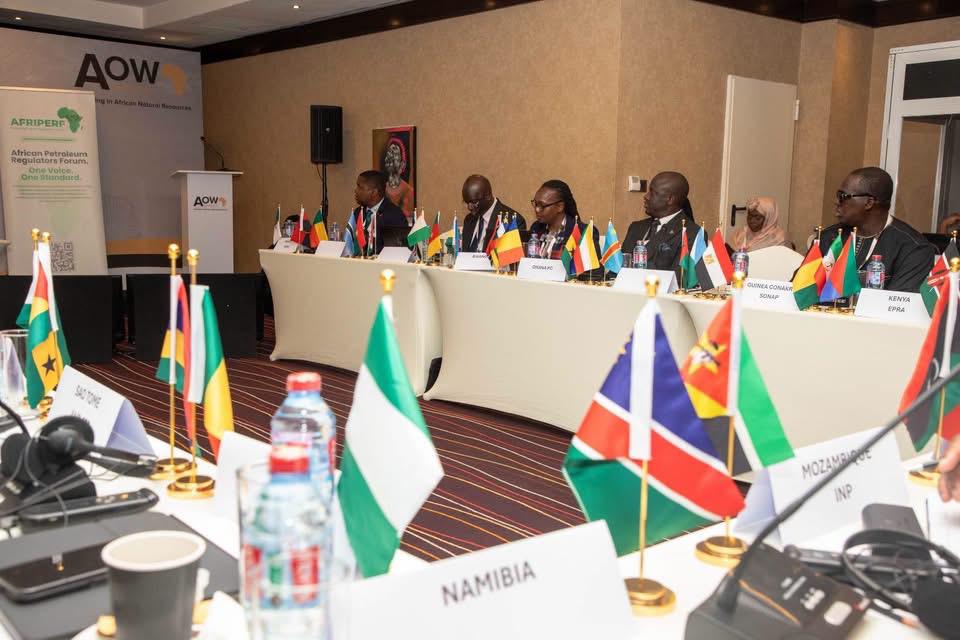
The regional dimension was also visible through the AFRIPERF Executive Committee Meeting held during the conference, where petroleum-sector leaders discussed financing, collaboration, membership and initiatives aimed at strengthening cooperation across Africa.
The signing involving new member countries and institutions reinforced the wider message that Africa’s petroleum future cannot be built entirely through individual national strategies.
Regional cooperation can expand markets, strengthen bargaining power and support shared technical and financial capabilities.
The Conference Ends, But The Real Test Begins
AOW 2026 has consequently left Ghana with more than a successful hosting opportunity. It has created a pipeline of conversations that now needs to be converted into measurable outcomes.
The real indicators of success will not be the number of delegates who attended Accra, the number of bilateral meetings held or the visibility generated during the conference.
They will be exploration commitments, farm-ins, investment agreements, infrastructure financing, drilling activity, new discoveries and projects reaching final investment decisions.
That makes the post-conference period particularly important.
Ghana has presented itself as open for business and has placed regulatory reform, exploration, infrastructure, partnerships and value creation at the centre of its petroleum strategy.
The next challenge is demonstrating that those messages can withstand commercial scrutiny and produce investment decisions.
The country is also operating in a competitive African market where petroleum-producing and prospective jurisdictions are pursuing the same pool of international capital.
Attractiveness therefore cannot rest on promotional messaging alone. It must be supported by credible geological data, predictable regulation, commercially rational fiscal terms, efficient institutions and infrastructure capable of moving discovered resources into productive use.
The Petroleum Commission’s extensive engagements throughout AOW 2026 therefore represent the beginning of an investment process rather than its conclusion.
Ghana’s hydrocarbons remain valuable only if capital, technology and institutional capacity can be mobilised to develop them responsibly.
The broader question now confronting the sector is whether the relationships established in Accra will become projects on the ground.
As AOW 2026 closes, Ghana’s investment proposition has been placed firmly before the international petroleum industry.
The conference may be over, but the competition for capital, and the work of converting Ghana’s remaining hydrocarbon potential into lasting economic value, has only intensified.
READ ALSO: Global Food Commodity Prices Rise in August – FAO Report