Ghana’s entry into the African Pooled Procurement Mechanism could change the economics of domestic pharmaceutical manufacturing by giving local producers access to a much larger and more predictable source of demand than the Ghanaian market alone can provide.
The agreement with Africa Centres for Disease Control and Prevention was signed on August 21 and disclosed publicly on Monday. It places Ghana within a continental procurement system designed to aggregate orders for quality-assured medicines, vaccines and other health products across African Union member states. For Ghanaian manufacturers, the economic significance lies less in the MoU itself than in whether pooled demand can improve capacity utilisation, reduce unit costs and make new investment commercially viable.
Pooled Demand Could Lower Production Costs
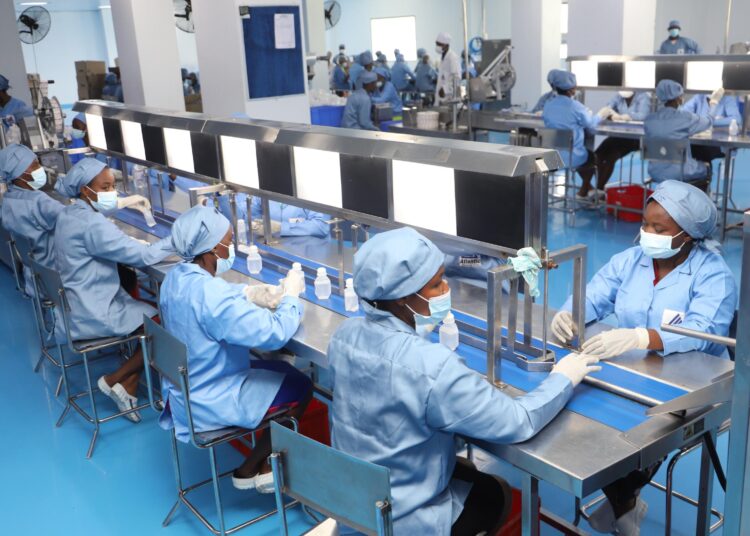
Pharmaceutical production carries substantial fixed costs. Firms must finance plants, specialised machinery, laboratories, regulatory compliance, quality systems and skilled personnel before a single unit is sold. When production volumes are small or uncertain, those costs are spread over fewer units, raising average costs and weakening the business case for expansion.
Africa CDC created the APPM partly to address precisely that problem. It says fragmented national markets, small order sizes and weak demand forecasting have constrained procurement and local manufacturing across the continent. Aggregating demand can give producers a clearer view of expected volumes while giving participating countries greater purchasing leverage.
That is important for Ghana, whose domestic population is about 33 million. The National Vaccine Institute says participation could give qualifying local producers a structured pathway into procurement serving a continental population of more than 1.4 billion. That should not be read as an automatic 1.4-billion-person market. It is an opportunity to compete for larger orders under common procurement arrangements.
Predictable Orders Can De-Risk Investment
Demand certainty matters because manufacturing investment is forward-looking. A pharmaceutical company will expand capacity only when expected future sales can justify the capital outlay and financing cost. Ghana’s planned Advance Purchase Commitment system is therefore economically significant: credible future orders can reduce demand risk and make projects easier to finance.
Government is also trying to improve the wider investment environment through the PharmaVax Programme, which targets governance, investment conditions and market access for local manufacturers. In combination with pooled procurement, that could shift industrial policy from supporting factories on the supply side to solving one of their biggest constraints on the demand side.
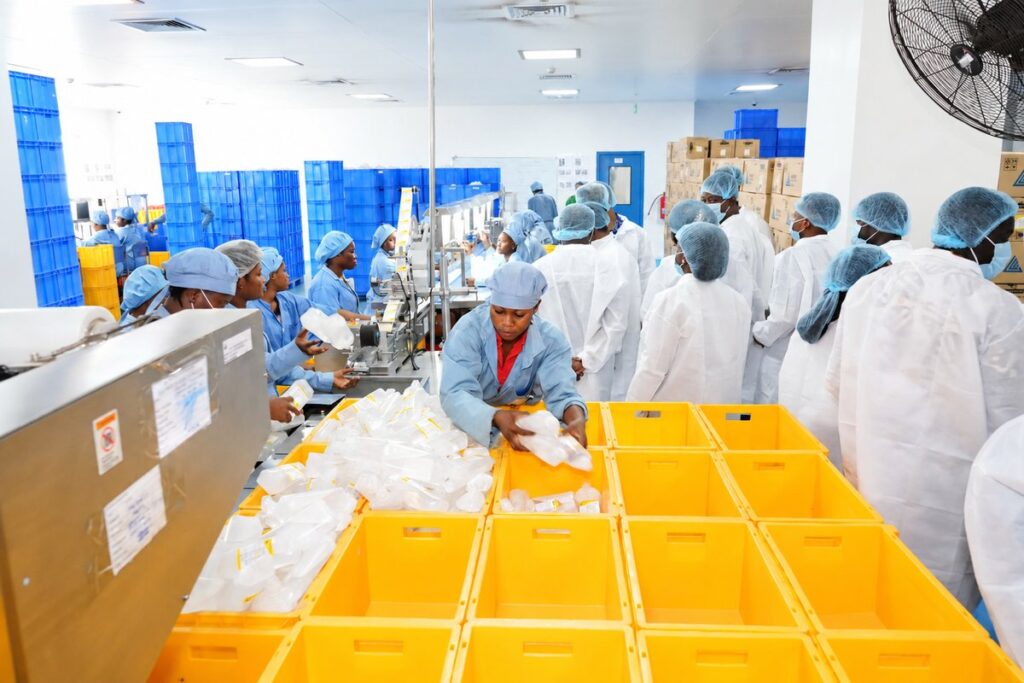
The test will be whether firms respond with additional productive capacity rather than simply higher sales from existing plants. New investment in formulation, packaging, testing, cold-chain systems and specialised manufacturing would deepen domestic value addition and create skilled jobs. It could also strengthen linkages with logistics, research, professional services and local suppliers.
Import Substitution Will Not Eliminate FX Demand
President John Dramani Mahama says Ghana currently imports about 70 percent of the medicines it consumes and wants at least 70 percent produced locally within five years. If domestic manufacturers competitively replace part of those imports, the economy could retain more pharmaceutical value added at home and reduce some foreign-exchange demand associated with finished medicine imports.
But import substitution is not the same as eliminating import dependence. Local pharmaceutical production can still require imported active ingredients, excipients, machinery, laboratory inputs and specialised packaging. The foreign-exchange benefit therefore depends on the amount of value actually created in Ghana, not simply on whether the final product carries a local manufacturing label.
The stronger long-run opportunity is to combine import replacement with exports. If Ghanaian firms can win APPM orders in other African markets, pharmaceutical manufacturing could shift from a domestic-protection story into an intra-African trade strategy, earning foreign exchange while spreading fixed production costs across a larger customer base.
Market Access Still Has to Be Won
The continental opportunity nevertheless comes with competition. Africa CDC’s APPM prequalification process assesses manufacturing capacity, product relevance, supply and export experience, financial strength, quality systems and regulatory compliance. Prequalification places a manufacturer in the supplier database; it does not guarantee future contracts, which remain subject to specific procurement processes.
Ghana therefore gains an enlarged opportunity set, not assured sales. Local firms will still have to compete on price, quality, reliability and delivery performance. The Food and Drugs Authority’s regulatory oversight and Ghana’s existing manufacturing base provide useful foundations, but scale without competitiveness would merely produce more expensive domestic supply.
The economic value of Ghana’s APPM participation will ultimately be measured by whether pooled African demand changes firm behaviour. If predictable procurement encourages factories to invest, lowers average production costs, replaces some finished-medicine imports and creates exportable capacity, the arrangement could become an industrial-policy instrument rather than simply a health-sector agreement. The breakthrough will not be signing into a larger market; it will be converting that market access into productive investment, competitive output and foreign-exchange earnings.
READ MORE: Mahama Unveils Five-Year Plan to Cut Ghana’s Dependence On Imported Medicines