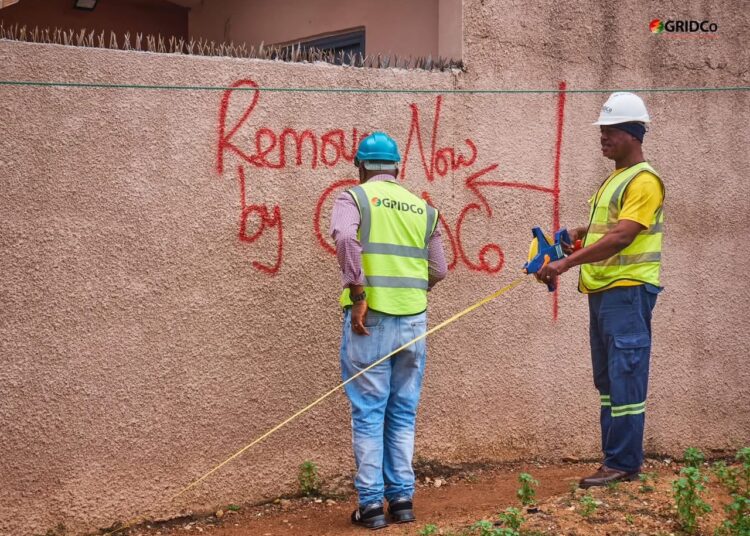
The Ghana Grid Company Limited (GRIDCo) has intensified efforts to remove unauthorised structures and activities from electricity transmission corridors, warning occupants to vacate protected areas before enforcement action begins.
The campaign forms part of a broader Right-of-Way (RoW) management drive aimed at protecting high-voltage transmission infrastructure, improving access for maintenance teams and reducing the risk of incidents that could disrupt electricity supply.
GRIDCo’s latest engagement comes against the backdrop of growing encroachment along transmission corridors, particularly in densely populated areas where homes, shops, workshops, car parks and other commercial activities have increasingly moved close to transmission lines and towers.
The company has been engaging affected communities and businesses before enforcement, with its message now becoming more direct: occupants who do not leave voluntarily should expect lawful removal.
The issue has gained greater urgency following a July incident at Ashaiman, where a tanker involved in welding activities reportedly exploded and struck a GRIDCo transmission tower.
The incident caused damage to the infrastructure and interrupted power supply for several hours.
“We are using this opportunity to educate all encroachers, squatters and people who have illegally occupied our Right-of-Way about the perils in doing this, one to human life and also the potential destruction to power supply.”
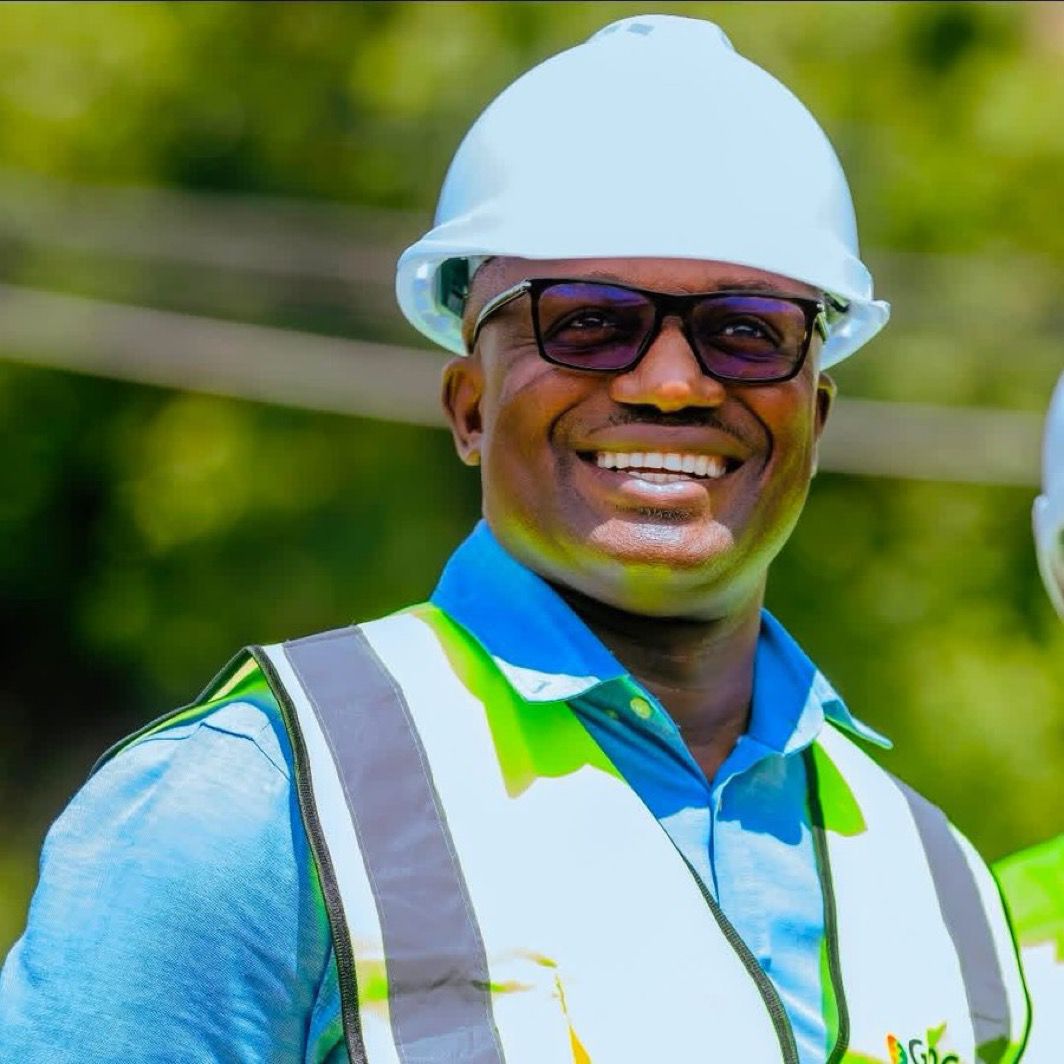
Samuel Kow Acquah, Director of Corporate Strategy, GRIDCo
Transmission Safety Becomes A National Power Issue
The Right-of-Way is not simply unused land surrounding transmission infrastructure. It provides the safety clearance required around high-voltage lines and towers while allowing GRIDCo personnel to inspect, maintain and repair the network.
Under the Transmission Line Protection Regulations, 1967 (L.I. 542), as amended by L.I. 1737 of 2004, certain activities and structures are prohibited within protected areas around transmission lines.
GRIDCo’s published guidance specifies a protected distance of 15 metres on either side of the centre of 161kV transmission lines and 20 metres for 330kV lines.
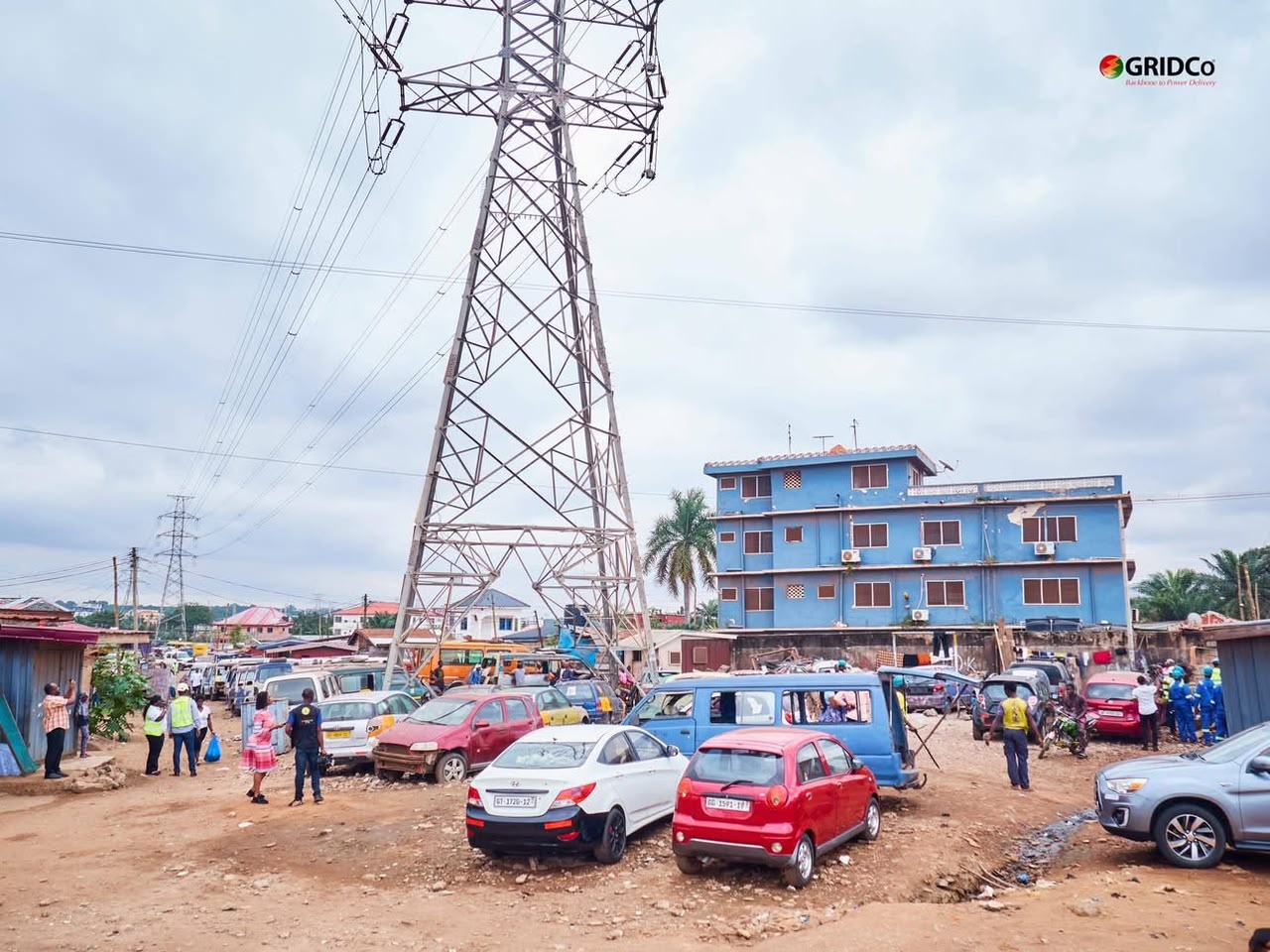
Activities including excavation, drilling, shops, garages, lorry parks and real-estate development within the protected areas are restricted.
The regulatory restrictions have a direct energy-security rationale. An obstruction can prevent maintenance crews from reaching transmission infrastructure, while activities such as welding, excavation or heavy-vehicle operations can create physical hazards around towers and lines.
The consequences can extend beyond the immediate location of an encroachment.
Damage to a transmission asset can interrupt power flows, place additional pressure on alternative network routes and complicate efforts to maintain system stability.
From Sensitisation To Enforcement
GRIDCo has maintained a Right-of-Way management policy since 2024, with the company previously undertaking education and stakeholder engagements across its operational areas.
The current nationwide campaign represents a more assertive phase of that approach. GRIDCo has indicated that the exercise will extend beyond Greater Accra to other regions, including Ashanti, Western, Western North and Bono.
The distinction is important. Public education can reduce new encroachment, but it cannot by itself resolve existing occupation of transmission corridors.
The company has therefore been giving affected occupants notice to relocate, with enforcement expected against those who remain after the applicable notices.
The Energy Ministry has already taken a firm position on the issue. Following the Ashaiman incident, Energy and Green Transition Minister Dr. John Abdulai Jinapor gave occupants one month to vacate affected transmission corridors and warned that enforcement would follow where persuasion failed.
“Where persuasion fails, force must be applied legally.”
Dr. John Abdulai Jinapor, Minister for Energy and Green Transition
Why The Campaign Matters For Ghana’s Power Reliability
The timing of the campaign is significant because Ghana is simultaneously investing in additional generation and transmission capacity to strengthen electricity security.
More generation capacity only improves the power system if the transmission network can safely and reliably move that electricity to distribution utilities and large consumers.
This makes the integrity of existing transmission corridors an infrastructure issue, rather than simply a land-use dispute.
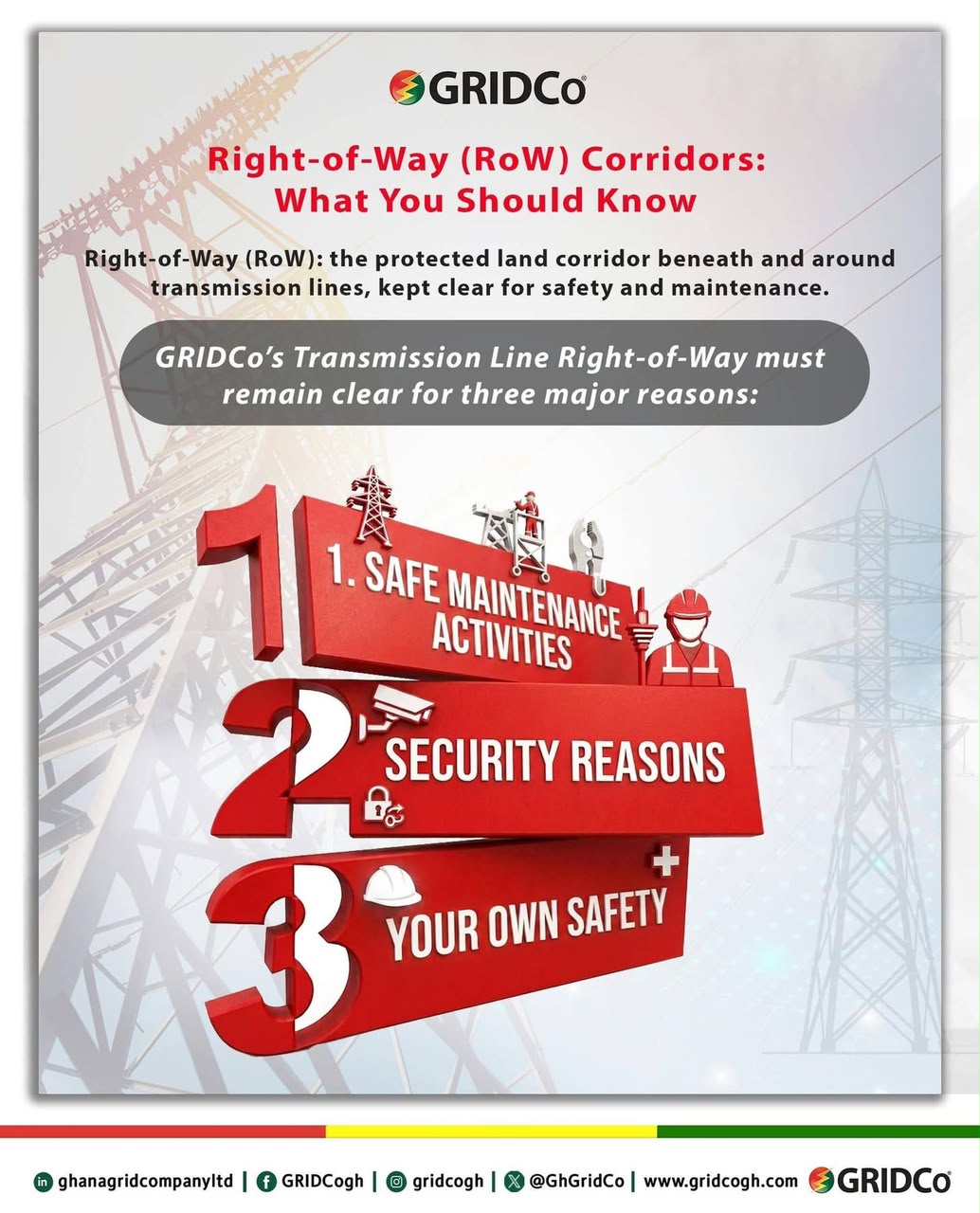
GRIDCo’s own Right-of-Way policy identifies maintaining unobstructed access to transmission infrastructure and preventing interruptions caused by human activity and vegetation as key objectives.
There is therefore a strong economic argument for clearing the corridors before incidents occur.
The cost of relocating an unauthorised structure or activity is considerably lower than the potential economic disruption from a damaged transmission tower, prolonged outage or restricted access to critical infrastructure.
At the same time, enforcement will need to remain transparent and legally grounded, particularly where affected occupants raise questions about land ownership or compensation.
GRIDCo has previously indicated that claims from occupants who say they were entitled to compensation would be assessed and validated before further action.
The broader energy-sector lesson is straightforward: transmission infrastructure cannot deliver reliable electricity if the corridors protecting it are progressively compromised.
As Ghana expands generation, regional power trading and transmission capacity, protecting the existing network becomes just as important as building new infrastructure.
The RoW campaign is consequently not only about removing structures; it is about protecting the physical backbone on which Ghana’s electricity security depends.
READ ALSO: Hungary Expels 10 Russian Diplomats