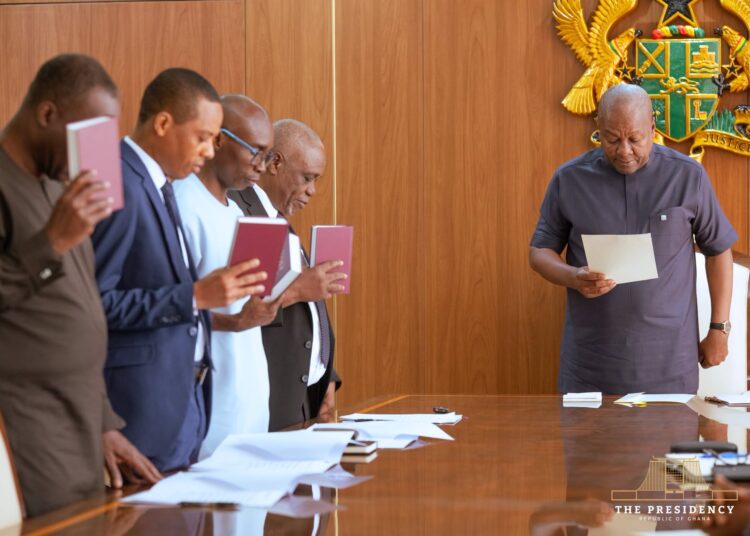
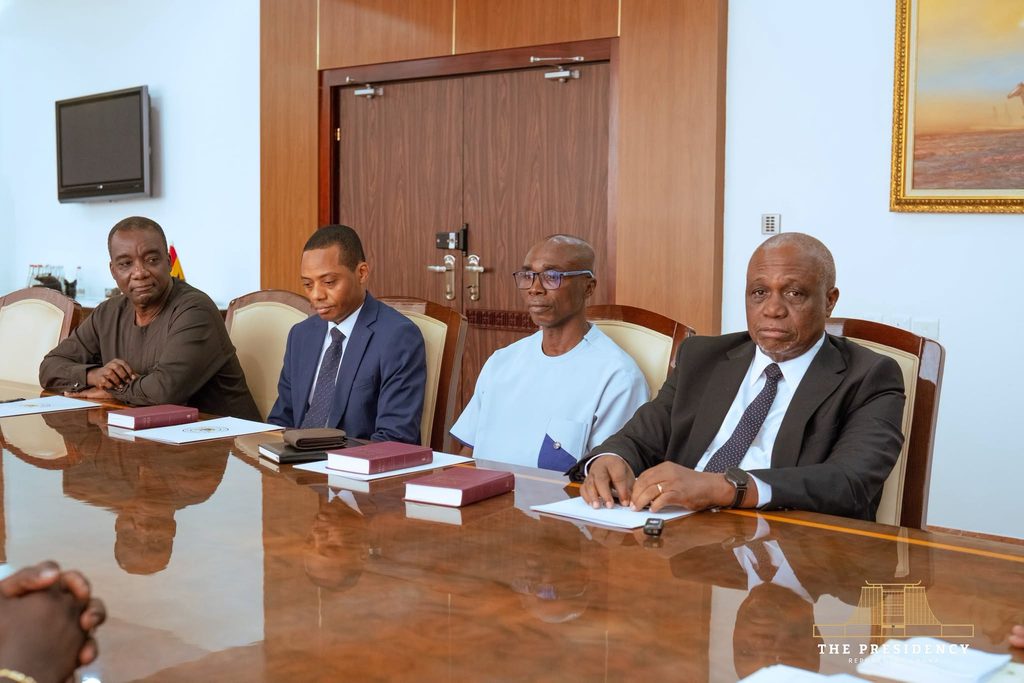
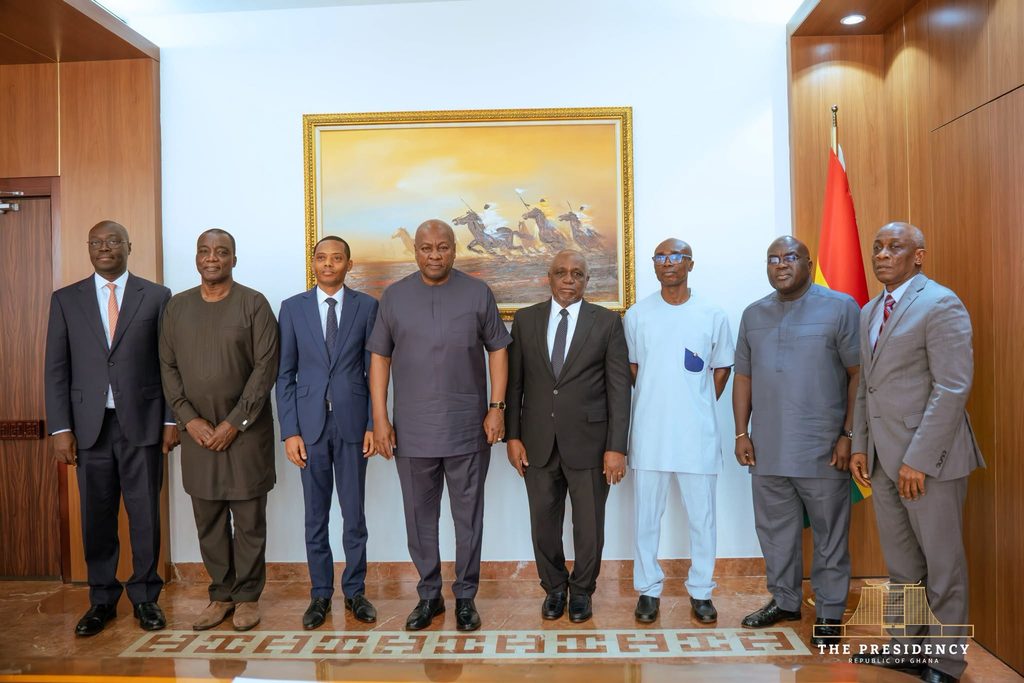
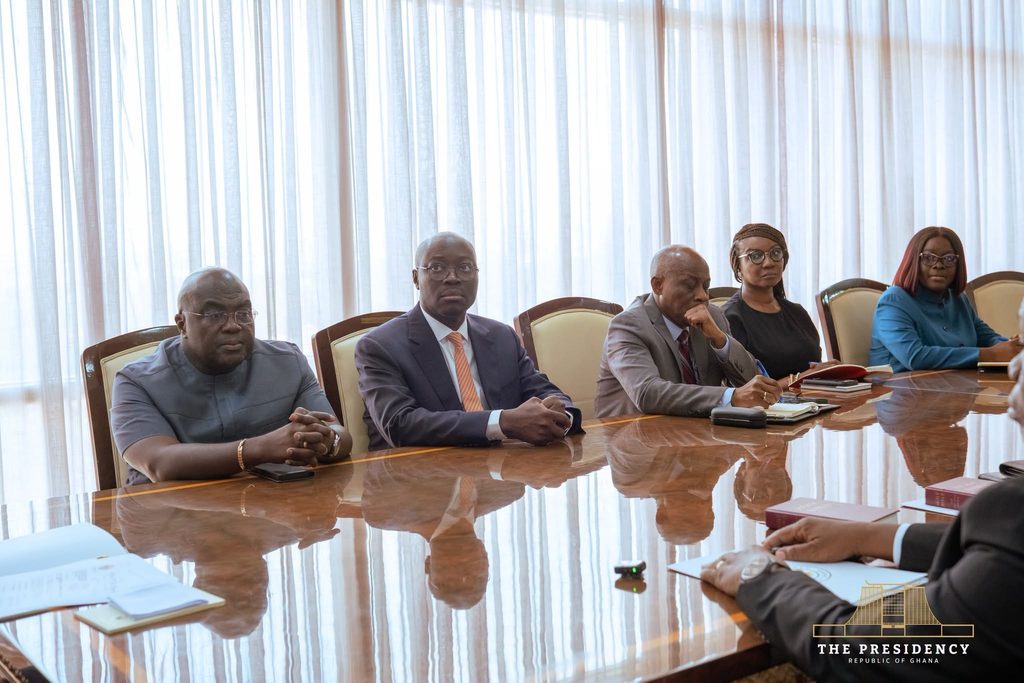
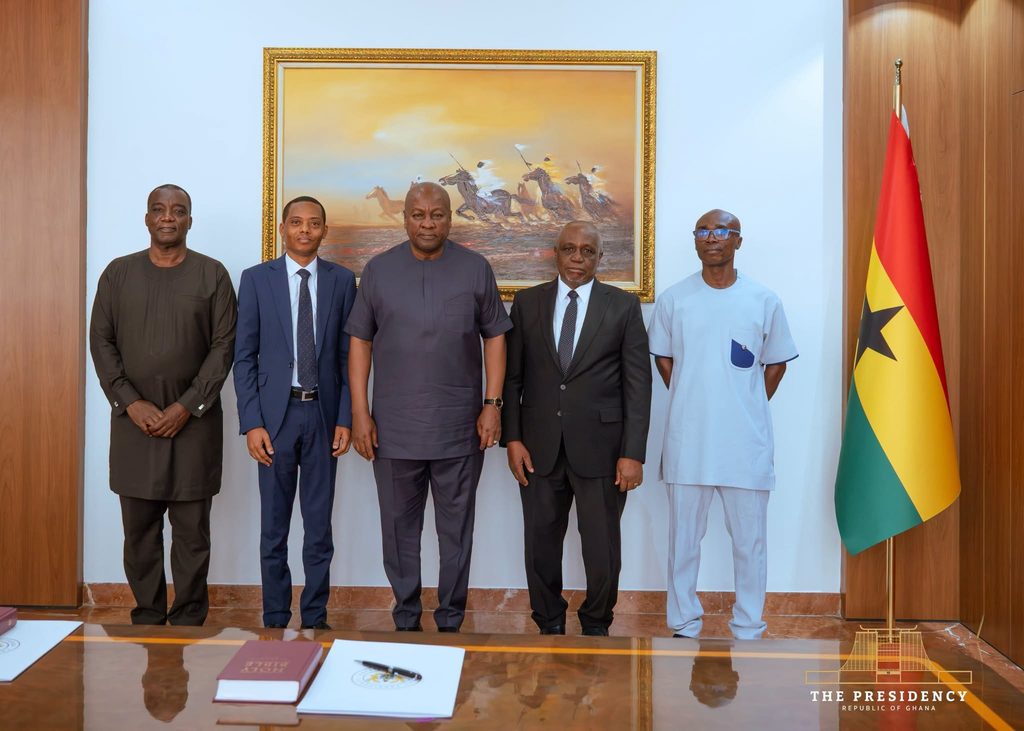
President John Dramani Mahama has inaugurated Ghana’s five-member Independent Fiscal Council, charging its members to provide credible, objective and non-partisan oversight of the nation’s fiscal policy at a brief ceremony at the Presidency.
The inauguration formally activates a watchdog institution that has existed on paper since April 2025, closing a gap of nearly a year and a half during which Ghana has operated under statutory fiscal rules but without an independent body to monitor compliance.
A Moral Obligation, Not Just a Statutory One
President Mahama told Council members that their oversight role is vital to sustaining economic reforms, restoring investor confidence, driving inclusive growth and improving public service delivery.
He set out their mandate directly. “Your responsibility is to scrutinise the Government’s fiscal decisions, assess compliance with established rules, and provide sound recommendations in the national interest,” he said, adding that public demand for transparency and prudent financial management has never been higher.
He framed the Council’s work in terms that went beyond legal compliance. “Fiscal responsibility must not be regarded merely as a statutory requirement; it is a moral obligation to present and future generations,” he said.
He was direct about the standard he expects members to hold themselves to. “Your work must be guided by evidence and the national interest, without fear, favour, or political consideration.”
The Legal Foundation Behind the Council
The Council draws its authority from the Public Financial Management (Amendment) Act, 2025 (Act 1136), which President Mahama assented to on April 2, 2025.
That law repealed the Fiscal Responsibility Act, 2018, dissolved the Presidential Fiscal Advisory Council and replaced it with a statutory body designed to be harder for government to sideline than its predecessor.
Act 1136 tasks the Council with independently assessing fiscal policy and compliance with two binding rules: a primary balance rule requiring an annual surplus of at least 1.5 percent of GDP on a commitment basis, and a debt rule capping public debt at 45 percent of GDP by 2034.
The Council is required to advise government on fiscal policy, supply Parliament’s budget committee with compliance assessments, and hold media engagements at least twice a year to publish its findings. Members are barred from holding any position in government, a safeguard written into the law specifically to protect the body’s independence.
A Chair With IMF Experience, Backed by Four Specialists
The Council will serve a four-year term under the chairmanship of Dr Emmanuel Oteng Kumah, an international economic consultant with 25 years at the International Monetary Fund, where he served as a division chief and as resident representative in Djibouti, and a former Board Chairman of Standard Chartered Bank Ghana.
He is joined by Dr Henry Akpenamawu Kofi Wampah, a former Governor of the Bank of Ghana who led the central bank from 2013 to 2016; Professor Patrick Opoku Asuming, an Associate Professor at the University of Ghana Business School and development economist holding a doctorate from Columbia University.
Other members of the council are Leslie Dwight Mensah, an economist and senior research fellow at the Institute for Fiscal Studies who has been among the more visible commentators on Ghana’s debt position through the restructuring years; and J. Kweku Bedu-Addo, a public policy expert who previously served at the Ministry of Finance.
A Long Road From Legislation to Activation
President Mahama submitted the five names to Parliament on April 8, 2026, under Section 11D of Act 921 as amended. Parliament approved the nominees on August 27, 2026, during an emergency sitting recalled by Speaker Alban Bagbin, nearly five months after the President’s submission and roughly sixteen months after the enabling legislation took effect.
At the approval stage, Speaker Bagbin objected to the Council’s composition, noting that all five appointees are men and urging the body to consult gender partners in its deliberations.
“It should not be a men-only club,” he said, adding that the Fiscal Council is meant to serve both men and women. The reforms establishing the Council were passed ahead of a September 2025 deadline under Ghana’s IMF-supported programme, which made an independent fiscal institution a structural commitment of that arrangement.
An Early Test Already Waiting
The newly inaugurated Council begins its work in an unusually live environment.
The Minority in Parliament has spent recent weeks pressing for a parliamentary inquiry into losses the IMF documented against the Bank of Ghana’s gold purchase programme, put at more than $1.7 billion for 2025, a matter that falls squarely within the scrutiny function Act 1136 assigns to the Council.
Whether the newly sworn-in members take up that question, or others like it, in their first substantive assessments will offer an early indication of how fully the Council intends to exercise the independence the law promises it on paper.
READ ALSO: Ghana Moves To Align Its Next Power System