Preparations have begun for the construction of a proposed 270-megawatt solar energy project that is expected to supply power to the Gomoa Special Economic Zone (SEZ) and the Gomoa Eco Park, placing dedicated renewable power at the centre of the area’s planned industrial expansion.
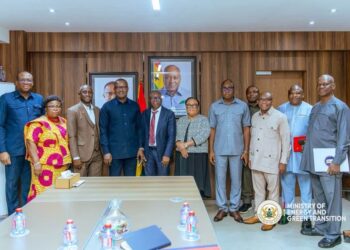
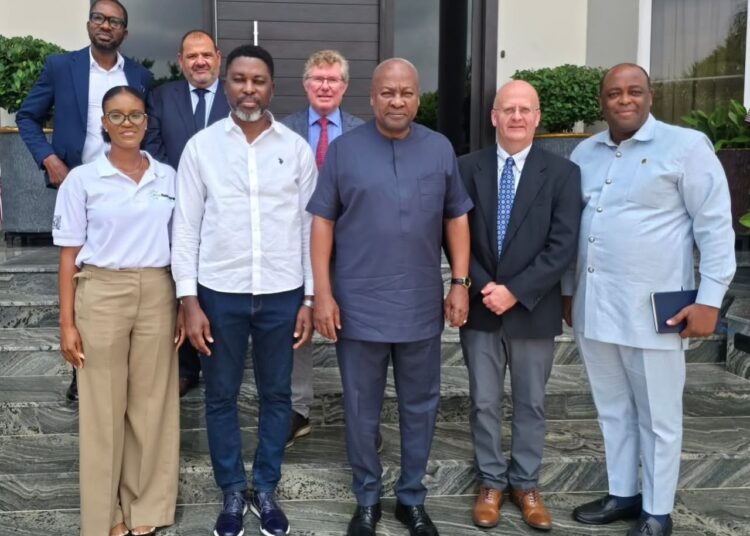
Gomoa Central MP Kwame Asare Obeng, popularly known as A-Plus, led a delegation from AKA Energy Systems, headed by the company’s Chief Executive Officer, to meet President John Dramani Mahama to formally brief him on the project.
The latest engagement represents a new stage in a project that was first publicly formalised in June, when the Gomoa SEZ signed a Memorandum of Understanding with Canada-based AKA Energy Systems for the development and operation of the proposed solar facility.
The delegation told the President that the project would be developed in phases, with Phase One targeted for completion by the end of 2027.
The project is intended to provide a dedicated electricity supply for the Gomoa SEZ, a planned manufacturing, industrial and commercial hub, as well as the adjoining Gomoa Eco Park.
Power Infrastructure Moves Ahead Of Industrial Expansion
The significance of the project goes beyond the addition of 270MW of renewable generation capacity.
The original agreement between the Gomoa SEZ and AKA Energy Systems was built around a straightforward industrial-development proposition: reliable and competitively priced electricity must be available alongside industrial land, transport infrastructure and other facilities if the Zone is to attract manufacturers and sustain production.
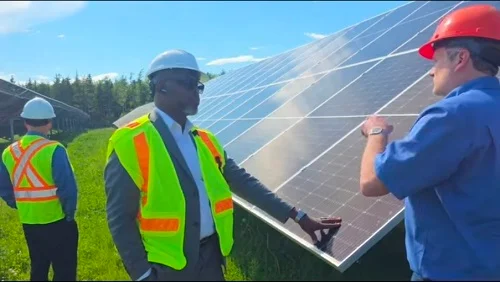
The June agreement followed an earlier Letter of Intent and was presented by the Zone as an attempt to address one of the structural constraints facing industrial development; electricity reliability and cost, before large numbers of factories begin operations.
That sequencing is important. Industrial parks can create demand for electricity rapidly once factories begin operating, but building generation and associated energy infrastructure after industrial loads have already arrived can create bottlenecks and expose investors to supply uncertainty.
Gomoa’s approach is therefore to make power infrastructure part of the industrial proposition itself.
“The cost of electricity remains one of the biggest obstacles to industrialisation across Africa. Too many countries focus on attracting industries before addressing the high cost and reliability of power.”
Gomoa Special Economic Zone leadership
The proposed solar plant would consequently serve a dual purpose: increasing Ghana’s renewable-energy capacity while providing a dedicated energy foundation for an emerging industrial cluster.
Project Builds On Earlier AKA Partnership
The latest presidential briefing builds on work that had already moved beyond preliminary discussions.
Following the signing of the June MoU, Gomoa SEZ leadership travelled to Canada to visit AKA Energy Systems’ facilities and engage the company’s management.
The visit provided an opportunity for the Ghanaian delegation to examine the company’s technology and operational capabilities before progressing with the partnership.
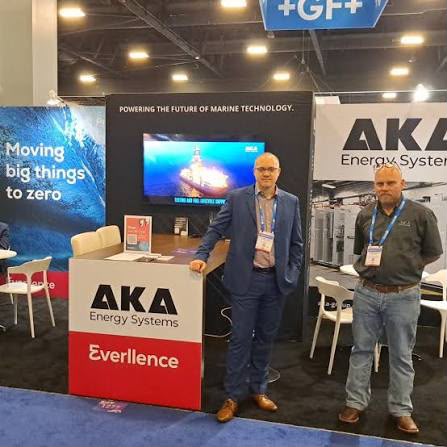
Mr Asare Obeng had previously said the visit strengthened confidence in the potential role of solar power in meeting the energy requirements of factories and communities.
“Seeing the technology firsthand confirms that solar can be a real solution for powering factories and homes reliably.”
Kwame Asare Obeng, MP for Gomoa Central
The latest meeting with the President therefore shifts the project conversation from the initial commercial agreement towards preparation for implementation.
The 270MW target is substantial within Ghana’s renewable-energy landscape, although its ultimate contribution to the national electricity system will depend on how much of the capacity is developed in each phase, the project’s operating configuration and the arrangements for integrating or supplying the generated power to the intended industrial loads.
Renewable Power Meets Industrialisation
The project also fits into Ghana’s broader attempt to increase renewable-energy deployment while supporting industrialisation.
Solar power can reduce exposure to fuel-price volatility because, after installation, generation does not require continuous purchases of fossil fuel.
For an industrial zone, that characteristic can become particularly valuable when electricity costs are a major component of operating expenses.

However, solar generation is variable. Output changes with daylight and weather conditions, meaning that a large solar installation serving industrial loads must ultimately be supported by appropriate system planning, balancing resources, storage or complementary generation to ensure that the electricity supply matches industrial demand when required.
That makes the project’s industrial value dependent not simply on the headline 270MW figure but on the quality of the overall energy architecture around it.
This is especially relevant because Ghana is currently undertaking wider power-system planning through the 2026 Integrated Power System Master Plan, which brings generation, transmission, distribution and energy-resource requirements into a coordinated planning framework.
For Gomoa SEZ, the advantage of dedicated renewable generation could therefore be strengthened if the project’s development is aligned with broader grid and industrial-load planning.
Energy Security Becomes Part Of Investment Strategy
The project also arrives at a time when Ghana is placing greater emphasis on improving the resilience and financial sustainability of its power sector.
Recent government initiatives have included reforms across the electricity distribution sector, transmission-system investments and plans to deploy battery energy storage systems to support peak demand and improve grid resilience.
The Energy Minister has also highlighted the importance of renewable energy in diversifying the country’s electricity system.
Against that backdrop, the Gomoa project illustrates a different model of energy investment: rather than relying exclusively on the national grid to supply a future industrial cluster, renewable generation is being planned alongside the industrial development itself.
That could provide investors with greater visibility over the energy infrastructure supporting their operations.
For Ghana, the wider economic argument is equally important.
The country’s industrial ambitions increasingly depend on its ability to provide manufacturers with predictable infrastructure costs.
Electricity that is reliable, competitively priced and increasingly sourced from renewable resources could improve the operating environment for companies producing goods for both Ghanaian and regional markets.
The June announcement specifically linked the Gomoa SEZ’s energy strategy to the opportunities presented by the African Continental Free Trade Area (AfCFTA), under which Ghana seeks to strengthen its position as a manufacturing and export hub.
Implementation Will Determine The Project’s Impact
The presidential briefing establishes an important milestone, but the next phase will be measured by execution.
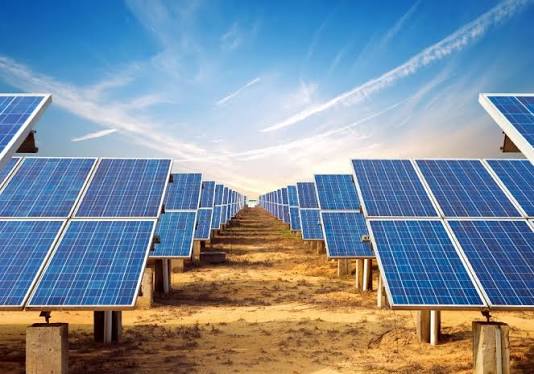
A 270MW solar project requires significant capital, land, engineering, procurement, construction, grid or dedicated-load arrangements, operations and maintenance systems and, depending on the final configuration, mechanisms for managing variability in solar output.
The phased approach could allow infrastructure and industrial demand to develop progressively rather than requiring the entire capacity to be delivered before the Zone begins generating economic activity.
The commitment to complete the first phase by the end of 2027 consequently gives the project a defined near-term implementation target.
If delivered successfully, the solar development could become more than a power project for Gomoa. It could form part of the basic infrastructure underpinning the Zone’s ability to attract manufacturers, create jobs and participate in regional trade.
For the Gomoa SEZ, the strategic calculation is clear: industrialisation requires power, and securing that power early can make the difference between an industrial park that exists on paper and one capable of supporting sustained production.
The latest engagement with President Mahama therefore places the 270MW project firmly within Ghana’s broader energy-and-industrialisation agenda, with the next challenge being to convert the announced plans and phased commitments into physical generation capacity that can support the industries the Zone is designed to attract.
READ ALSO: Banking Giants Battle for Control of Société Générale Ghana