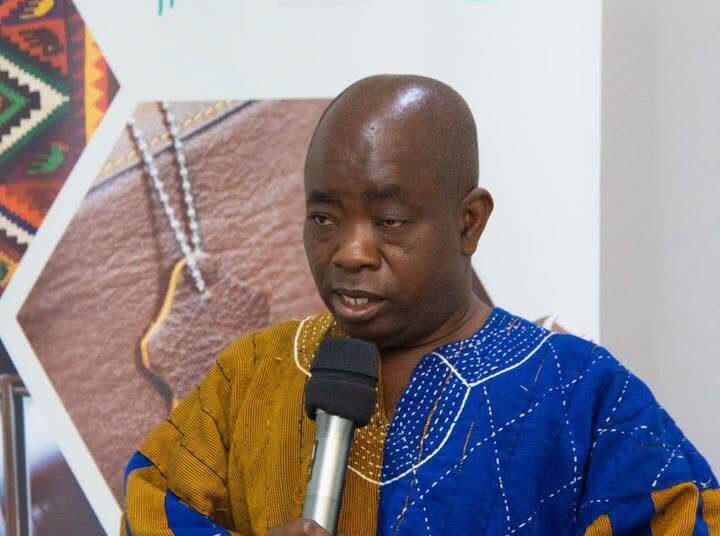
Ghana has renewed its commitment to revitalizing its textile, leather and fashion industries, with Government describing sustainability, quality and compliance with global standards as non-negotiable pillars for future growth.
The assurance was given by the Deputy Minister for Trade, Agribusiness and Industry, Hon. Sampson Ahi (MP), at the opening of a two day awareness workshop on the EcoMark Africa Initiative in Accra on Wednesday.
Speaking on behalf of the Sector Minister, Hon. Elizabeth Ofosu-Adjare, Hon. Ahi said the implementation of harmonized African sustainability standards under the EcoMark Africa programme presents a strategic opportunity for Ghana and the continent to boost industrial competitiveness, satisfy evolving global market demands and entrench environmentally responsible production.
“Modern markets increasingly value products that meet environmental, social and quality standards. Adopting credible sustainability standards will help Ghanaian businesses gain market confidence, attract investment and expand exports.”
Hon. Ahi
The workshop, jointly organised by the Ghana Standards Authority (GSA) and the African Organisation for Standardisation (ARSO), brought together stakeholders from the textile, apparel, leather and fashion value chains, regulators, development partners and sustainability experts.
It forms part of continental efforts to promote the uptake of the EcoMark Africa label, a voluntary sustainability certification scheme designed to distinguish African products that meet stringent environmental and social criteria.
Hon. Ahi underscored Government’s broader industrial transformation agenda, which seeks to grow Ghana’s textiles and garments sector, create sustainable jobs for the youth, revive cotton production in the northern savannah zones and position Ghana as a hub for ethical and sustainable apparel manufacturing in West Africa.
He noted that while Ghana’s textile heritage remains strong, the sector faces intense pressure from cheap imports, second-hand clothing, and global competition. The way forward, he argued, is differentiation through quality and sustainability.
“Ghana cannot compete on cheapness alone. We must compete on quality, authenticity and sustainability. The EcoMark Africa Initiative gives us the tool to do that. When a product carries the EcoMark label, it tells the world that it was produced in Africa, respecting our environment, our people and international best practice.”
Hon. Ahi
Gov’t Rolling Out Incentives and Support for Cotton Farmers to Feed Local Factories
He added that Government, through the Ministry of Trade, Agribusiness and Industry, is implementing supportive policies including the provision of incentives under the Ghana Industrial Transformation Programme, investment in industrial parks, and targeted support for cotton farmers to ensure raw material availability for local factories.
The Director-General of the Ghana Standards Authority, Prof. Agyei George, in his welcome address, said GSA as the national standards body and custodian of quality, is committed to ensuring that Ghanaian industries are equipped to meet both continental and international standards.

He explained that EcoMark Africa is built on the African Standard DARS 444 – Sustainability and Eco-labelling requirements, which covers critical areas such as restricted chemical substances, water and energy efficiency, waste management, fair labour practices and product quality.
“Standardisation is not a barrier to trade, it is an enabler. Through EcoMark, we are helping our SMEs to future-proof their businesses. Products that are not sustainable will soon have no market in Europe, America and even within Africa’s own AfCFTA market.”
Prof. Agyei
He revealed that GSA has already trained auditors and conformity assessment experts to support local companies seeking EcoMark certification and urged textile and garment manufacturers to take advantage of the scheme.
Representatives from ARSO emphasized that Africa must define its own sustainability narrative rather than wait to be regulated by external markets. They noted that with the European Union’s Green Deal and new due diligence regulations, African exporters who do not demonstrate sustainability compliance risk being locked out of lucrative markets.
EcoMark Clarification Driving Premium Export Deals
Participants at the workshop were taken through the certification process, benefits of eco-labelling, and success stories from other African countries including Kenya and Mauritius, where EcoMark certified textile factories have secured premium contracts with international buyers.
The two day workshop is expected to end on Thursday, September 10, with the development of a roadmap for increased adoption of EcoMark Africa in Ghana’s textile and leather sectors.
Ghana’s textile and apparel industry, which once employed over 25,000 people in its heyday in the 1970s, currently employs an estimated 5,000 formal workers but supports over 100,000 livelihoods indirectly through the cotton, ginning, tailoring and fashion ecosystem.
Government says its goal is to restore the sector to create at least 50,000 new jobs in the next five years. The Deputy Minister concluded with a call to action for all stakeholders to embrace sustainability not as a cost, but as an investment.
“The future of Ghana’s textile industry is not just about fashion; it is about sustainable fashion. It is about quality, it is about global standards, and it is about decent jobs for our people.”
Hon. Ahi
READ ALSO:Banking Sector Hit by Profit Decline and Rising Impairment Costs