Israel has opened its first embassy in Slovenia, strengthening diplomatic ties with the European Union member at a time when its relations with several traditional allies have deteriorated over its policies in the occupied West Bank and the Gaza war.
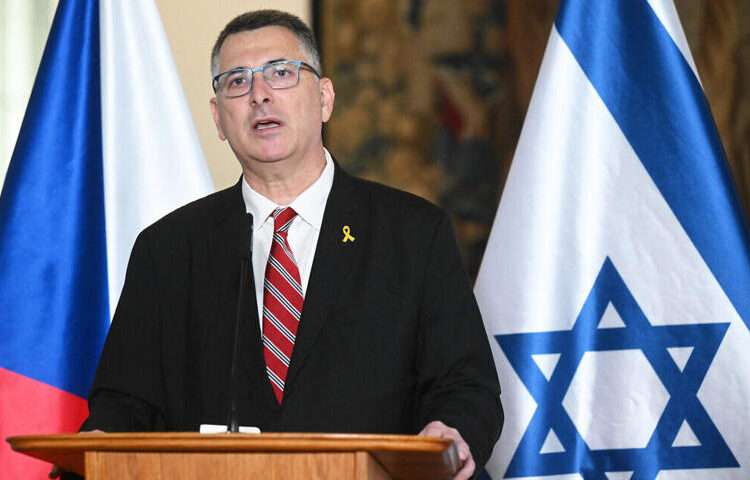
Israeli Foreign Minister, Gideon Sa’ar travelled to Ljubljana for the opening, describing the establishment of the embassy as a “historic day” following talks with his Slovenian counterpart, Tone Kajzer.
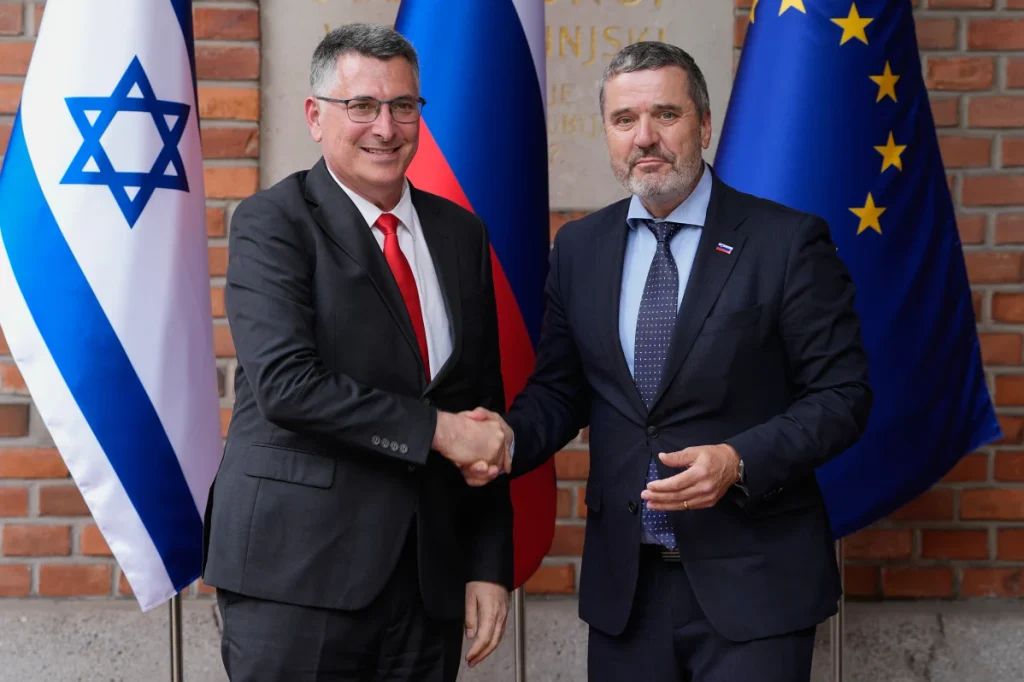
The embassy opening marks a notable development in relations between the two countries, as Israel’s diplomatic interests in Slovenia had previously been handled by its embassy in Vienna, Austria.
Sa’ar welcomed the deepening relationship with Slovenia and portrayed Israel as an important strategic partner for Europe. He described Israel as “the only democracy in the Middle East and almost the only real and true partner of Europe,” according to the Slovenian press agency. “Moreover, we are defending Europe, Europe’s security, directly and indirectly,” Sa’ar said, adding that “Israel is the fortress on the front line for Western civilization.”
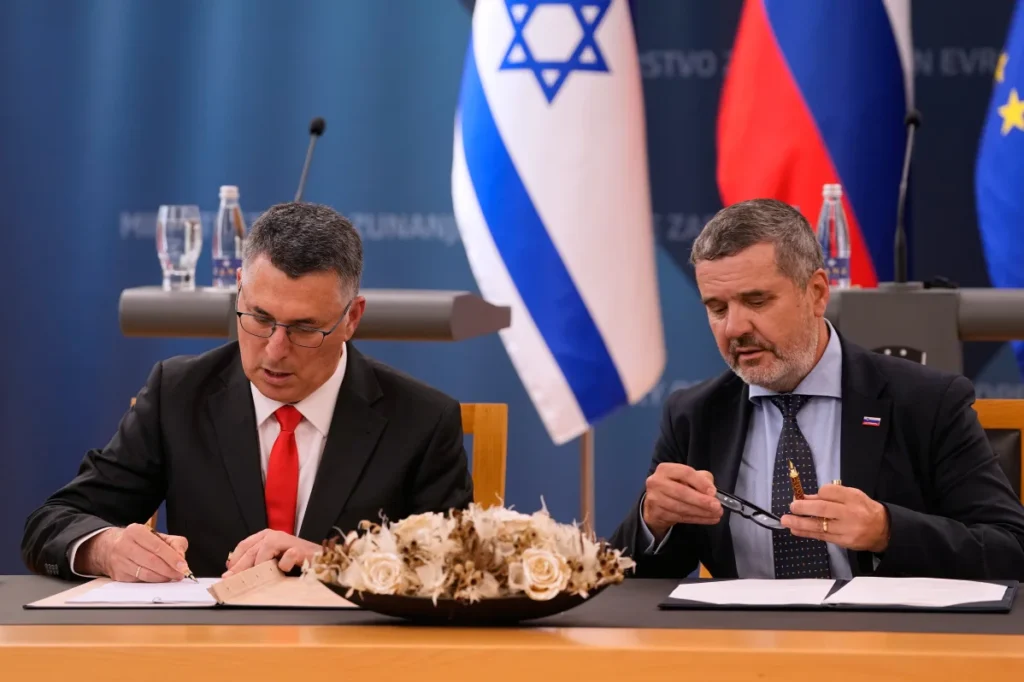
On his part, Kajzer said that Slovenia wanted the new embassy to signal a broader improvement in bilateral relations and greater practical cooperation. “We want today’s opening to mark the beginning of a period of greater dialogue, stronger cooperation and, above all, more tangible results for the benefit of our people,” Kajzer said, according to a Slovenian Foreign Ministry post on X.
The two Foreign Ministers also signed a multi-sector cooperation agreement covering education, science, culture, youth and sport.
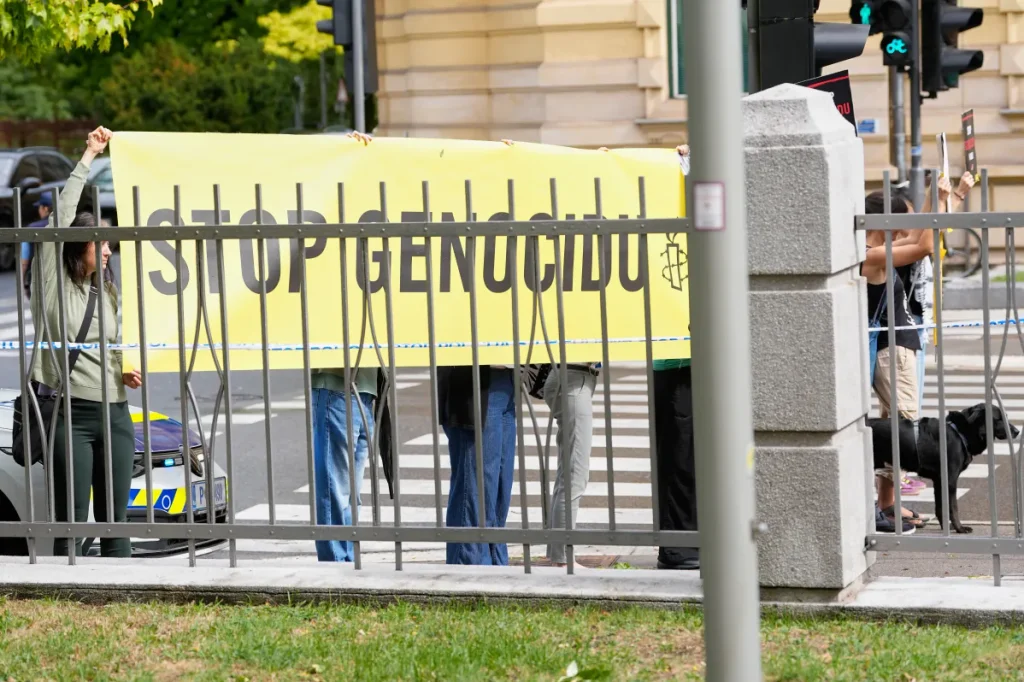
However, hundreds of pro-Palestinian protesters gathered outside the new embassy building to protest the visit, demanding the embassy’s closure.
The opening comes against a complicated backdrop for Israel’s relations with Europe. Several European governments that have traditionally maintained close relations with Israel have recently taken measures expressing opposition to Israeli policies in the occupied Palestinian territories.
Just one day before Sa’ar’s visit, the United Kingdom announced a ban on trade with Israeli settlements in the occupied West Bank. France and Canada also announced plans for similar measures.
The moves have been interpreted as symbolic expressions of dissatisfaction with Israel and further signs of the diplomatic pressure facing Prime Minister Benjamin Netanyahu’s government over the Gaza war and settlement policy. Israel responded angrily to the British decision, announcing that it would close the British consulate in Jerusalem.
Janša Reverses Slovenia’s Israel Policy
The embassy opening reflects a significant shift in Slovenia’s policy following the return of right-wing Prime Minister Janez Janša to power in early June. Slovenia’s previous centre-left government, led by former Prime Minister Robert Golob, had been among Israel’s most vocal critics within the European Union.
That government recognised a Palestinian state in 2024 and introduced additional measures against Israel in 2025, including a ban on imports from Israeli settlements, an arms embargo and entry restrictions on senior Israeli officials, including Netanyahu.
After taking office, Janša quickly moved to reverse those policies. He removed the Palestinian flag from the Slovenian government building, where it had been displayed alongside the Slovenian, EU and Ukrainian flags, and his government subsequently scrapped the measures imposed against Israel.
Janša has defended the policy reversal, arguing that his government is seeking to repair what he regards as damage caused by its predecessor. “The economic damage alone due to the anti-Semitic policies of the Golob coalition is enormous,” Janša said in a post on X.
The change has sparked a political confrontation inside Slovenia, with Golob accusing Janša of preventing the EU from adopting a tougher position towards Israeli settlements. Golob’s Freedom Movement party has said it would seek to remove both Janša and Kajzer through Parliament.
The dispute demonstrates how Israel’s policies and the wider Israeli-Palestinian conflict have become increasingly intertwined with European domestic politics.
The opening of the embassy provides an opportunity for Israel to deepen ties with a government that has moved away from its predecessor’s criticism and restrictions. For Slovenia, the new diplomatic relationship could lead to expanded cooperation across education, science, culture and other sectors covered by the agreement signed by the two Ministers.
The development also comes as Israel faces growing diplomatic pressure elsewhere in Europe. While the embassy does not erase the broader disagreements between Israel and several European governments, it signals that the European response to Israel remains divided.
Slovenia’s policy shift under Janša stands in contrast to the increasingly critical approach adopted by some of Israel’s longstanding European partners, illustrating the competing political positions within Europe over Israel, the Palestinian territories and the Gaza conflict.
READ ALSO: Salam’s Withdrawal Strategic, Not Fear of Defeat — Deputy Youth Organiser