Ghana’s latest export numbers reveal a useful paradox for agricultural policy. Non-traditional agricultural exports generated about US$710 million in 2025, yet cocoa paste alone earned roughly US$789 million.
The comparison does not imply one product is more important than the country’s farm economy; it illustrates how much additional value can be captured when raw output moves through processing, quality control, packaging and export marketing before leaving Ghana.
That distinction has become a central theme at the Ghana Horticulture Expo 2026, where businesses and financiers have called for investment across the full agricultural value chain rather than a narrow focus on farm production.
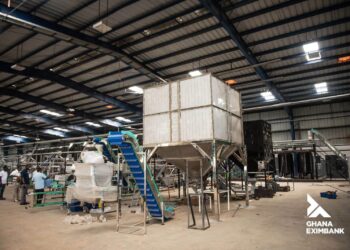
Ghana already produces commodities with export potential, but too much value is still lost after harvest through inadequate aggregation, cold storage, processing capacity, certification, logistics and access to appropriate finance.
For an economy seeking jobs, foreign exchange and rural income growth, the objective should therefore be larger domestic value capture per tonne produced.
John-Paul Taabavi of Fidelity Bank summarised the problem: “The difference lies largely in what happens after the harvest.” The economics is straightforward: the stages between farm and final buyer determine how much of the export price remains with Ghanaian workers and firms.

Cocoa Processing Shows the Value-Addition Premium
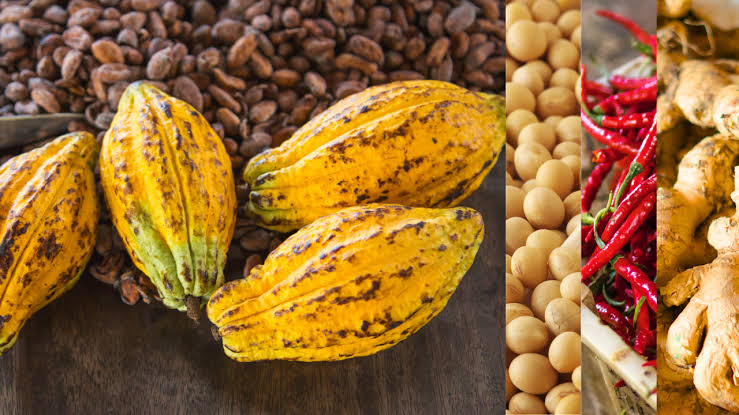
Ghana’s 2025 non-traditional exports reached about US$5.0 billion, rising 30.7%, with cocoa derivatives among the largest contributors. Cocoa paste earned approximately US$789.3 million and cocoa butter about US$635.7 million, while non-traditional agricultural exports reached roughly US$710.3 million.
Ghana has therefore demonstrated an ability to create export value through processing; the challenge is to reproduce that capacity across more agricultural products. That is the core economic payoff: processing raises domestic value added without requiring an equivalent increase in cultivated land.
The processing-gap argument should not be reduced to the familiar claim that Ghana exports everything raw. That would be inaccurate. Manufactured and semi-processed products already account for a large share of non-traditional export earnings.
Ghanaian non-traditional products reached 152 countries in 2025, suggesting market reach itself is not the binding constraint. The stronger question is why successful value addition remains concentrated in relatively few products while horticulture, fruits, vegetables and other crops still face fragmented supply chains and post-harvest constraints.
Ghana’s record US$5 billion non-traditional exports highlighted the growing role of value-added products. A more recent Ghana-JICA initiative under AfCFTA is targeting agro-processing value chains, suggesting that the next export frontier may depend on processing more of what Ghana already grows.

The Missing Middle Sits After the Farm Gate
The biggest constraint often appears between dispersed farms and processors. Factories need consistent volumes, quality and delivery schedules; small farmers frequently sell in fragmented markets and cannot individually finance irrigation, cold storage, traceability or certification.
Without aggregation, processors face high procurement costs and unreliable utilisation. Without processors, farmers face gluts, weak bargaining power and volatile farm-gate prices.
That coordination failure explains why infrastructure matters as much as credit. Pack houses, cold chains, laboratories, feeder roads, reliable electricity and digital traceability systems reduce losses and make export contracts feasible.
Public investment is most defensible where these shared facilities lower transaction costs for many private firms rather than permanently substituting for them.
Agriculture Minister Eric Opoku has made the same point from the production side: “Our farmers have produced so much, but consumption alone cannot absorb everything. We need more companies to process agricultural products and create markets.”
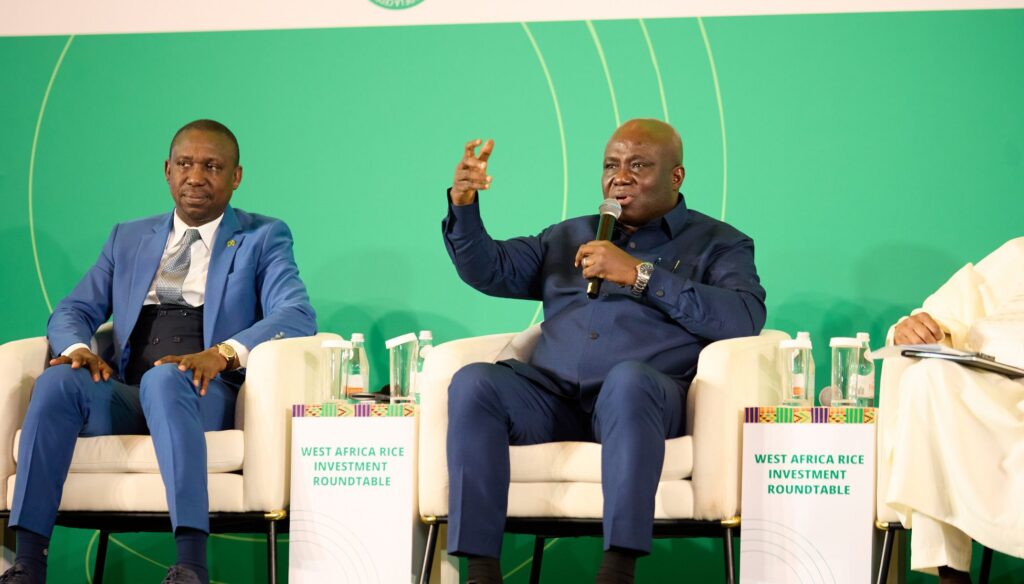
The official Feed Ghana Programme consequently includes supplying raw materials to agro-industry, promoting value addition, expanding exports and creating jobs.
Finance Must Follow the Value Chain
Agricultural finance also needs to match the timing and risks of the chain. Farmers require seasonal capital, processors need longer-term machinery finance, exporters need working capital and guarantees, while cold-chain operators need infrastructure funding. A conventional short-tenor loan priced without regard to crop cycles can leave a commercially viable project unable to service debt before revenue arrives.
The Horticulture Expo discussion is useful because it shifts the question from how much banks lend to where capital produces the highest economic return. Finance for an additional acre may add little value when existing harvests are already wasted. In that case, the binding constraint may be storage, processing or market certification rather than cultivation.
Export Growth Needs Domestic Value Capture
The wider payoff extends beyond exporters. Processing creates demand for packaging, transport, maintenance, testing, business services and energy, generating domestic linkages that raw commodity exports often provide more weakly.
It can also reduce foreign-exchange pressure when locally processed inputs replace imports and increase foreign-currency earnings when finished or semi-finished goods reach regional and global markets.

Ghana’s agricultural transformation should therefore be measured by more than tonnes harvested or hectares cultivated. Better indicators are post-harvest losses, processor capacity utilisation, value added per worker, farmer incomes, export earnings and the domestic share of each final product’s value.
Production remains the foundation, but greater agricultural wealth will come from value chains that convert farm output into products commanding higher prices before they cross the border.
READ ALSO: Horticulture Expo 2026 Targets Non-Traditional Export Growth